Photo by Neidy Gutierrez | SOC Images.
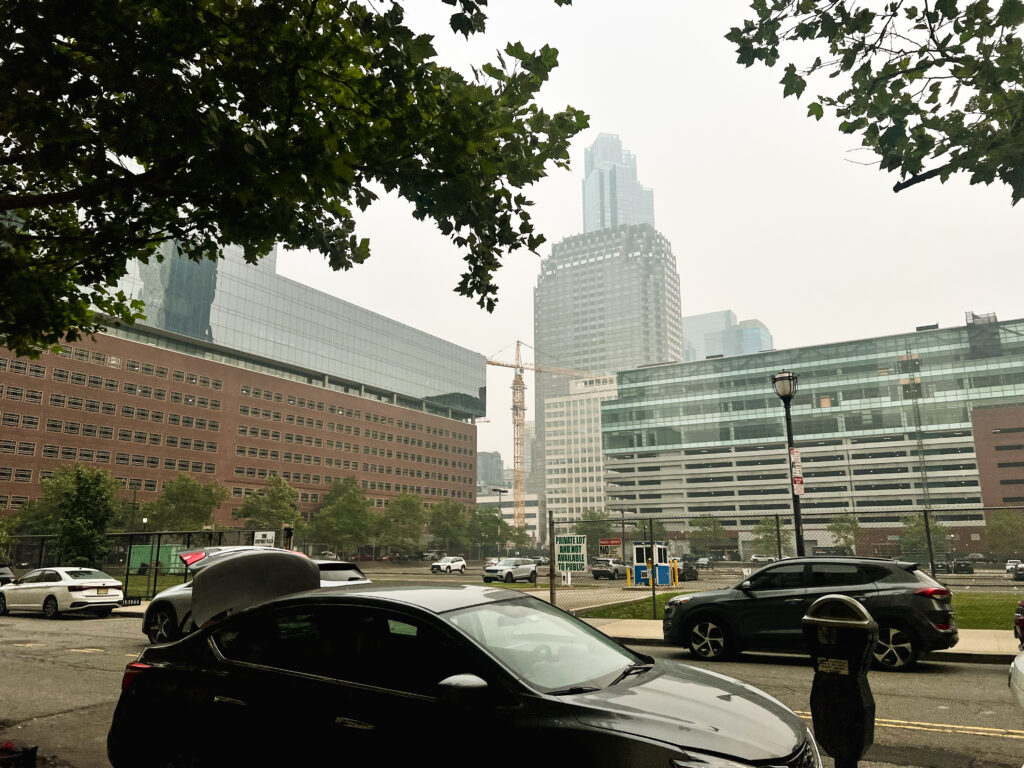
On July 15, for many Hudson County residents, simply stepping outside felt different as thick smoke from Canadian wildfires pushed air quality into unhealthy levels across the region.
The Air Quality Index (AQI) in Jersey City reached an estimated peak of 230 on July 16, placing the city— and its surrounding area— in the “Very Unhealthy” category. An AQI between 201 and 300 means everyone may experience health effects, while sensitive groups including children, older adults and people with heart or lung conditions face an even greater risk.
Scientists use the Air Quality Index (AQI) to measure air pollution from sources including ozone and fine particulate matter. While an AQI below 50 is generally considered good, many researchers say there is no completely “safe” level of air pollution because the index does not account for every harmful pollutant.
To better understand the environmental impacts of the smoke and how Hudson County is preparing for future air quality challenges, Slice of Culture spoke with Sophia Calcaterra-Hull, principal environmental planner with the Hudson County Division of Planning.

“I think it’s really important for people to know the risk and protect themselves,” Calcaterra-Hull said. “If they can, they should avoid or limit their exposure, stay indoors as much as possible and make sure their homes have adequate air filtration. HEPA filters really help filter out the particulate matter that’s elevated during these smoke events.”
Days after July 15, residents reported coughing, burning eyes and shortness of breath as wildfire smoke lingered over the region. Health experts said even healthy individuals could notice symptoms because wildfire smoke contains fine particulate matter (PM2.5), which are tiny particles that can travel deep into the lungs and even enter the bloodstream.
According to the American Lung Association, wildfire smoke can irritate the eyes, nose and throat, worsen asthma and other respiratory diseases and increase the risk of heart and lung complications. During the 2023 Canadian wildfires, smoke drifting across much of the eastern United States contributed to a rise in emergency room visits for asthma and other breathing related illnesses.
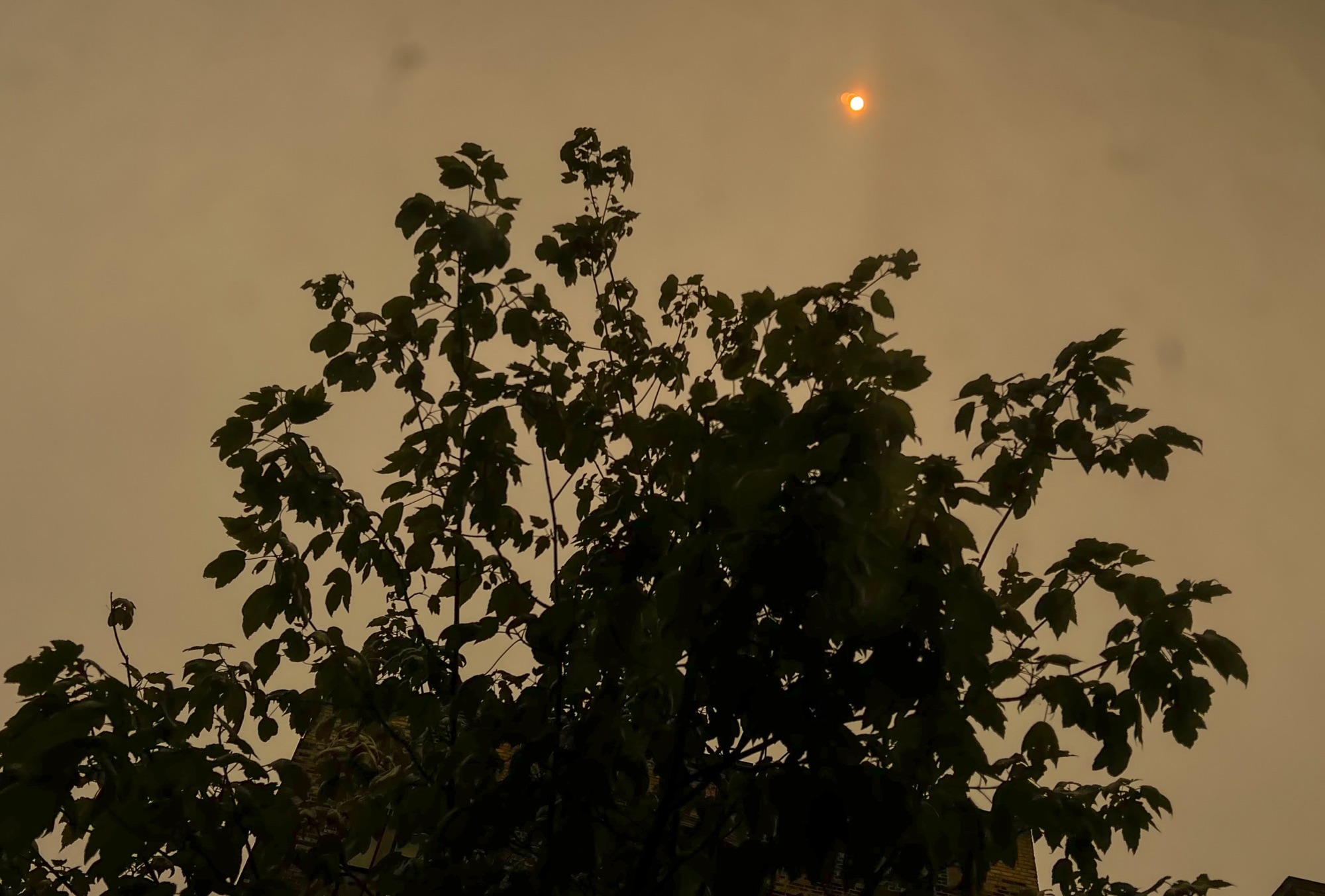
May-Lin Wilgus, a pulmonologist and professor at UCLA, has compared breathing wildfire smoke to smoking cigarettes because of the high concentration of harmful particles people inhale during heavy smoke events.
Wildfires burning hundreds of miles away in Canada affected millions of people across New Jersey and New York, demonstrating how increasingly severe wildfire seasons can spread smoke far beyond the fire zone and expose communities hundreds of miles away to unhealthy air.
“Even though the fires are so far away, because of the winds, jet streams and weather patterns, our area was hit with one of the worst concentrations of air quality issues,” Calcaterra-Hull said.
According to NASA and the National Interagency Fire Center, rising global temperatures contribute to hotter, drier conditions that make forests more susceptible to large wildfires. Climate change is linked to longer wildfire seasons, more frequent droughts and vegetation that ignites more easily. While scientists cannot attribute any single wildfire solely to climate change, warming temperatures create conditions that allow fires to grow larger, burn longer and produce more smoke.
As air quality worsened, many residents changed their daily routines by moving workouts indoors, limiting time outside and choosing rides over walking whenever possible.
“It is interesting that we’re seeing, almost back-to-back, just a couple of years apart, two similar extreme air quality events from fires in Canada,” Calcaterra-Hull said. “Changing snowmelt patterns and increasing temperatures appear to be contributing to these larger fire events.”
Currently in Europe, France and Spain are being hit with one of “Europe’s worst wildfires” this summer.
“The climate alarm is blaring, from every direction,” read a statement by the UN Climate Change Executive Secretary Simon Stiell. “Around the world, climate-driven disasters are reaching nightmare proportions, as the costs of humanity’s addiction to burning coal, oil and gas keep spiraling upwards.”
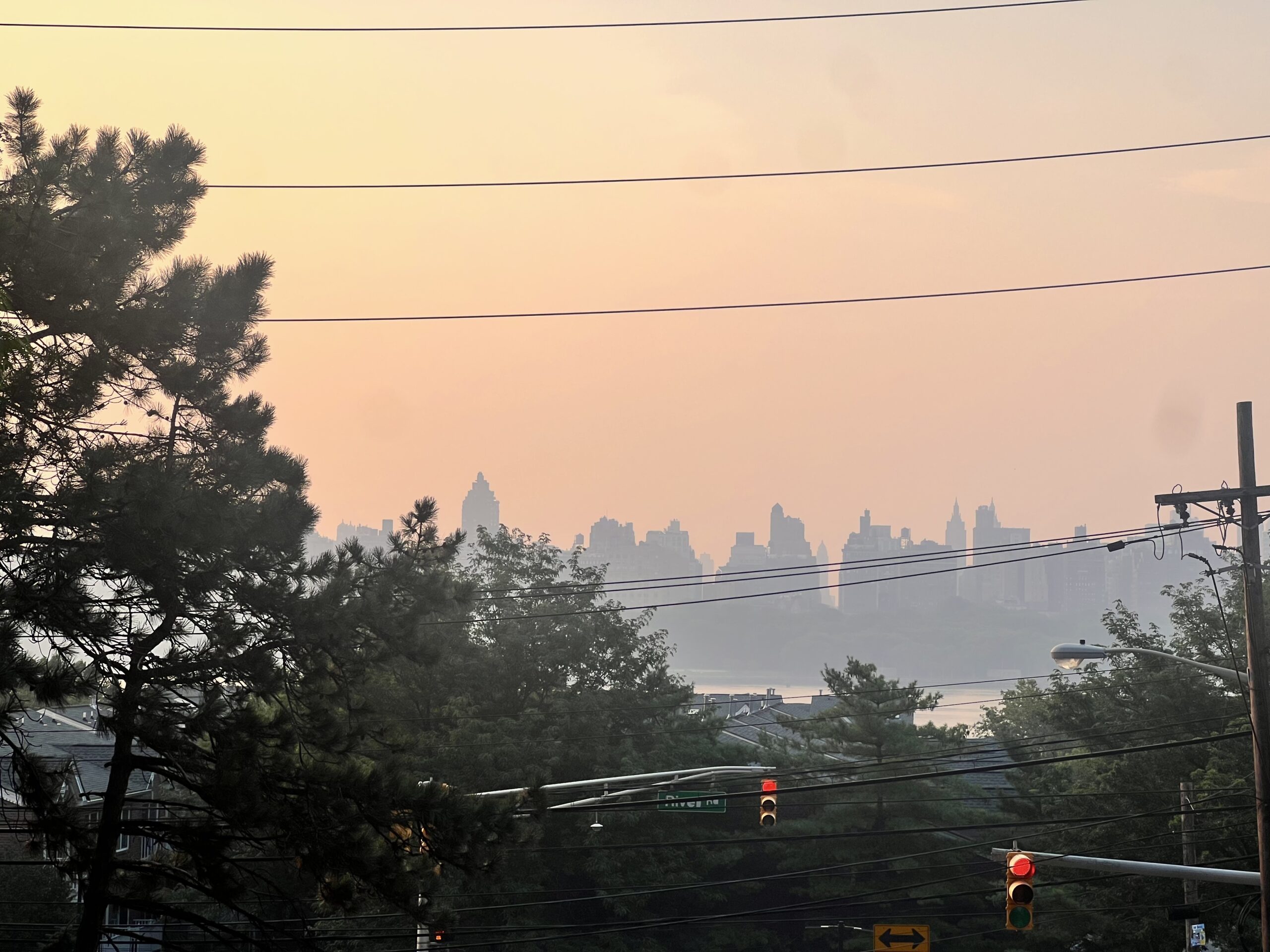
Looking Towards The Environment’s Future
While residents can take steps to reduce their exposure during smoke events, Hudson County officials are also working on long-term environmental planning aimed at improving resilience and public health.
“One of the largest projects I’ve worked on is overseeing our Shade Tree Program,” Calcaterra-Hull said. “Trees help filter our air and have a lot of positive co-benefits for both people and the environment.”
During unhealthy air quality, health officials recommend:
- Limiting strenuous outdoor activity
- Keeping windows and doors closed when smoke levels are high
- Running an air purifier or air conditioning on recirculate if available
- Wearing a well-fitted N95 mask if prolonged time outdoors is unavoidable
- Checking the AirNow AQI forecast before spending extended time outside
Beyond responding to smoke events, Hudson County is incorporating climate resilience into its Comprehensive Plan, a long-term planning document that will help guide development, environmental initiatives and resiliency efforts through 2050.
“If people are concerned about air quality and extreme weather events, it’s something we’re going to be able to really delve into in this planning document and help inform what we can do to make Hudson County safer,” Calcaterra-Hull said.
Climate change is warming the planet, drying forests and vegetation, and contributing to longer, more intense wildfire seasons. According to climate scientists, rising temperatures are expected to increase the frequency and severity of wildfires in many regions, making smoke events that reach the Northeast more common in the coming decades.
Those trends mirror broader climate challenges already affecting Hudson County. Earlier reporting by Slice of Culture highlighted how rising temperatures are increasing flood risks, intensifying extreme weather and contributing to public health concerns across the region.
Local organizations have also called for expanded tree canopies, greener infrastructure and cleaner transportation to help communities adapt to a warming climate. Slice of Culture also previously reported the surge of residential fires in New Jersey, highlighting how rising temperatures and extreme weather can increase fire risks and the importance of community preparedness.
Mark Cygan, communications director for the Hudson County Executive’s Office, said expanding parks and green space remains one of the county’s priorities to help improve the local environment.
“Residents love parks. They love open spaces. They love the chance to get away from the hustle of the city and relax,” Cygan said. “Open space projects are important both from a quality-of-life perspective and from an environmental and climate change perspective.”
Although skies over the area have cleared, experts say the event should serve as a reminder that wildfire smoke is no longer a problem confined to the West or other fire-prone regions.
As climate change continues to influence wildfire activity and weather patterns, smoke drifting from distant fires could become a more familiar part of summers in the Northeast, making public awareness, preparedness and long-term environmental planning increasingly important.