

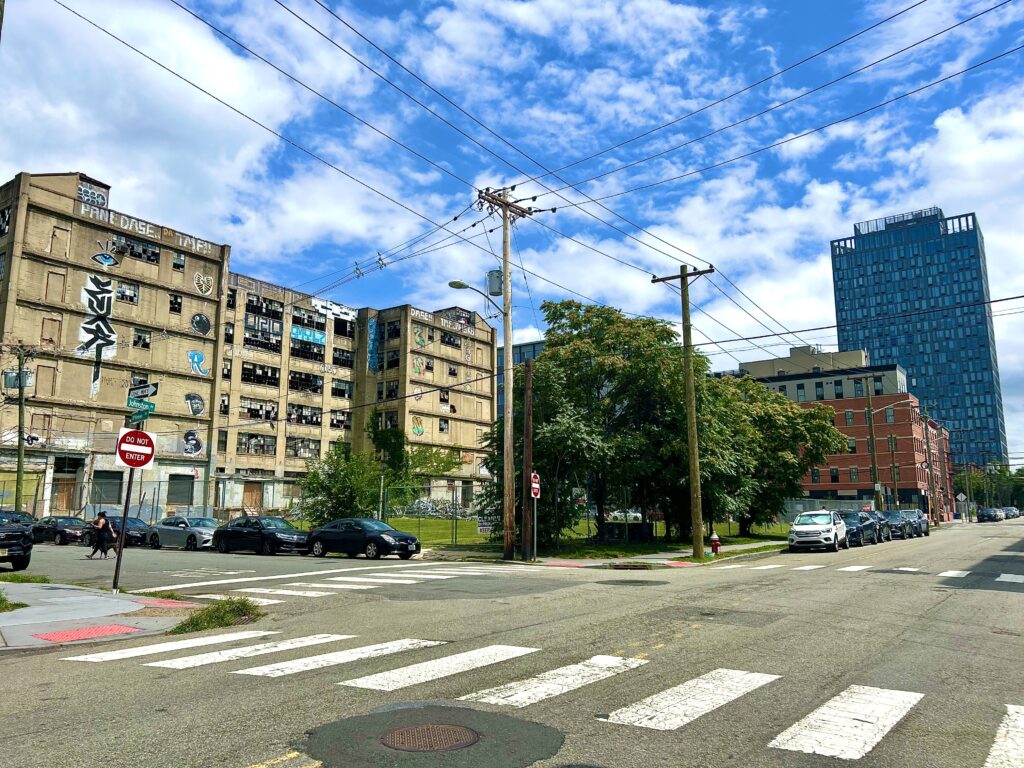
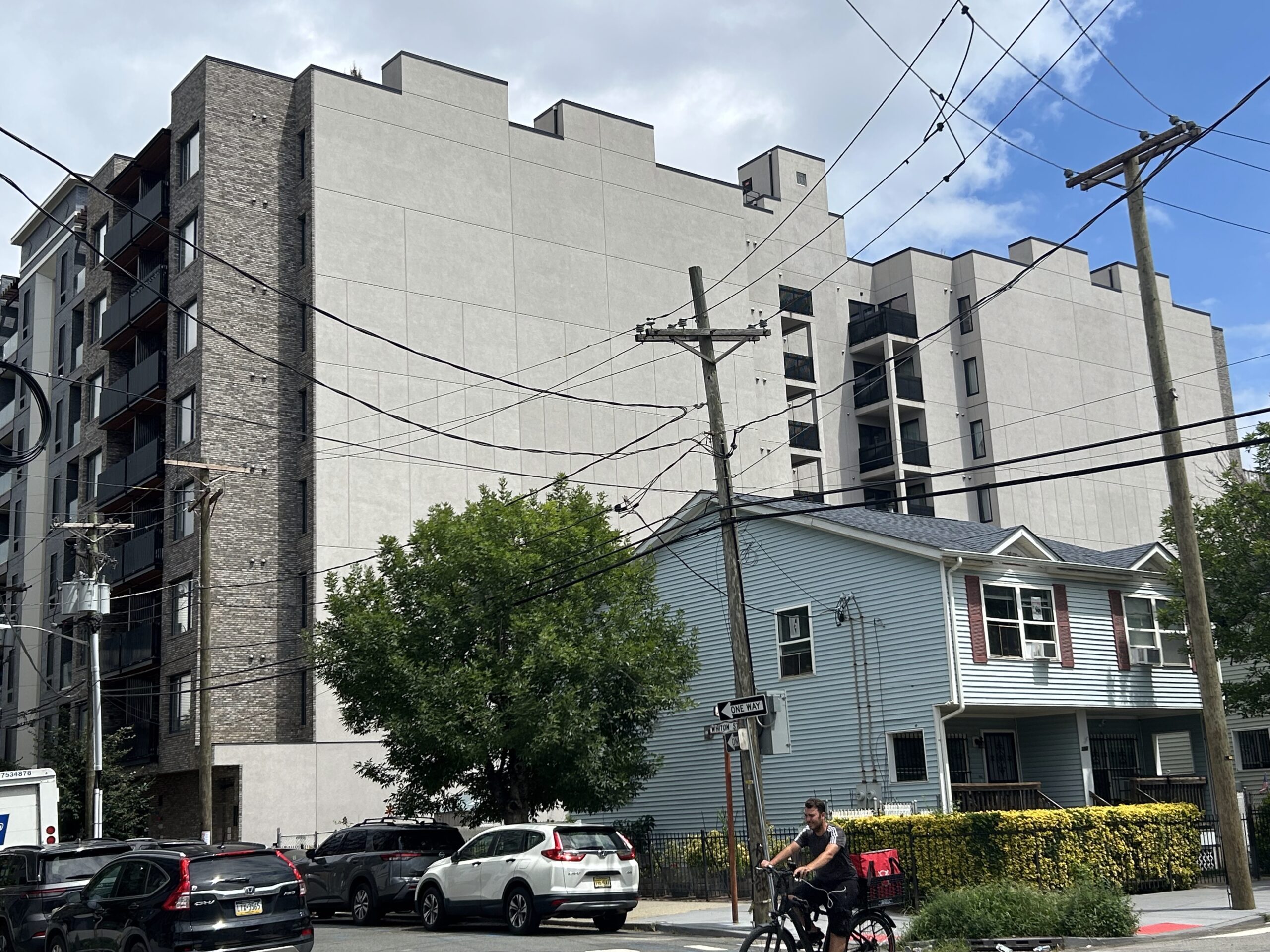
Buildings on the corner of Johnston Avenue and Pine Street in Jersey City. (Sergio Sanchez / SOC Images)
Take a walk in Jersey City—a place where there’s culture, strength and heart.
In this city, you can walk outside and see your family and friends seizing the weather you so happened to stumble upon, with loud music playing from antique radios and the scent of slightly burnt cheeseburgers on the grill.
Nearby, through the gates of your neighbor’s house, dogs are wrestling over who gets the bigger bone, while the chattering of multiple conversations captive you. You find your way to the corner store not worried about time because you realize the only place you have to be is here and now.
With a smile emanating light, you grace your way down the noisy street, allowing yourself to absorb the sun gushing with light, giving the neighborhood peace. Arriving at the bodega, you see your homeboy, embracing him with a dap up that echoes throughout the entire city and know that you’re about to carpe diem.
But nowadays, surging costs of living, a recently proposed 15.5% property tax increase and other expensive factors are slowly chipping away at a Jersey City many once knew.
Walking down Maple Street in the Bergen-Lafayette area, Hartman Morgan, locally known as “Junior,” was sitting on his steps and listening to music, enjoying his Wednesday morning—a habit that’s become part of his daily routine. He recalled the days when he used to play football and with cans in the middle of the street when cars used to honk to let you know they were passing, giving you a chance to pick up your cans.

But nowadays, Junior said, “things just aren’t the same anymore, cars will run you over without a honk or notice.”
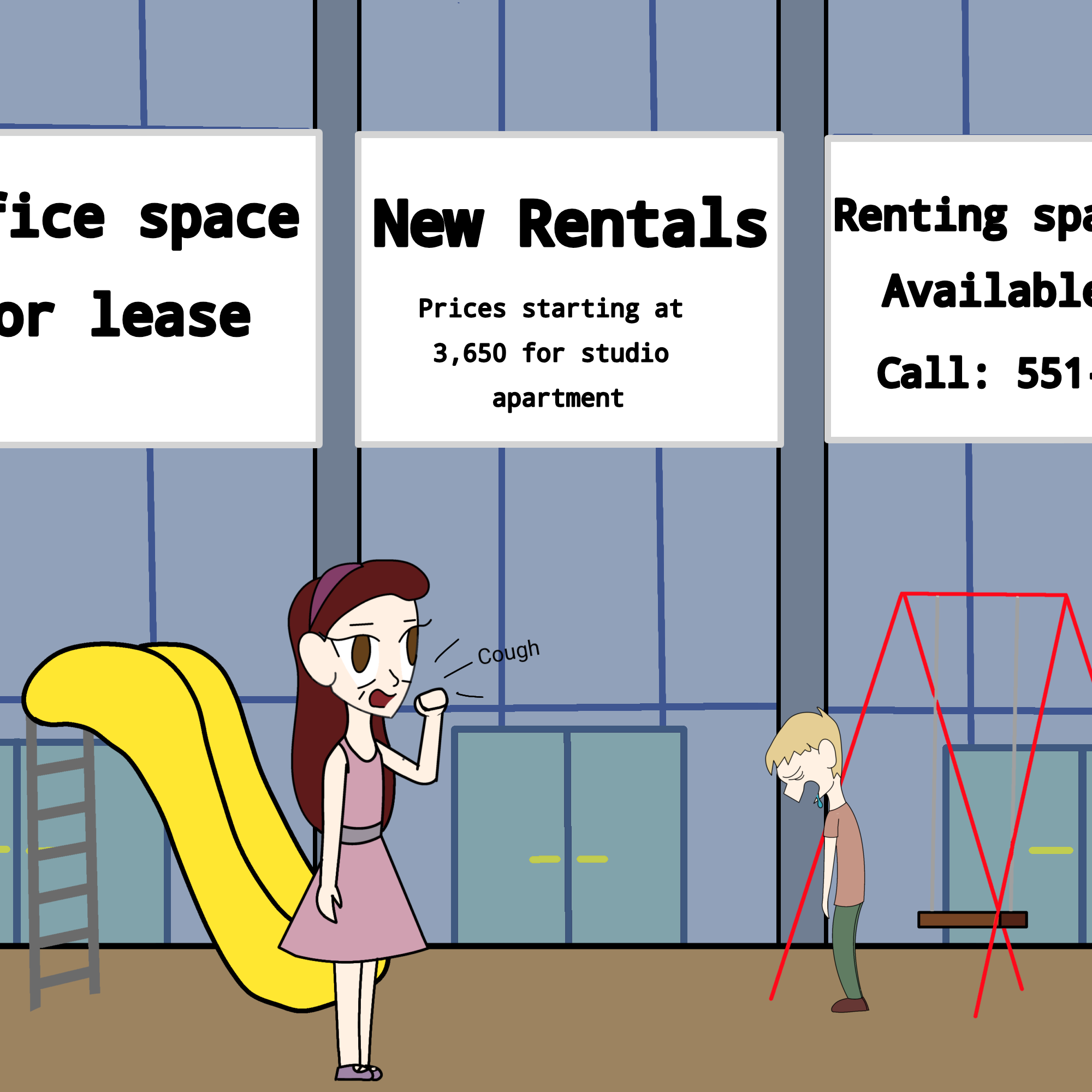
Junior, a Jersey City resident of 71 years, said he’s experienced many changes, but the one that’s affecting him the most is the cost of living in his hometown.
Back in his day, “$300 could get you an apartment and send your children off to college.” The average cost for a one-bedroom apartment today is roughly $3,300, which is 98% higher than the national average.
“I need my money, I’m poor!” Junior emphasized.
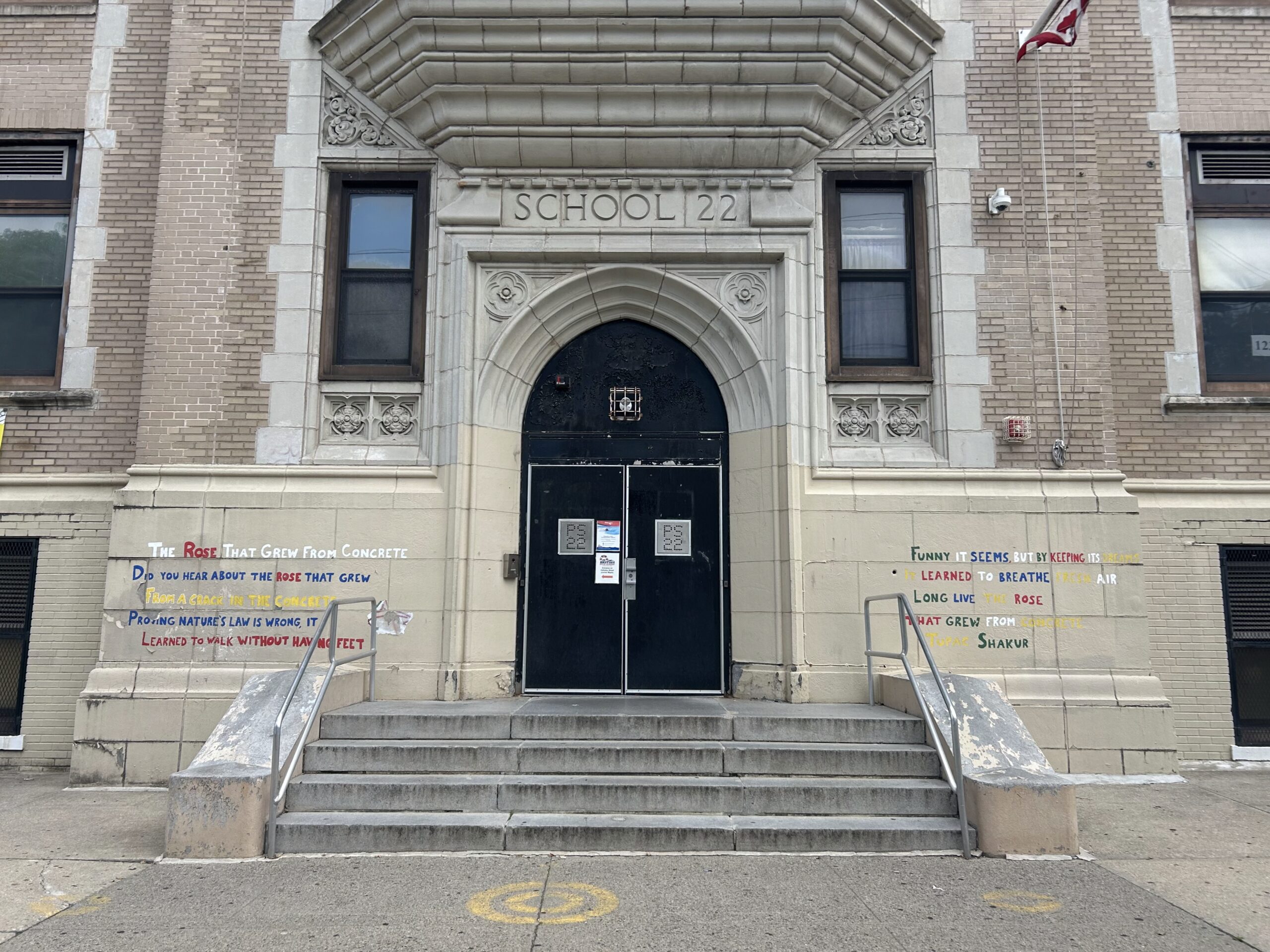
And this is a thought cycling through many residents’ minds, and they’re reminded when opening monthly bill statements and reading daily news. Though there’s no clear solution yet, Junior still continues to enjoy music on his porch every morning.
Many Residents Aren’t Happy
For many Jersey City residents, like Junior, there is a constant worry for the municipal budget, taxes and the consideration of moving—stressors that contradict the city’s OG given nickname “Chilltown.”
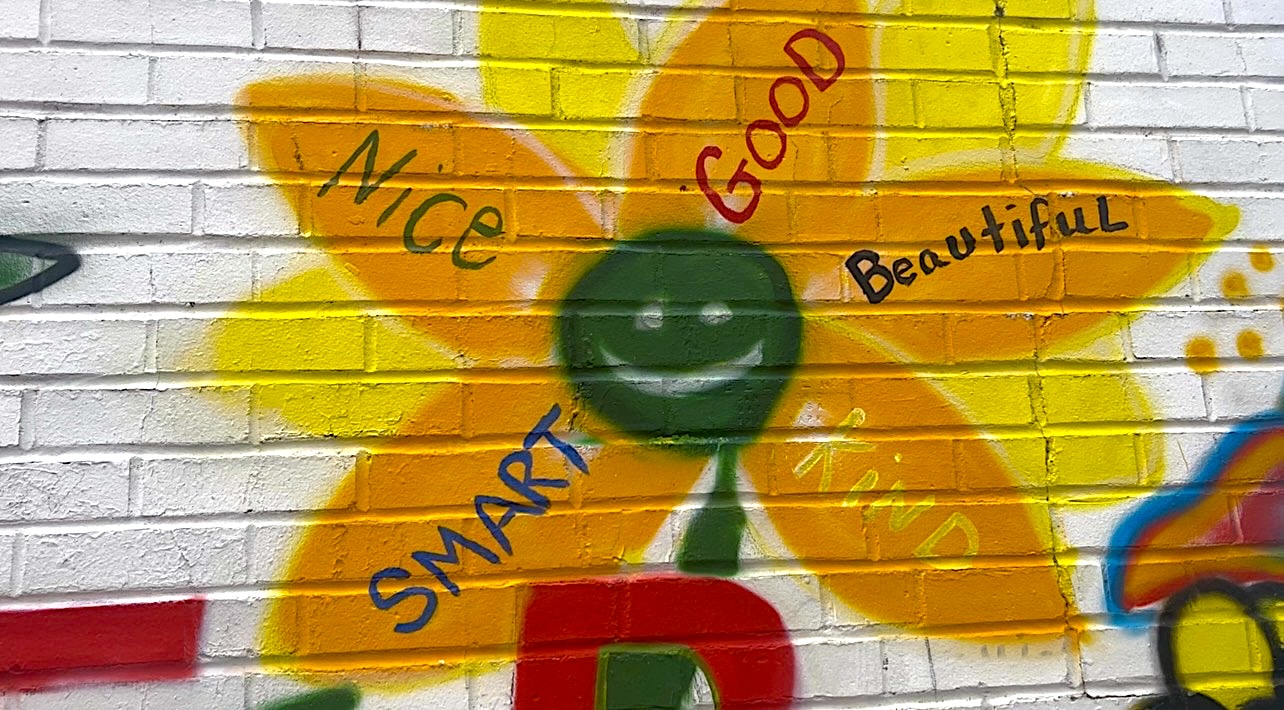
Arriving at Lafayette Park—better known by locals as “22 park”—, Csilla, a Jersey City resident, walked with her toddler. As she spent her Wednesday morning beneath the hot sun, she continued contemplating the decision to move out of Jersey City, a city that she proudly grew up in.
Talking to Csilla—who only provided her first name—said she’s just trying to survive in today’s Jersey City.
“I feel like so many people are being pushed out. [The property tax increase is] pushing out residents who have been here in this area for such a long time [and] pushing out middle class families, people that work,” said Csilla, who’s been a Bergen-Lafayette homeowner for over a decade.
“We are not happy about it at all,” she said.
And many residents are on the same boat, with up to 62% of New Jersey residents moving out, which is more than any other state as of 2025. The Garden State now has the highest outward resident migration for its eighth year in a row.
With elevated costs of groceries and utility bills, Csilla said, “It’s really just Jersey City isn’t becoming affordable… It’s hard. It’s definitely a tight squeeze… After we pay for everything, the budget has become much smaller throughout the years for people to enjoy life.”
She added, “I still do feel privileged and we feel blessed… But when I look around and I see others who are not as fortunate, I wonder what they feel when we know Jersey City is becoming like this?”
Residents have been scrambling about the city’s $255 million budget deficit, which the Solomon administration has claimed to be caused by “poor budgeting and cash management” inherited from the Fulop administration, which previously oversaw the city from 2013 to 2026.
In efforts to close the gap, Solomon has been entertaining a 15.5% property tax increase. As a result, residents said they feel that there’s no money being put back into the community, which makes Csilla feel like the mayor is “backstabbing every person who voted for him.”
Csilla also placed blame on developers “who [are] using automated [messages], and representatives calling homeowners offering to pay close to a million dollars [for their homes]… If you really think about it, it’s a savage tactic these people are using.”
With Hudson County home taxes being slightly more expensive to Bergen County—an average rate of $12,878 to $12,103, respectively—Csilla thinks “we’re paying the same thing [if not more] and we’re not really getting much for it… [like] the preppy things.”
And with the proposed property tax increase, residents like Csilla are wondering, “… [Is our tax money being] put back into the community? … There’s no YMCA anymore… Nowhere you can actually have affordable kid programs… P.S. 22 [is right] here [but] they can’t even create different programs [for] the kids.”

Making it to Berry Lane Park on Garfield Avenue, Gary, a local resident who only gave his first name, was sitting under a tree avoiding the heat. Talking about the proposed property tax, he stated, “I don’t agree with it, but that’s how [the system] is built.”
“The system can’t change [by themselves]. Systems can’t do that …. You gotta change the people who are in the system.”
– Gary
Solomon’s campaign promised residents to change that very system with his anti-corruption plan, focusing on the protection of Jersey City residents. The Jersey City city council will continue to deliberate the proposed 15.5% tax increase and municipal budget on Wednesday, Aug. 19 at 6 p.m. at City Hall.
You can check the City Council page to see if any special meetings are called, which could be listed here or Jersey City’s social media account.
Additionally, Prevailing Sentiment, which describes itself as a “Community for Progressives in New Jersey,” will be hosting a “counter-protest” on Monday, Aug. 17 at 1 p.m. at City Hall to “ask our elected officials to put Jersey City taxpayers first.”
You Have The Power To Change The System
Residents have more effect on “the system” than they think. From how many resources your local school district gets to what immigration law looks like, it all trickles down from who moves into city hall.
You can have a say in the process by making sure you’re registered to vote, speaking up at town hall or city council meetings or simply sharing your opinion on issues that matter to you.
Jersey City residents can exercise their right to vote at the upcoming Jersey City Board of Education Election on Nov. 3, 2026. For a full 2026 Hudson County Election Calendar, it can be found here. Find additional voter resources at hcnj.us/county-elections.
“Go more for the people. Look out more for the people,” Gary concluded.






One Response