Photo courtesy of the NJ Governor’s Office.
In this month’s edition of The Jersey Escrow, we’re breaking down Gov. Mikie Sherill and the State of New Jersey’s Housing Strategy and Progress Report that came out this month, outlining housing needs and how the administration plans to address them.

In the report’s introduction, Sherill writes: “New Jerseyans know housing is too expensive. They don’t have the patience for a 10-year study.”
The report is organized by five pillars, titled the following:
- Deliver more homes where New Jerseyans want to live, work and stay
- Increase New Jersey’s Speed to Shovel
- Partner with Municipalities to build and preserve housing
- Expand access to housing opportunities for New Jersey families
- Lower costs, fight unfair housing practices and keep New Jerseyans housed
One-page summaries are available at the introduction of the report, you can read here.
Pillar 1: Deliver More Homes Where New Jerseyans Want To Live, Work And Stay
Pillar 1 begins by illustrating how the high costs of housing affect New Jerseyan’s incomes.
The report defines New Jersey’s families as “cost-burdened” or “extremely cost-burdened,” meaning households are spending 30% or 50% of their income on housing, respectively. For lower income families, 50% is only a starting point; the report outlines that 72% of low-income households are losing more than 50% of their income to rent.
The report points to housing scarcity as the cause of “cost-burdened” families. “New Jersey simply has not built enough homes at every price point,” it reads.
According to data from the state’s Housing Governing Council, 350,000 to 406,500 homes need to be built in the next 10 years in order to adequately meet housing needs while addressing the state’s current economic standing.
With current affordable housing development initiatives happening now, like pushing municipalities to set development plans through law A4/S50, the state is set to create 22,000 to 28,000 homes per year.
Considering those projected numbers, 110,000 to 140,000 homes will be built in five years and 220,000 to 280,000 in 10.
Further in this pillar, the DCA estimates that 150,108 affordable homes will be needed in the next 10 years and 85,000 of those would need to be built.
Pillar 1 also cites higher interest rates and cost of construction from U.S President Donald Trump’s administration and racial inequity as an added obstacle for affordability and housing in New Jersey.
“Rising prices, high rents, displacement and limited access to credit and equity reinforce disparities for families of color, first-generation buyers, young people, seniors, and people with disabilities,” it reads.
What Will New Jersey Do To Address These Problems?
In a section titled “Our Strategy,” the report proposes the following:
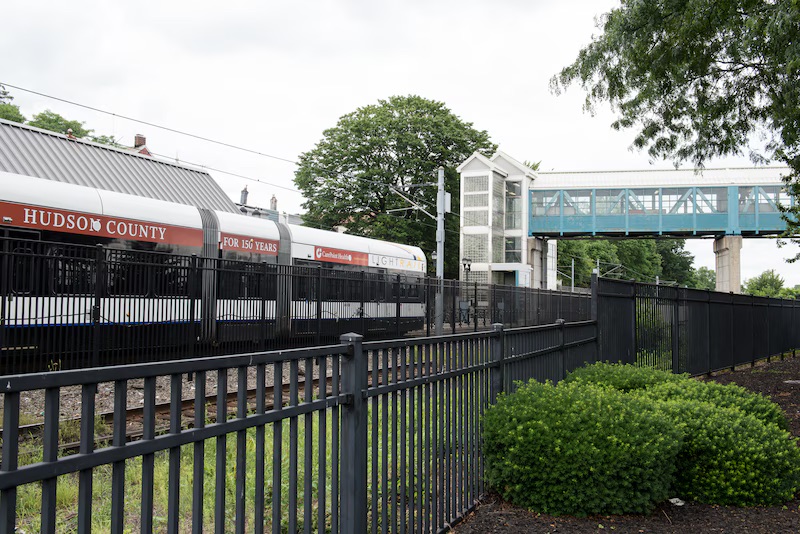
- Collaborating with NJ Transit’s real estate plan to build transit-oriented housing, as seen in Bayonne
- Turning empty malls and parking lots into spaces for housing, as proposed in Jersey City
- Building more starter homes like townhouses and duplexes
- Providing and creating affordable homes for teachers, nurses, police officers, firefighters, laborers and skilled workers via investment programs
- Continuing to invest in public housing, housing for seniors, housing for disabled persons and housing for the homeless
- Increasing investments that go towards the Affordable Housing Trust Fund
- Supporting mission-driven developers and non-profits, like Habitat for Humanity
While noting there is much to do, the Sherill administration displays their progress in housing efforts, such as passing Executive Order 17.
The order, signed in April 2026, formed the New Jersey Senate Community and Urban Affairs Committee to update existing affordable housing and create new legislation to support development goals. In May, they passed the following bills to the New Jersey Senate:
- S1803: Expanding financing opportunities for low and moderate income housing
- S3103: Dedicates 50% of profits made from fees and taxes on property transfers that are worth one million dollars for the state’s Affordable Housing Trust Fund
- S4066: Requiring the state to produce a report on under-utitilized state property and on their potential to be used for affordable housing every two years
The committee is also responsible for executing the above-mentioned strategy.
The report also acknowledges:
- Prioritizing funding for the Affordable Housing Trust Fund amidst budget cuts
- Developing 15 sites for transit-oriented housing in collaboration with NJ Transit and finding potential development in Hamilton, Camden and Atlantic City
- Identifying 2,300 acres of land for potential development
- Announcing a state housing inventory and preservation database, to facilitate property owner and municipality outreach for housing preservation
More milestones can be found on pages 13 and 14 of the report.
Next steps for this pillar include:
- Continuing to build mixed-income housing in North, Central and South Jersey
- Supporting housing, film and health development via the state’s Aspire program, which is currently on pause to re-assess priorities.
- Collaborating with mission-driven developers
- Advancing state and local policy in accordance with state housing strategy
You can read more about next steps on page 15.
Your local catch-up! Sign up for our biweekly newsletter for local events, more community stories, exclusive wallpapers and more!
Pillar 2: Increase New Jersey’s Speed To Shovel
Building housing in the state can take up to three to five years and depending on the complexity of the project, up to 10 years, delaying needed housing efforts.
Pillar 2 explains that developers must go through three approval and permit processes through municipal & zoning planning, local administration, the State and financial partners. Affordable housing projects have multiple funding and financial partners on municipality, county, state and federal levels, which all require their own separate application and review.
The background of this section proposes a streamlined process with transparency and collaboration from all parties involved for more efficient development.
“Slow approvals, permitting and utility connections cost developers time and money, delay or prevent viable projects from getting built, and ultimately prevent people from moving into the homes of their dreams,” the report reads.
It proposes the following to make financing and permits an easier process for developers:
- Removing permit barriers and streamlining approval processes through the Permitting Governing Council
- Modernizing the Municipal Land Use Law from 1976
- Coordinating affordable housing financing application processes to coincide with multiple agencies, such as New Jersey Housing and Mortgage Finance Agency, New Jersey Economic Development Authority, Department of Community Affairs, and the New Jersey Redevelopment Authority
- Moving applications from paper-based to electronic format
- Creating a team focused on planning, financing and development resources beyond identifying development opportunities
In addition to the creation of the Permitting Governing Council, the Regulatory Simplification Team was created according to Sherill’s Executive Order 5, signed in January 2026. These committees plan to work with state agencies to accelerate the finance and permitting process in order to create housing at a quicker rate, possibly cutting down the three to five-year wait time.
More information on the Sherill administration’s efforts can be found starting on page 18.
Pillar 3: Partner With Municipalities To Build And Preserve Housing
Pillar 3 establishes the Sherill administration’s intentions of creating more state and local collaboration in addressing New Jerseyan’s housing needs, highlighting that it’s an equal responsibility for both forms of government.
The background section acknowledges that strategies may vary from municipality to municipality, depending on its demographic and geographic location. However, it states that all municipalities could benefit from state support due to lack of staff, expertise, knowledge or resources.
“The State can help close those gaps by providing planning and predevelopment assistance, shared services, model ordinances, coordinated financing, infrastructure support and incentives that reward communities for expanding housing opportunities,” the report reads.
To help bridge this gap, the state’s strategy points to:
- Providing state grants to municipalities actively developing and redeveloping housing
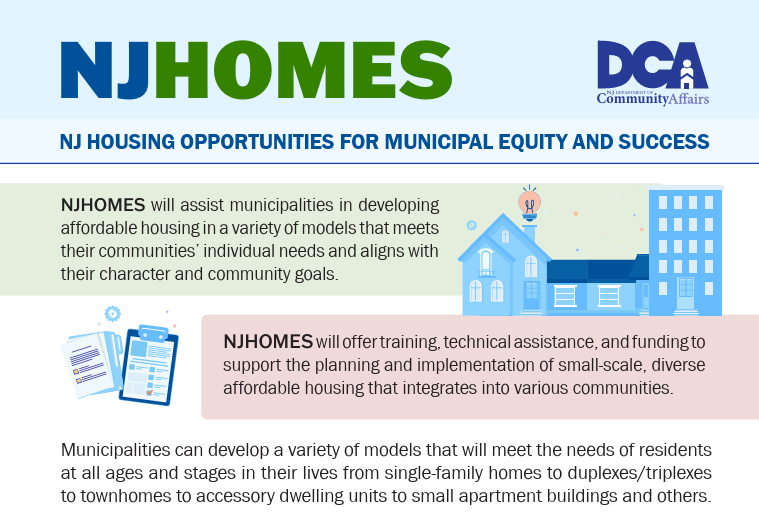
- Offering municipalities assistance programs such as NJ HOMES Program, which provides municipal employees with training, technical and financial assistance in their affordable housing planning
- Helping municipalities review their land-use laws for efficiency, modernization and considering current community needs
- Helping municipalities with data collection and reporting, a federal requirement
- Expanding shared services programs for site selection and developing on public land Union City and Jersey City are distinguished in this section for their efforts in repurposing underutilized land for affordable housing
- Offering tax advantages for investors who work with low-income communities
Here is what the Sherill administration has done so far:
- Requiring the Department of Community Affairs, New Jersey Department of Transportation and Department of Education to prioritize funding for municipalities with pro-housing funding
- Expanding the NJ Homes program to assist more municipalities in cohorts
- Creating the ROAD to Housing Compliance Support Tool, a searchable database/inventory of available public land
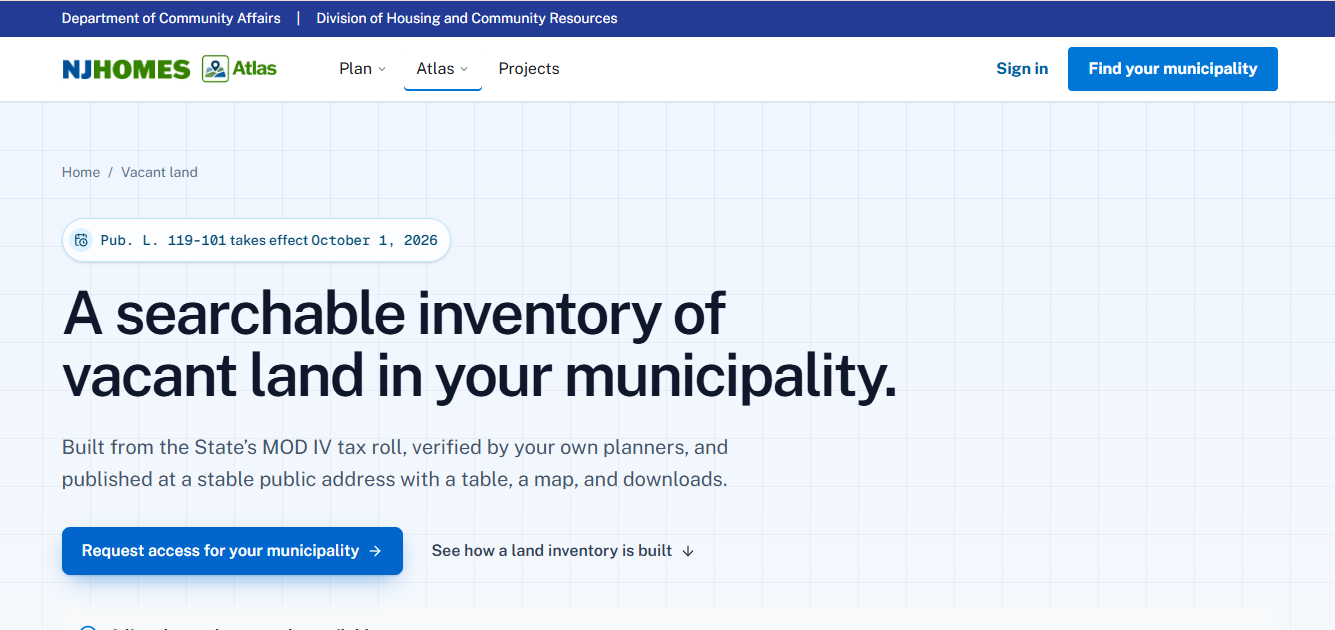
Similar to the state’s strategy, next steps for this pillar can be found on page 27.
Pillar 4: Expand Access To Housing Opportunities For New Jersey Families
Pillar 4’s introduction begins plainly: “For many New Jersey families, homeownership is unattainable.”
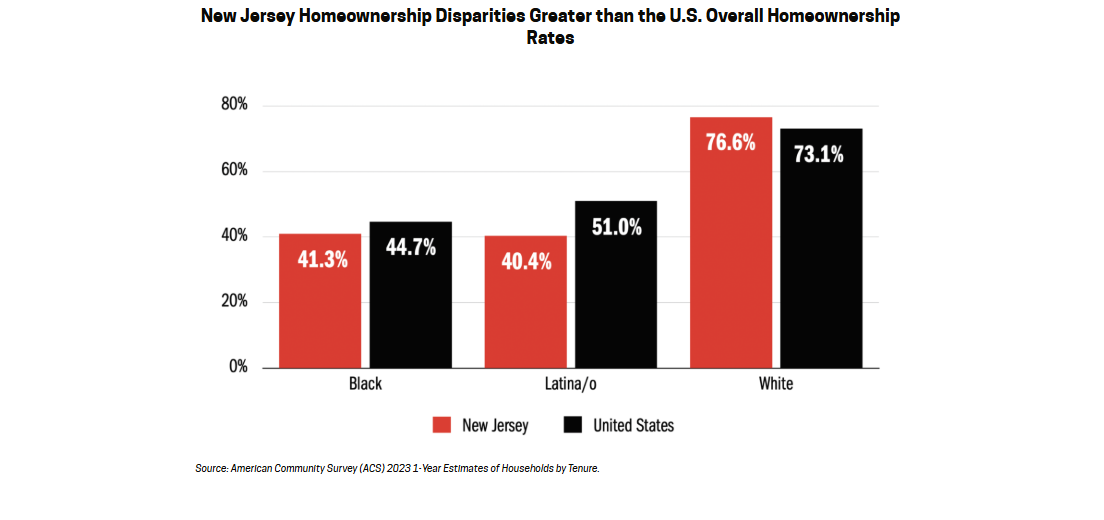
Citing rising costs and racial inequity, the report averages home prices as more than $500,000 with mortgage payments of $4,000 a month. With supporting data from the New Jersey Institute for Social Justice, it also states that more than 75% of white families in New Jersey own their homes, as compared to only 40% of Black and Brown households in the state.
The following is the state’s strategy to making homeownership more accessible for all New Jerseyans:
- Expanding down payment assistance programs, with a focus on supporting first-time and first-generation buyers. Currently, the New Jersey Housing and Mortgage Finance Agency offers two programs: the NJHMFA Downpayment Assistance Program and the First Generation Down Payment Assistance Program
- Encouraging state and local administrations to promote starter homes like townhouses and duplexes
- Supporting rental assistance programs for very-low and low income families, like Housing Choice Vouchers, the State Rental Assistance Program, and the Supportive Housing Connection Program. Please note the Housing Choice Voucher program waitlist is currently closed
- Partnering with organizations to create a rental assistance application process and information guide
The report reads that the Down Payment Assistance Program and First Generation Down Payment Assistance Program recently received more funding through the Sherrill Administration’s 2027 budget. In this same budget, $80 million have been set aside for the State Rental Assistance Program, or SRAP.
The following are immediate next steps the Sherrill administration plans to take:
- Prioritizing funding for rental assistance programs in future budgets
- Responding to federal budget cuts by finding temporary solutions, referred to as “stop-gap” measures in the reporting, but no specific outline is provided
- Encouraging the development of starter homes through programs like NJ Homes, that educate municipalities on development
- Collaborating with renters and organizations with a focus on renter advocacy (like Hudson County’s The Waterfront Project) to make finding existing adorable housing easier through technology
Pillar 5: Lower Costs, Fight Unfair Housing Practices And Keep New Jerseyans Housed
Pillar 5 addresses the rising cost of living and homelessness in the state.
To protect New Jerseyans from eviction and homelessness, the state plans to:
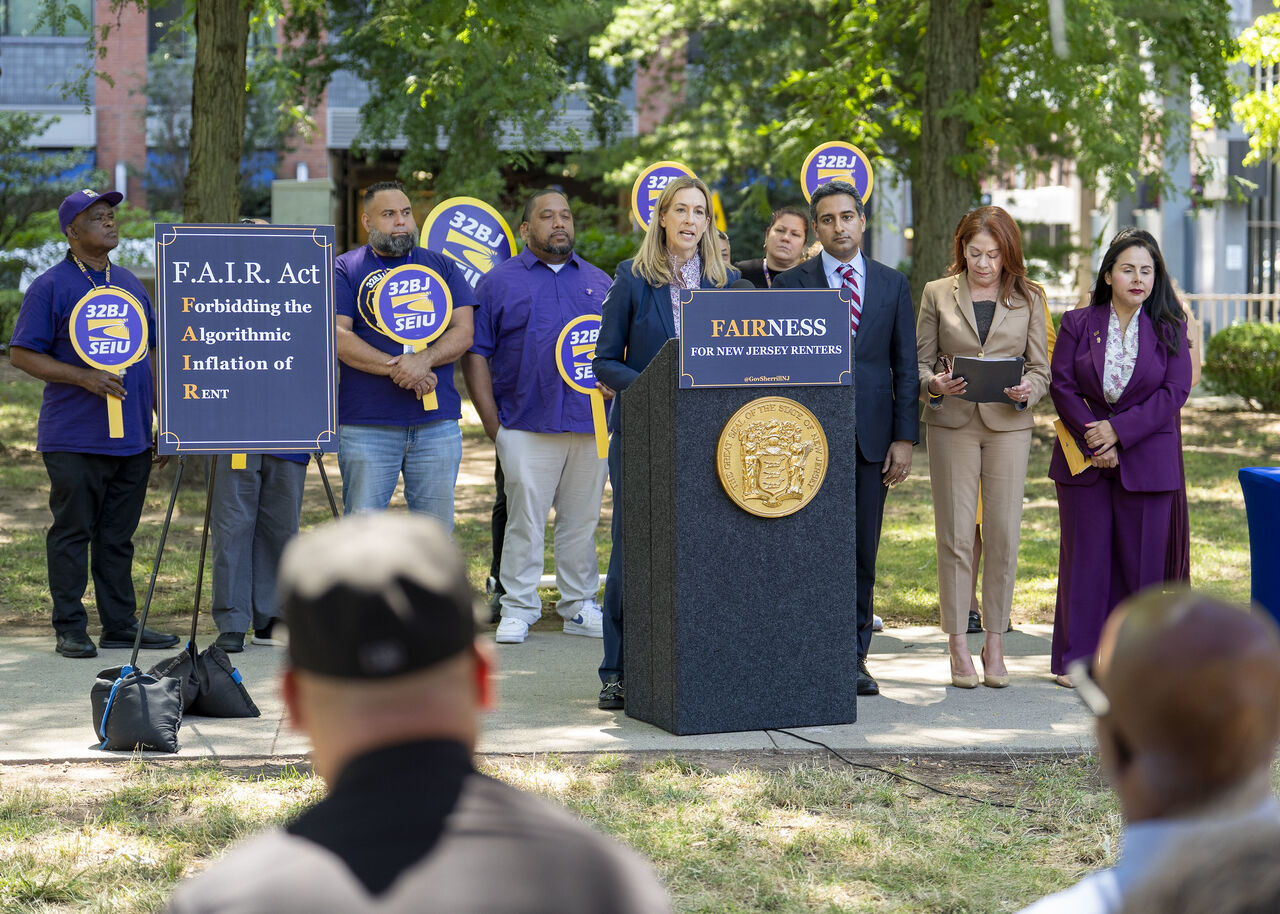
- Creating policy to protect renters and homeowners from unfair pricing. In July, the Forbidding Algorithmic Inflation of Rent, or FAIR, Act was passed to stop the use of systems like RealPage. These systems compare rent rates in an area and competitively raise rent
- Helping low- and middle-income homeowners, people with disabilities, and seniors with property taxes through financial investments and services
- Lowering energy costs, which are currently frozen and under state of emergency
- Collaborating with the state’s Office of Eviction Prevention and NJ Courts to prevent evictions and foreclosure by sharing data on eviction filings and creating intervention programs. Similarly, the state would like to facilitate more collaboration amongst state agencies, counties, municipalities, organizations and service providers to invest in affordable housing
- Continuing the Bringing Veterans Home Initiative and creating similar programs for different demographics
Here is what the Sherrill administration has done so far:
- Passed the FAIR Act, as explained above
- Prohibiting landlords from charging more than $50 on rental applications
- Setting aside $4.2 billion towards ANCHOR, Senior Freeze and Stay NJ in the 2027 budget
- Working with the Attorney General’s Office and the Division on Civil Rights to fight against housing discrimination, source of income discrimination and past criminal history
- Suing the Trump Administration through the Attorney General’s Office in response to cutting funding for providing permanent housing for homeless individuals
- Issuing a total of $7 million in grants to provide legal assistance, case management and financial support to those facing housing instability through the Department of Community Affairs

More milestones can be read on page 37 of the report.
The following are all the resources provided by the report, accessible to New Jersey residents:
- ANCHOR program is a property tax relief for New Jersey residents who own or rent property in New Jersey as their main form of housing
- New Jersey’s Senior Freeze program reimburses the state’s senior citizens and people with disabilities for property tax or a mobile home park site fee
- The Stay NJ program also offers property tax benefits for New Jersey homeowners. Interested applicants can apply online or download their application
- The Bringing Veterans Home Initiative connects veterans in need to service providers to find stable housing in under 30 days. Veterans in need can fill out a self-referral form here or call Vet2Vet at 1-866-838-7654
- The NJHMFA Downpayment Assistance Program and the First Generation Down Payment Assistance Program are programs to help first-time homeowners make their down payment. Interested applicants can fill out the Participating Lenders form
- The Housing Choice Vouchers, the State Rental Assistance Program, and the Supportive Housing Connection Program are programs created for very-low and low-income households to find affordable housing and rental assistance. Please note the Housing Choice Voucher program waitlist is currently closed
Know any New Jersey housing news or resources we should include? Email Chelsea Pujols at [email protected].