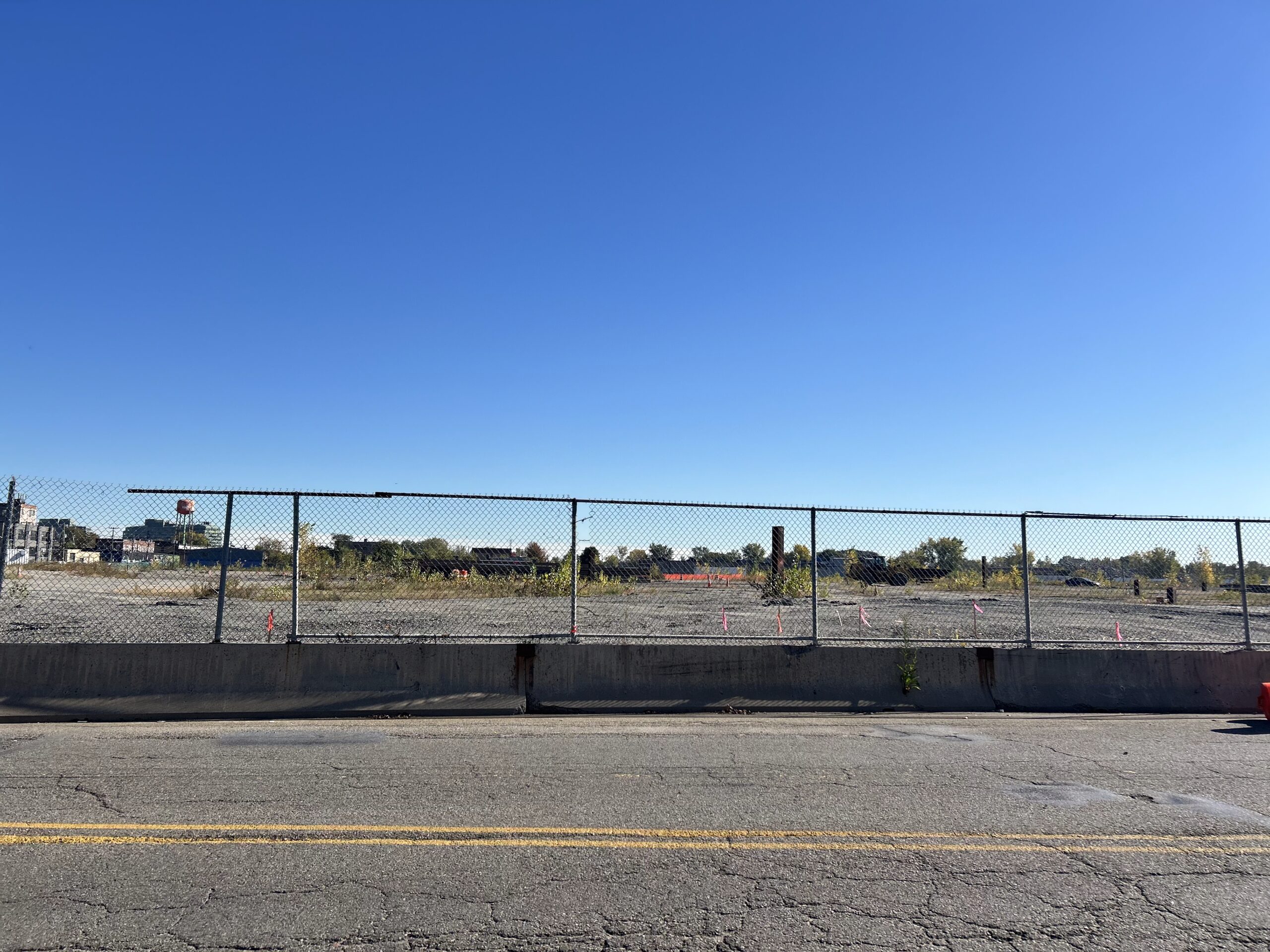
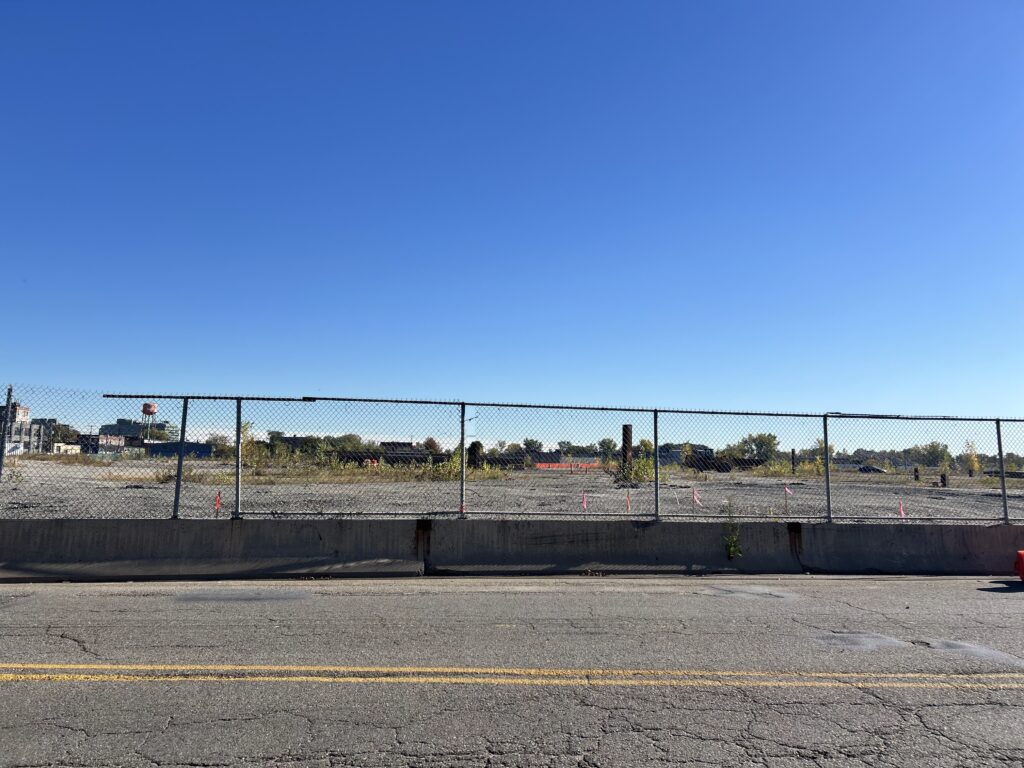
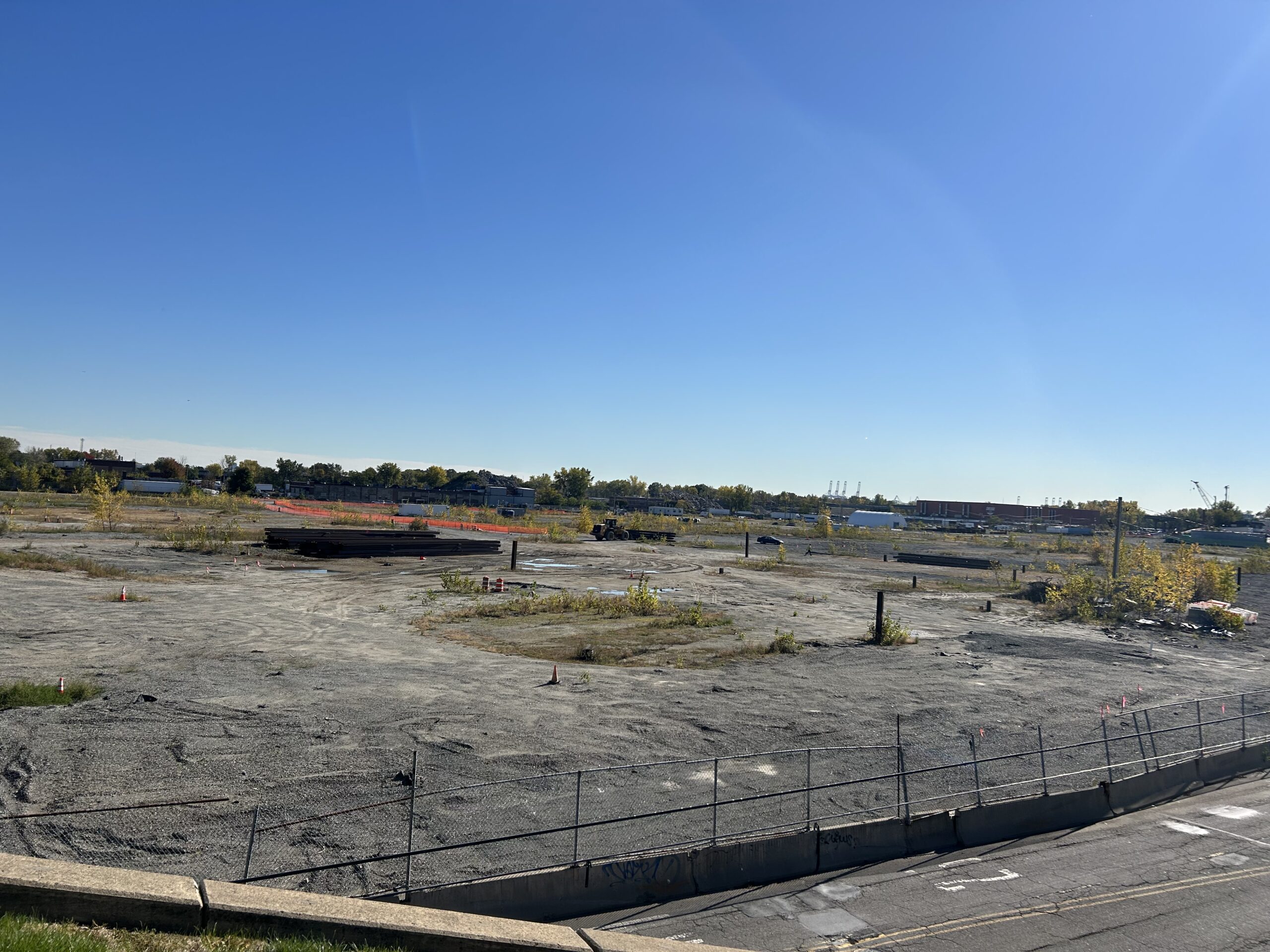
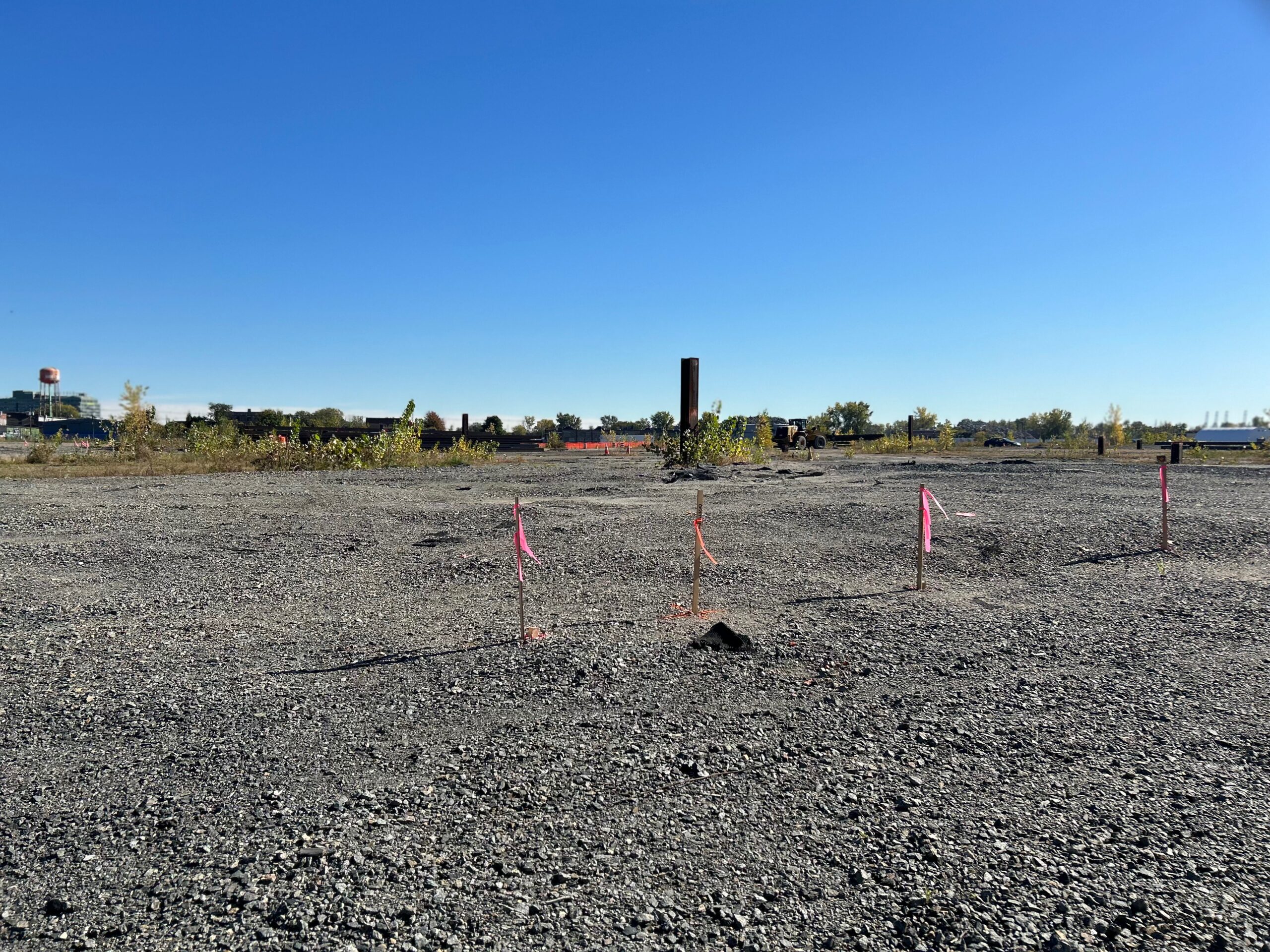
The site at 900 Garfield Avenue. (Adrienne J. Romero / SOC Images)
For decades, community activists have been vocal on the environmental and health impacts on the 111-acre Canal Crossing site in the Bergen-Lafayette area of Jersey City, which at one point longtime residents could recall “green water” oozing out of the ground.
Today, the city is looking to rebuild on that land.

The Jersey City Municipal Council gave the green light for the financial agreement for the Canal Crossing project, which calls for 508 new homes on the site at 900 Garfield Avenue, near the Garfield Avenue Light Rail Station, according to the city’s site.
The vote was met with seven council members approving with both Ward F Councilman Frank Educational Gilmore and Council President Denise Ridley abstaining in their vote.
Gilmore admitted on the record that he received campaign donations, not directly from the developer, “but someone that works with the developer,” he added on Sept. 23 at the general council meeting, where the project received final approval.
Ridley added that she was abstaining for similar reasons.
The redevelopment project would establish 102 units to be designated as “affordable,” with some rents set at $1,000 or less. The city will also have funds dedicated to the project with $3.5 million awarded to Jersey City by the Regional Transportation Alternatives Program for construction of the greenway in four phases.
“We went into this negotiation with one question: what do the working people of Jersey City get in return? The answer is over 100 affordable homes, union jobs, a new park and greenway that the developer is now paying, and tax revenue worth 13 times more than the property is currently generating,” said Deputy Mayor Keshav Poddar, who has since then resigned from the Solomon administration, as previously reported by Slice of Culture.
“This is a new standard for development in Jersey City and we look forward to many more projects like this in the months and years to come.”
To get the project built, the council approved a 30-year Payment in Lieu of Taxes (PILOT) agreement for the land, meaning, the property will pay less in taxes than it would under the standard rate—there would be two 30-year tax abatements for the two phases of the project.
Under these negotiations, the city has claimed the project would generate approximately $1.9 million in taxes expected in its first year of operations, up from roughly $65,000 of daily costs.
But a caveat of the agreement, is the Jersey City Board of Education will have 10% of the monies from the PILOT revenue set aside to support local schools.
A ‘Win’ For Union-Backed Work
The site was previously owned by PPG industries, an industrial painting company on the 111-acre Canal Crossing site in Bergen-Lafayette who reportedly discharged chromium waste that spread to more than 130 locations across Jersey City.
The early stages of the site’s latest approval process took place after the first tract of the 900 Garfield Avenue property was cleared by the Jersey City Planning Board. An applicant by the name of Boraie Development owned the property since 2018, according to the terms of the agreement under the purview of the Jersey City Redevelopment Agency.
Council touted the efforts of leaning towards more projects with a union-backed labor, to which Ward B Councilman Joel Brooks reverted to a personal tone on how unions gave him an opportunity to pursue higher education.
“I’m the first college graduate in my family, and I would not have been able to do that if my dad was not a union member,” Brooks said. “Unions changed the trajectory of my family. For this development, build it safe, build it right, build it union.”
The first building designed by Beyer Blinder Belle, will rise 10 stories and hold 293 apartments, according to the project’s renderings reviewed by Slice of Culture. Of those, 59 will be set aside as affordable housing. The mix includes 39 studios, 160 one-bedrooms, 80 two-bedrooms and 15 three-bedrooms.
The ground floor will hold 11,426 square feet of retail space split among three storefronts along with 212 parking spaces.
The installment of the second phase will be a six-story, mixed building with 215 apartments, with 20% set aside for affordable housing. It will include 16 studios, 116 one-bedrooms, 73 tw0-bedrooms and 10 three-bedrooms, along with 68 parking spaces and 6,900 square feet of ground-floor commercial space.
But Some People Still Have Concerns
But the former industrial site also carries its own dark history in Jersey City.
“My family members died from that area, we had people die down there, you hear me?” said LaVerne Webb Washington who told the council she had relatives who lived on the property and scolded the council. “I lost family members, I thank God I am still alive.”
“We believe any surrounding development must respect the natural environment,” said Natalie Limon, a member of Hudson County Tree Allies, a grassroots environmental organization advocating for the protection and preservation of green space.
“We are deeply concerned by any proposal that prioritizes concrete over canopy or risks compromising local environmental health displacing longtime residents…it’s a developer giveaway.”
“When we look to put industry again next to residential, it defeats the purpose,” said June Cross, the president of the Morris Canal Community Development Corporation (CDC) in a phone interview with Slice of Culture.
She added that the redevelopment plan for the project was fleshed out from the Morris Canal project, but the sirens went off, when she filed a lawsuit back in 2021, suing both Jersey City and the city’s planning board for the proposed 17-story, 416-unit high rise development project at 417 Communipaw Ave.
The crux of the suit cast blame on the city for engaging in what she referred to as “spot zoning” or when the municipality cites a different zoning classification for the selected property, in this case, the community pushed back saying it bypassed community input from locals and sped up gentrification in the Bergen-Lafayette neighborhood.
Critics noted that the city had already been awarded $1 million in state Green Acres money to turn the site into a parkland, an extension of Berry Lane Park. Some residents of Ward F, she added, worry that the project moving forward, “would speed up the process of gentrification.”
“The community has vested interest in all of this and should be a part of the decision making process,” she said, noting that the administration has not reached out to the CDC in following up on community feedback with the happenings of this project.
Other members of council made prior discussions with the developer known at the Jersey City Municipal Council meeting on Sept. 23.
“I challenged the developer more…people don’t really want to see big and invasive buildings in their backyards blocking their way,” said Gilmore.
“We have watched countless buildings go up and even now you almost have to bend the developer’s arm on 10%,” referring to the city’s inclusionary zoning ordinance, required by municipal housing law to set aside 10% to 20% for affordable housing.
Back in 2022, the Ward F councilman showed his discontent with the proposed 17-story residential and commercial redevelopment project, with former Mayor Steve Fulop calling his opposition a “baseless lawsuit.”
Jersey City’s model ties union work to public incentives. The city has required developers of projects costing over $25 million with long-term tax breaks to enter Project Labor Agreement (PLAs), or a prehiring agreement with unions.
That arrangement was challenged in court. The Associated Builders and Contractors’ New Jersey chapter sued, arguing the abatement-linked PLA violated federal labor law.
An appeals court found the abatement didn’t give the city the financial stake of an investor or owner. A management-side attorney said at the time that unions had exclusive rights to at least 20 projects under the ordinance.
Still, the latest decision for the Canal Crossing project is seen as a heralding win as union workers who stood outside the steps of City Hall expressed to Slice of Culture, prior to the Sept. 23 council meeting.
“We are here in numbers, local unions exist and we demand a livage wage,” said Chris Capers, a longtime resident and a member of Laborers’ International Union of North America Local 3 to Slice of Culture.
“Without this project, we risk losing jobs.”
What’s next for the Morris Canal Project? Construction is set to begin the “second half of 2026” as posted on the city’s site.