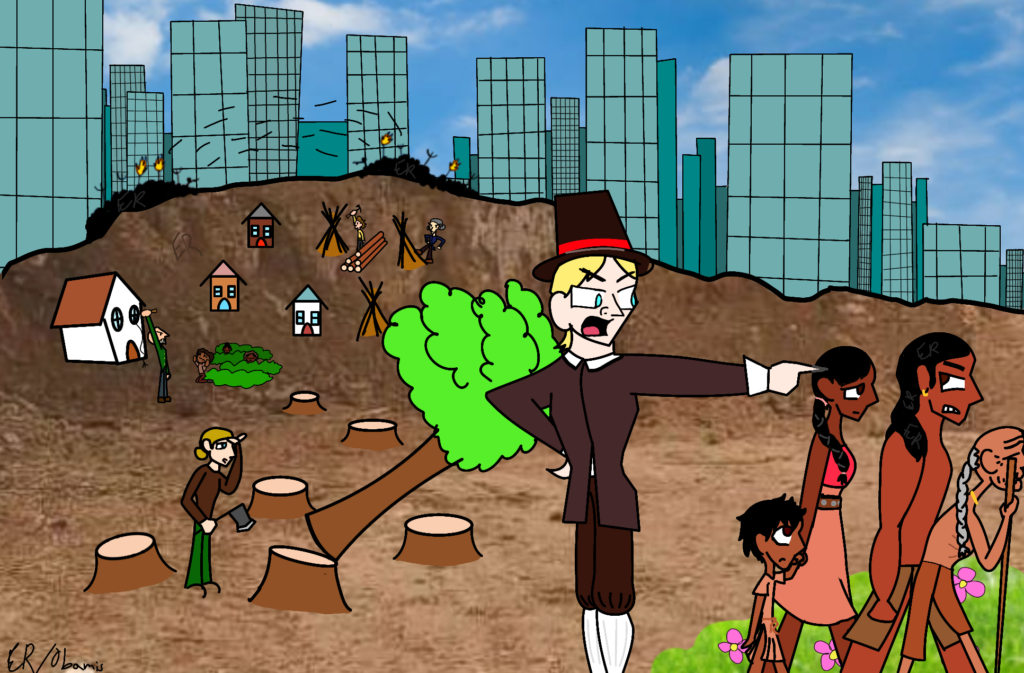
Illustration by Elizabeth Romage / SOC Images.
This marks the first part of Slice of Culture’s collaboration with Branch Four, a nonprofit organization that seeks to merge data science and local journalism to inform communities across the country. We will explore Hudson County’s past, present and future through data collection and community-centered story telling.
Though a eurocentric view of history marks the “end” of them due to European exploration and westward expansion by the United States, New Jersey’s original people still hold a significant part of the state’s legacy, including Hudson County.
Now living in states like Oklahoma, Ohio, Indiana, Kansas or Texas, New Jersey was first inhabited by fishers, hunters and gathers called the Lenape people, respected for their skilled negotiation skills and deep value of diplomacy. Their land, which is now known as “New Jersey,” was once called “Lenapehoking,” meaning the land where we dwell.
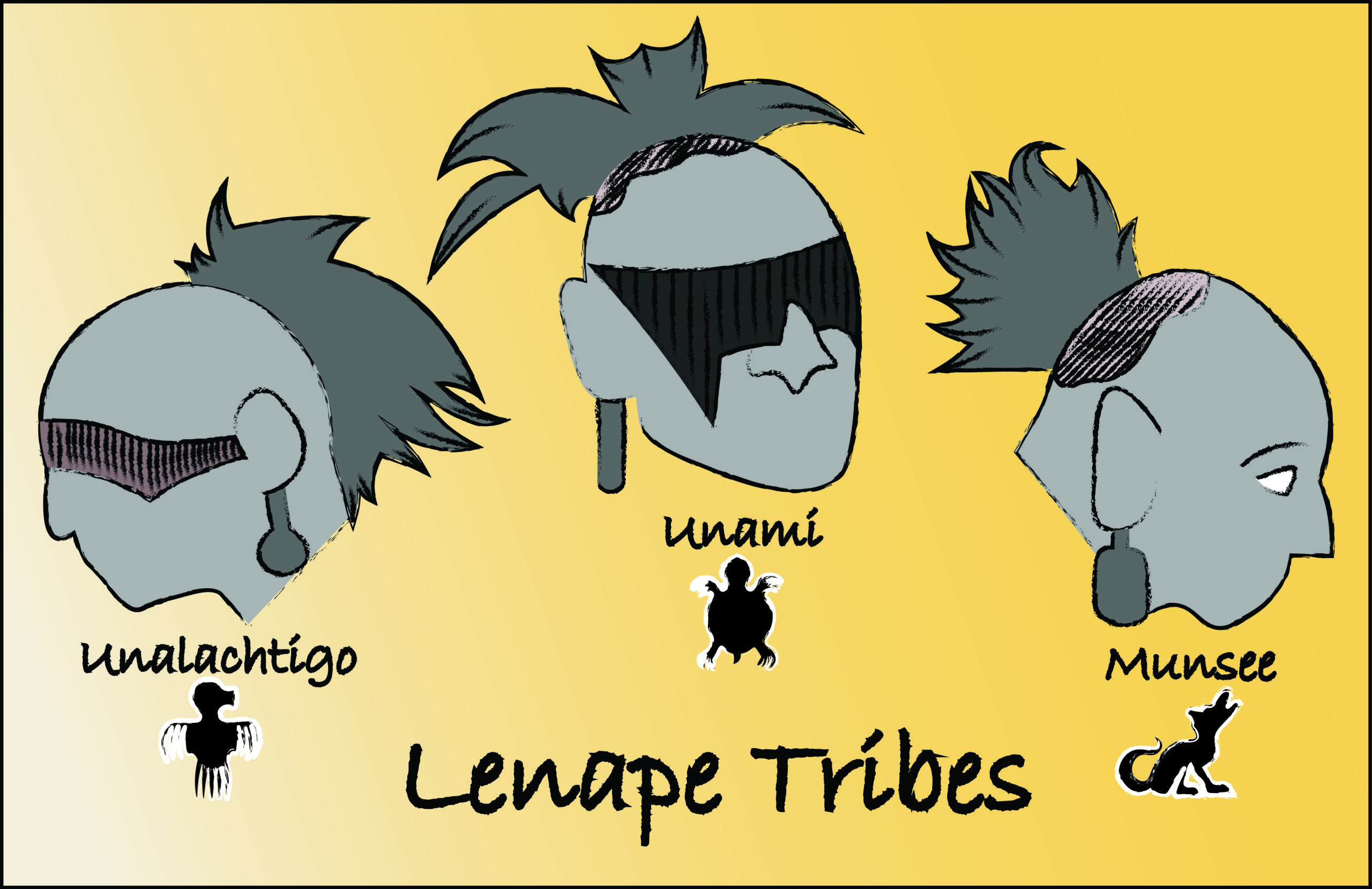
The Munsee, Unalachtigo and Unami are also the names of dialects spoken by three family clans: Wolf, Turkey and Turtle. The Munsee lived in the north, the Unami lived near valleys and riverways and the Unalchitago lived near the ocean, marshlands and the Delaware River. Despite their differences, they all held structured societies with a great emphasis on community autonomy, according to the Delaware Nation in Oklahoma.
Regional leaders, who were democratically elected and referred to as sakimas, often met to discuss issues in the community and negotiate. Alongside them in decision-making were women, mothers and grandmothers, who made decisions for family clans and its lineages passed through them.
Families lived together in wigwams: huts surrounded by trees for protection. Young men were sent away from their birth tribes when they came of age. Age was measured by wampum beads on belts.
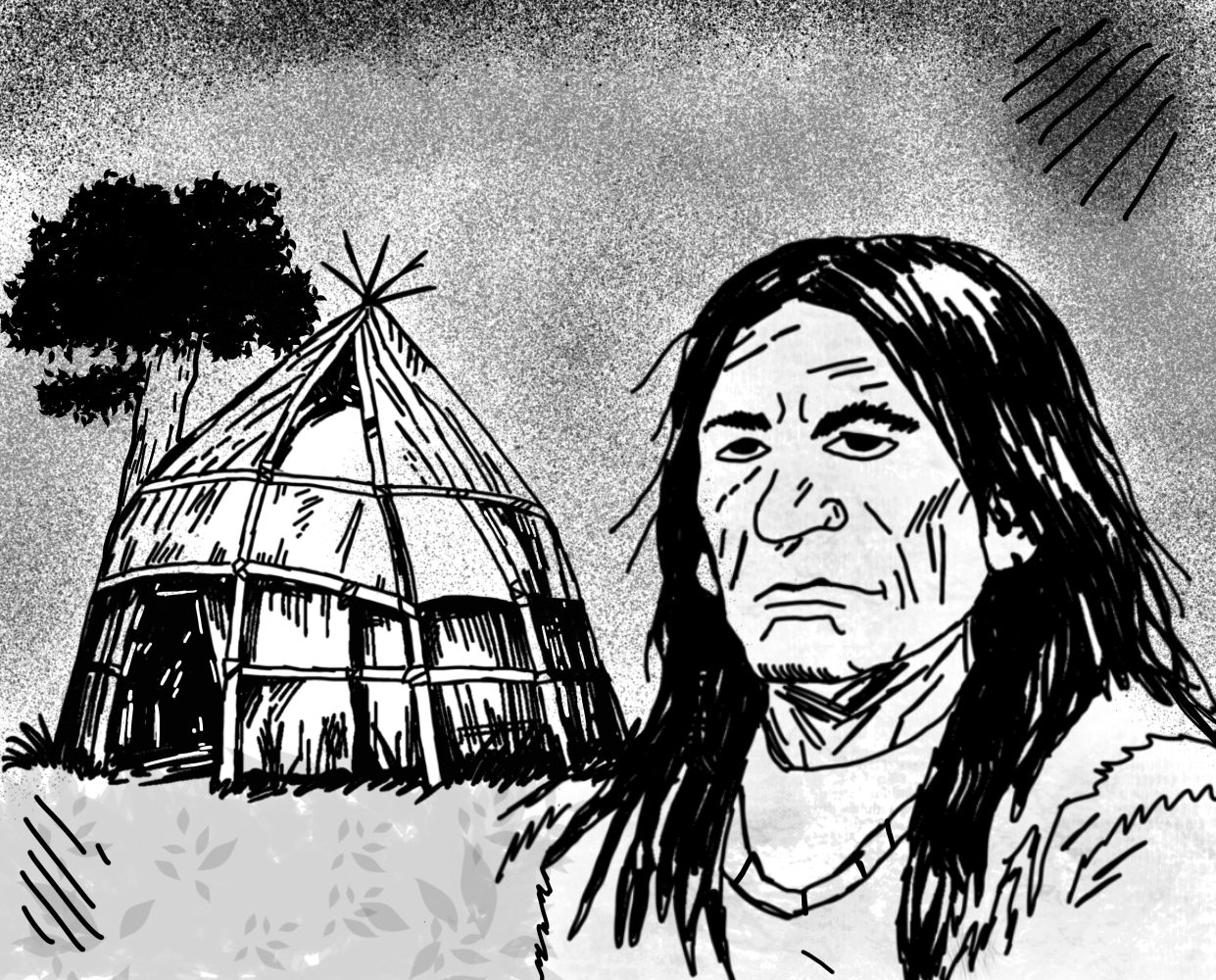
Chief Lappawinsoe of modern-day Pennsylvania, whose name means “gathering fruit” or “going away to gather food,” had tattoos of two thunderbirds and a snake. According to “The Thunderbird Motif In Northeastern Indian Art” by Edwark J Linek, the thunderbird is a powerful spiritual being that provides protection and power.
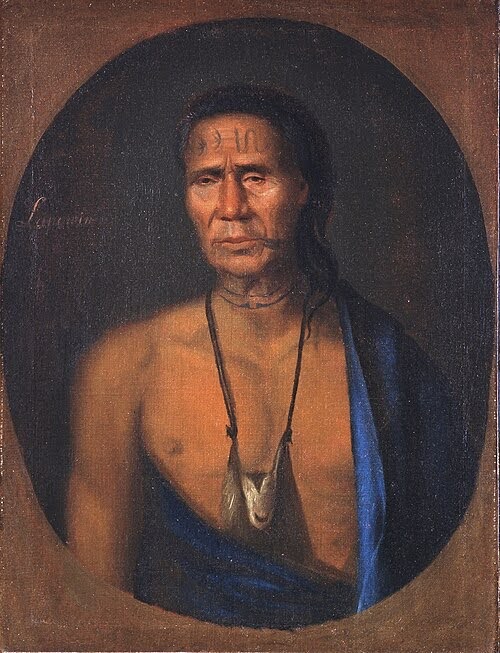
Now out west, the Lenape’s influence still lingers in Jersey City as communities preserve derivatives of their original names.
The Paulus Hook neighborhood was once called Arresick or Arressechonk, and served as a burial ground for the tribe. Parts of Liberty State Park were used as a temporary settlement and the Communipaw neighborhood was a summer encampment and council fire for the Lenape Hackensack tribe.

Communipaw might come from the word “gamunk,” meaning “on the other side of the river” or “pe-auke,” meaning water land or big landing-place.
Harismus Cove, which could be translated to mean “Crow’s Marsh,” was a seasonal encampment for the Hackensack tribe. The Lenape people called the Greenville neighborhood Pamrapo or Mingakwe, according to Finally Home JC.
Jersey City locals find themselves actively trying to remember their city’s forgotten history through organizations like Area of Refuge, who teach the community photography skills. Amidst higher rents, more expensive paths to ownership and gentrification pricing out locals, these tools help them feel empowered to document their surroundings.
They host photowalks in places like Journal Square where participants are encouraged to focus on their perspective of their city and its changes. The photos are then given a home in the organization’s own publication and archives, supported by the Jersey City Arts and Culture Trust Fund.
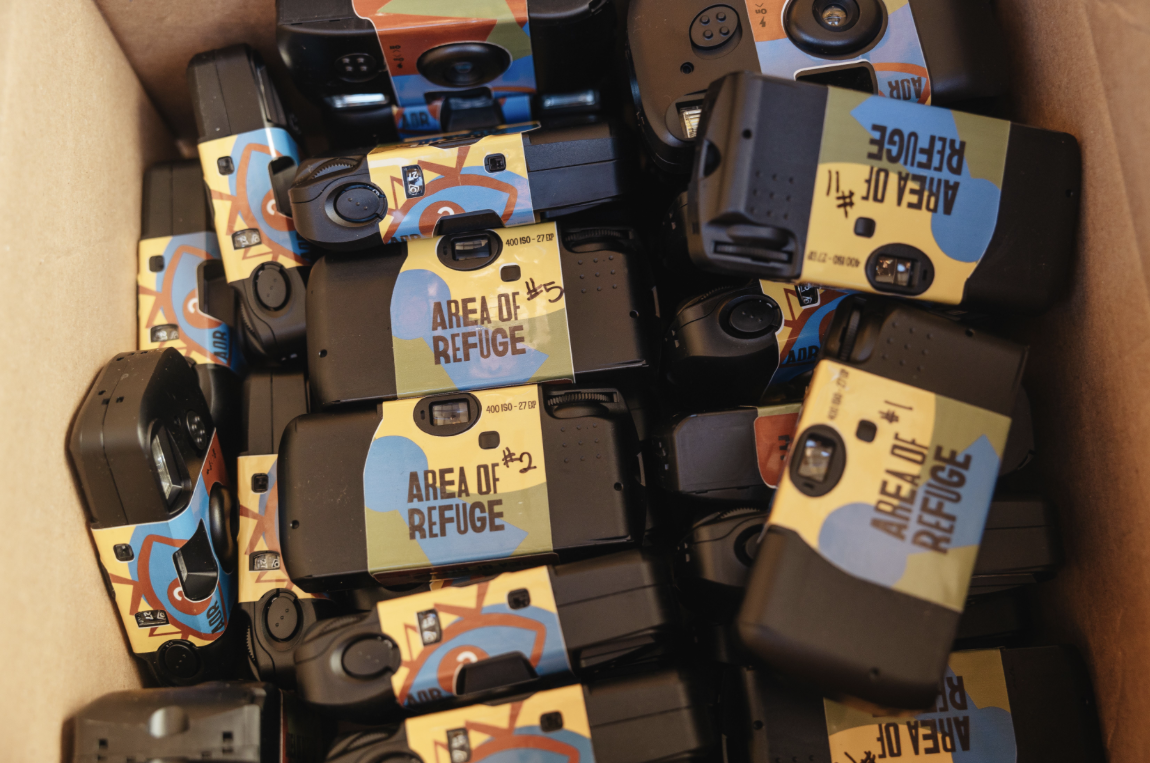
“Art and photography has opened up the door to speak with more people about what they remember about their communities,” photographer and founder Brian Winston Frasier told Slice of Culture.
Frasier said art, photography and documentation, while perhaps overlooked by some, captures “what makes you special” during times of change. To Frasier, remembering that speciality, is to remember the reason why people love their communities.
“The reason people move to Jersey City is because of that cultural diversity, because of that freedom. When you’re looking at the paleo, the Native American, or Native Indigenous communities who have built culture, you’re talking about Irish, you’re talking about Black, you’re talking about Latino communities, Asian, Southeast Asian, so many people: communities that make Jersey City the most diverse place.”