

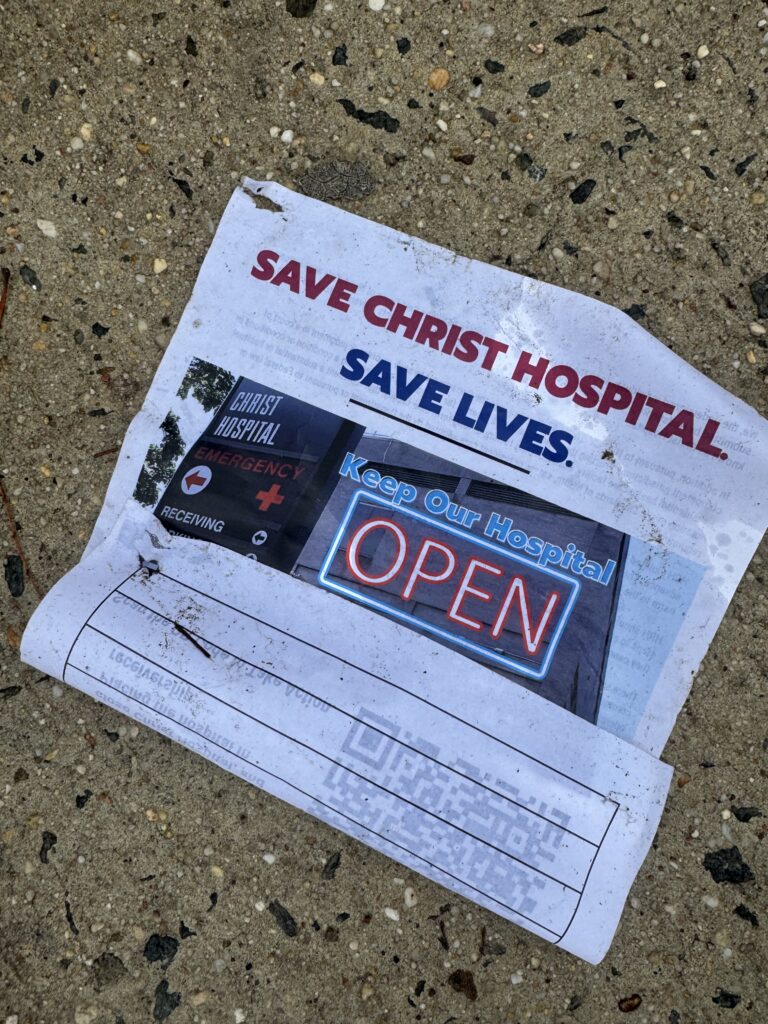
Photo by Jordan Coll / SOC Images.
Eight months ago, Jersey City and surrounding communities were left with one less hospital in Hudson County. And today, the community remains in limbo.
A letter was recently released urging the New Jersey Department of Health (DOH) to arrange a long overdue meeting on the abrupt closure of Christ Hospital.
“Every week of delay is another week that Jersey City—a city of 300,000 people—operates with a single emergency room, and another week that Hudson Regional Health (HRH) avoids the public accountability the law and sound public policy requires,” read the letter sent over to Slice of Culture.
The letter drafted by the Save Our Hospital Coalition, a grassroots organization, has been advocating for the reopening of the healthcare facility and to adhere to the DOH public hearing.
“New Jersey’s Certificate of Need law exists precisely so that a private operator cannot simply close a hospital’s doors and dare the State to catch up.”

To add insult to injury the HRH closed its operation circumventing a 30-day process to conduct a public hearing addressing the community’s qualms of the sudden closure.
In a ruling held last month, Hudson County Superior Court Judge David Katz ruled the DOH was acting in the clear authority of its state jurisdiction when it denied the withdrawal of the Certificate of Need (CN3), a regulatory approval from the DOH to begin the process of either opening up a new facility, expanding medical services or purchasing additional equipment.
The attempt by HRH to retract the original request on the landlord claiming that it violated the terms of its lease was a point of defense brought by HRH on the June 24 hearing at the Hudson Superior Court, as previously reported by Slice of Culture, underscoring Hudson Regional Health, the health operator for Heights University Hospital, was then denied the request under DOH, lifting the temporary restraining order at the department, which was vacated by the judge on June 24.
While the hospital’s closure has left Jersey City and its surrounding communities with a widened health infrastructure gap, what is essentially being debated over is a hospital that is already closed.
“A plethora of challenges beyond HRH’s control contributed to the extremely precarious financial state of Heights University Hospital,” said Vijay Chaudhuri, the vice president of community and external affairs of HRH, in an email statement to Slice of Culture.
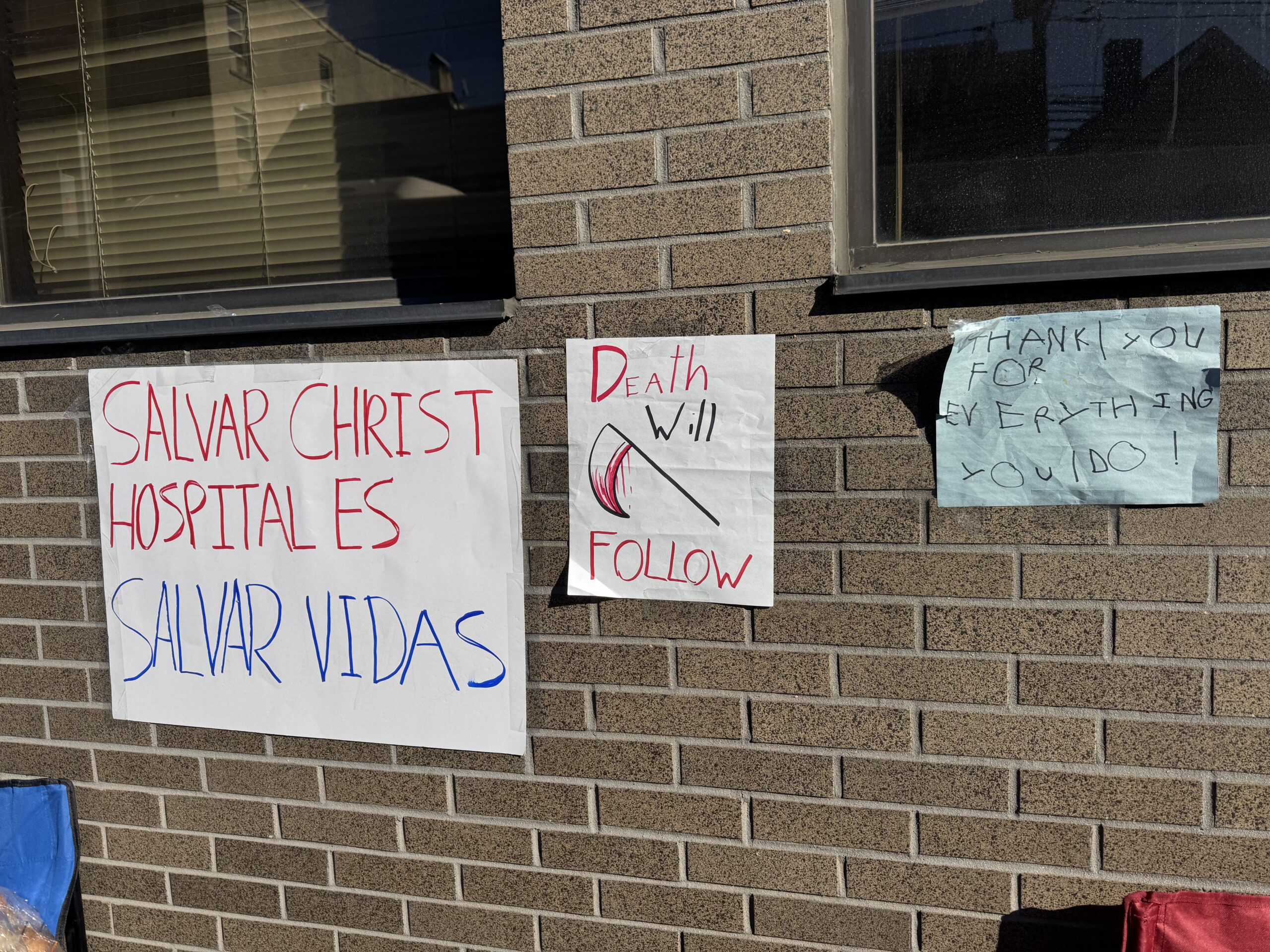
The closure of the hospital has put a strain on residents on Jersey City’s healthcare grid, who said that this has become a trend nationwide in prompting healthcare deserts or communities cut from life line services such as hospital institutions.
When news broke about Christ Hospital’s financial woes earlier this year, residents arrived at the site of the hospital and decried the efforts of their hospital closing, as previously reported by Slice of Culture.
“I have seen in my lifetime living in Jersey City, the Fairmont Hospital closed, the Jewish Hospital closed, Saint Francis closed…and Christ Hospital,” said Yvonne Balcer, who spoke at the Municipal Jersey City Council meeting.
“There is a reason why hospitals across the United States are closing.”
According to a scathing report published by the watchdog human rights group Public Citizen, an estimated figure of $911 million in federal spending on Medicaid and the Children’s Health Insurance Program (CHIP) will be cut under the One Big Beautiful Bill, ushered in by the Trump administration.
In 1986, former U.S. President Ronald Regan passed the Emergency Medical Treatment and Active Labor Act (EMTALA) which required Medicare enrolled hospitals to provide emergency medical screening and stabilizing medical care, despite immigration status or ability to pay.
As for the city of Jersey City, it seems to have shifted tides when it comes to exercising legal threads in responding to HRH’s efforts to cease the area for commercial and real-estate profits. Jersey City Mayor James Solomon told Slice of Culture that the city would be considering legal avenues of appealing the decision, “we are looking into options,” confirmed Solomon.
Former council members Richard Boggiano, for Ward C, and Solomon, for Ward E, co-sponsored an ordinance last December that would aim to ban senior housing and housing from being built in the already medically zoned facility under the city’s master plan.
On June 5, the ordinance became a trivial measure when Hudson County Superior Court Judge Joseph Turula struck down the ordinance, leaving a win for Hudson Regional Health.
New Jersey’s Healthcare Gap
Jersey City’s emergency care crisis is by the numbers.
The national average sits at 2.4 emergency room beds per 1,000 residents, according to figures placed by the Centers for Disease Control and Prevention (CDC). In Jersey City, that number has been cut in half.
The closure of Christ Hospital left the city’s 300,000 residents with just 1.2 ER beds per 1,000 people, raising concerns of an imminent healthcare desert in the area. On a given commute day, an additional 400,000 people flow into the city through public transit, funneling through the Holland Tunnel and PATH train system.
Add it up, and nearly 700,000 are dependent on a shrunken emergency care system. What has become telling, is the federal cuts ensued by the Trump administration, which have added to approximately $3.3 billion in medicaid cuts to hospitals and public health funding.
Renée Steinhagen, the executive director of the New Jersey Appleseed Public Interest Law Center, a legal clinic, who is representing the public as the amicus brief said of Christ Hospital, “people are hiding something, they are making deals.”
“The failure of the government to act expeditiously and ensure that the public is being protected is a serious problem, and unfortunately it is setting a precedent for other closures.”
While hospital closures not abiding by the proper review of the NJDOH has become a lethal trend in New Jersey, intensive care units (ICUs) at Inspira Medical Center Elmer and Inspira Medical Center Mannington in Salem County have followed through proper protocol and are pending approval to close.
“Inspira Health has applied to the NJDOH for approval to close our ICUs at Inspira Medical Center Elmer and Inspira Medical Center Mannington,” said an Inspira Health spokesperson. “While that application is pending, we are providing critical care services at those locations subject to physician determinations of where best to serve a given patient, which are made on a case-by-case basis.”
Down in Trenton, a bill moved forward last month at the Assembly Health Infrastructure Committee, as reported by NJ.com, a group of six members, to impede healthcare facilities from running due to bankruptcy or significant state violations.
“The legislation makes sure that we hold the muscle to account in the family communities without critical care,” said Assemblywoman Katie Brennan (D-32), who spoke to Slice of Culture over the phone.
She discussed the legislation is intended on holding hospitals accountable, including a bill that increases fines and may seek to ban bail leaseback, which she added contributed to the hospital bankruptcies.
“The mandated public hearing is in the works,” said Brennan, who added that a potential hearing would be set by the state the first week of August on the matter.
Residents who spoke to Slice of Culture said that the closure of Christ Hospital has caused a domino effect on the healthcare grid of Jersey City, leaving patients upended for health care services.
Walter McDermott , a longtime resident of Jersey City, was checked in at Jersey City Medical Center in March and was released the following month.
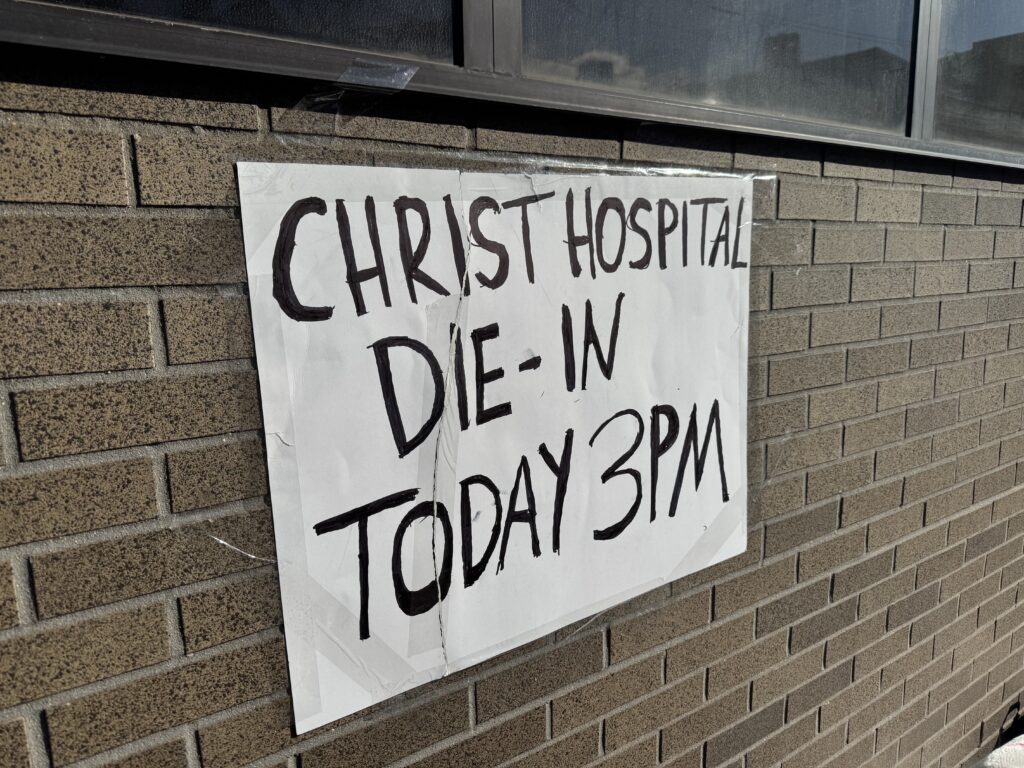
“The hospital was buzzing, with many of the staffers asking where else will these patients go?,” said McDermott, noticing that the hospital was overcrowded and what he heard staff members phrase as waiting in a “fish bowl” or in other words, waiting to be attended by a physician.
“I do not hear anybody asking the question,” he added, referring to how the hospital will receive future funding in the event of opening up their medical care services. He recalled nearly a decade ago, walking through the doors of Christ Hospital, as a result of injuries he faced on his toe.
“They could not even find a pillow for me,” he added.
To keep track of the assigned public community hearing on Christ Hospital you can click the link on the New Jersey Department of Health site for updates on the date.












One Response