Photo by Jordan Coll / SOC Images.
Editor’s Note: This article is updated with clarification on Melody Lee’s quote.
Hudson County is getting a tax increase.
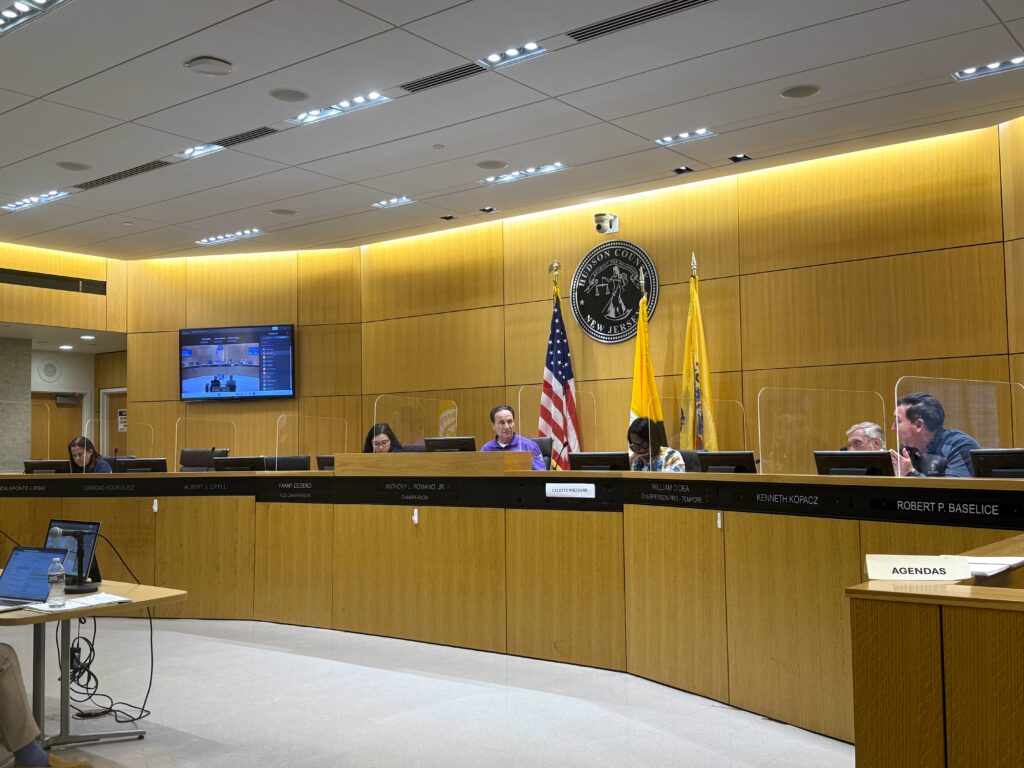
In a caucus meeting held last week, the county’s budget was introduced by Hudson County Executive Craig Guy and unanimously voted to introduce this year’s budget–delivering the 13th consecutive increase to the county’s tax base alongside a rise in municipal tax levies and cutting costs for the county rather than overspending amidst financial woes.
The total county budget sums to $769,667,257.

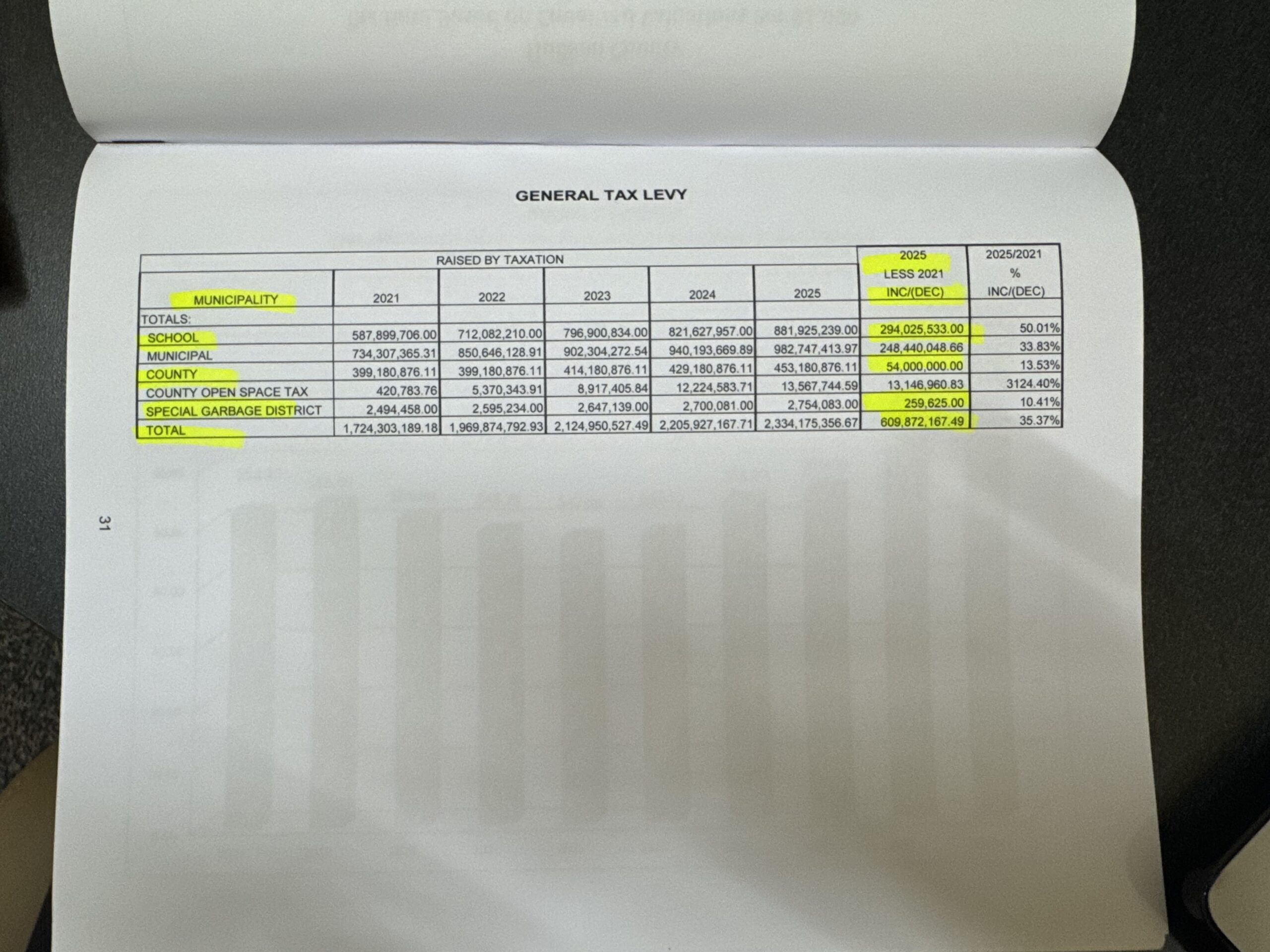
From that budget, the total tax levied, or fee collected, by the local government is $495,180,876.11. Last year’s tax levy, or the government’s withholding of assets and property of, was $453,180,876.11, which is equivalent to a 9.27% increase.
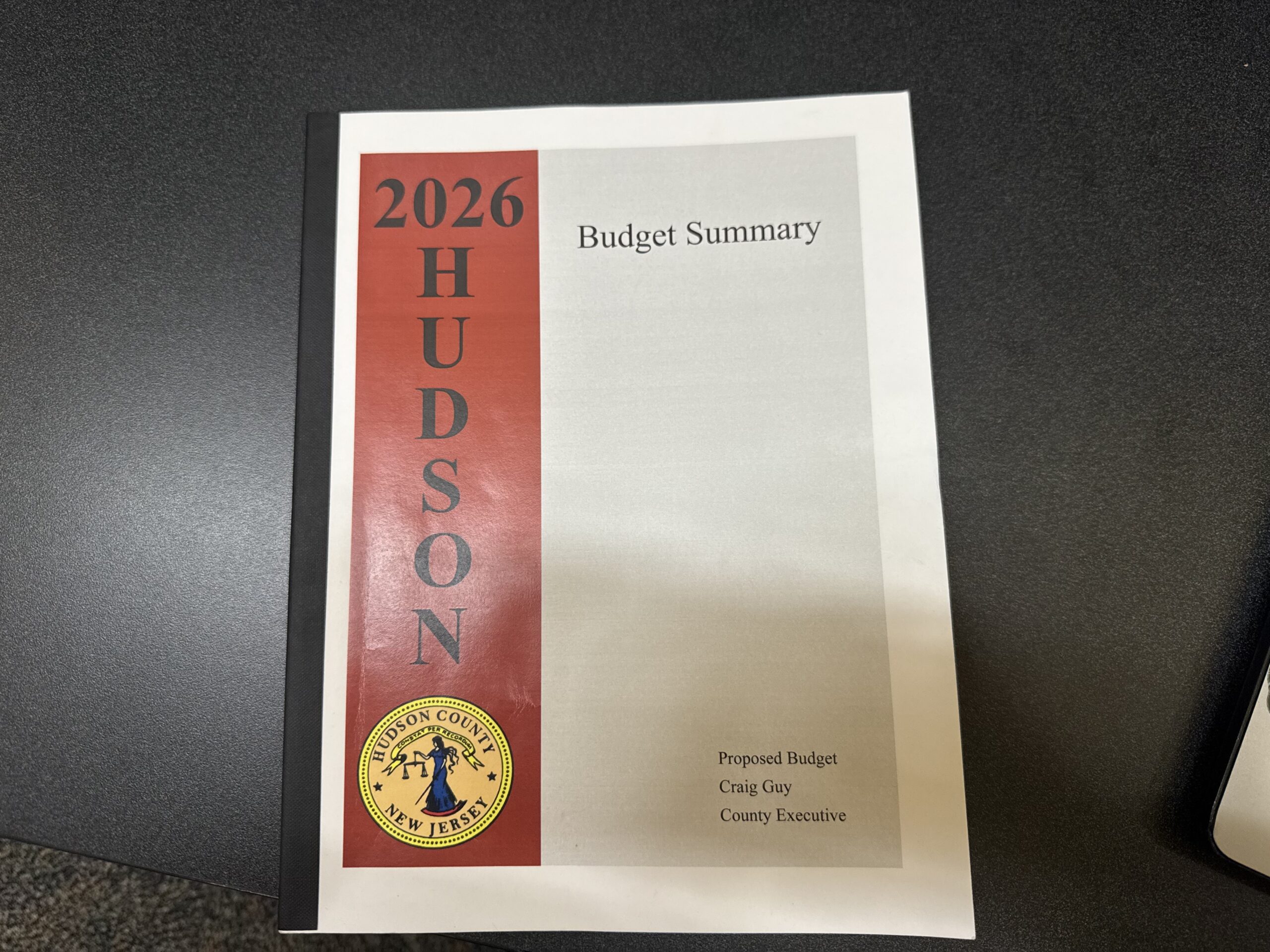
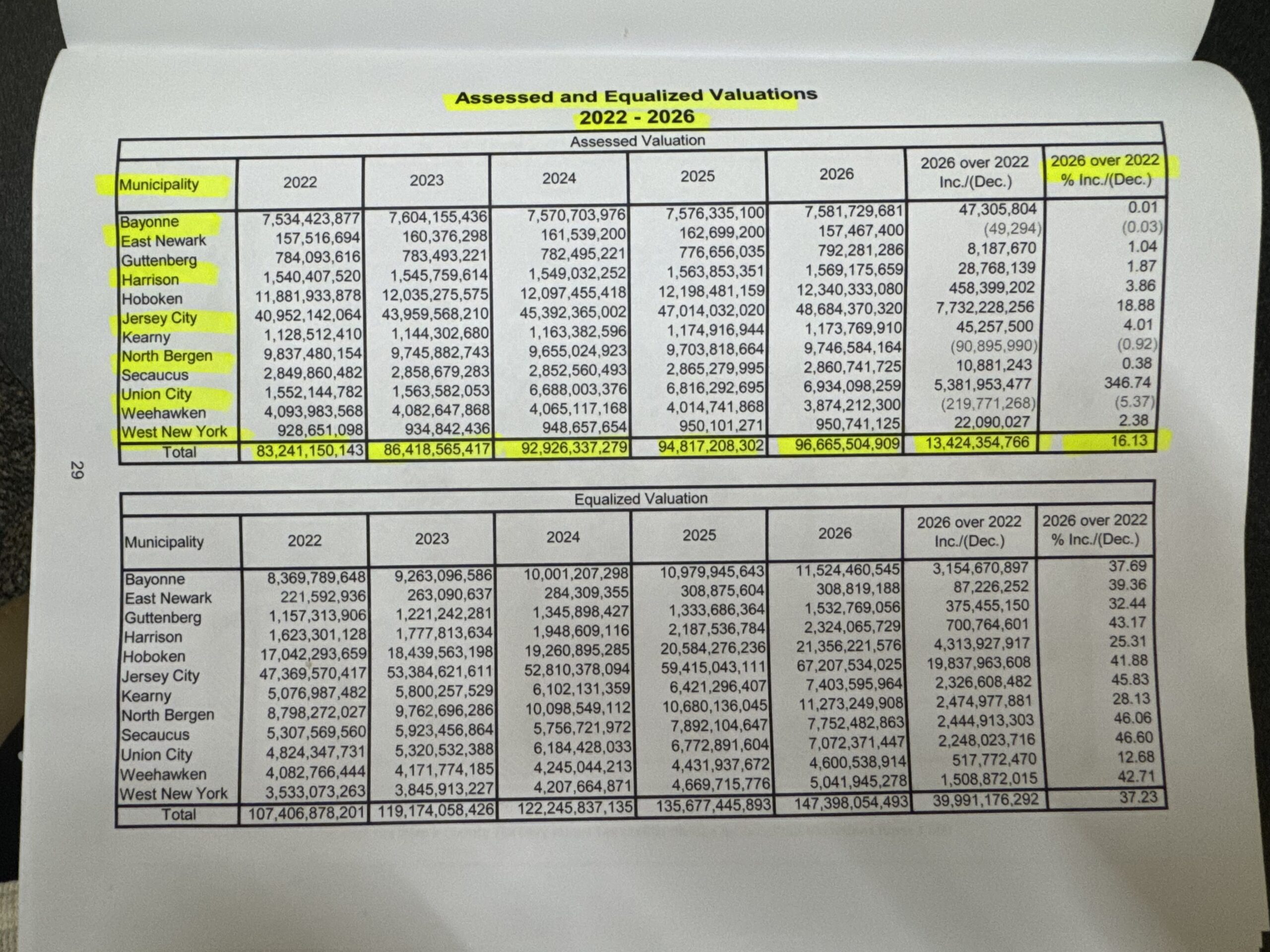
The current county’s tax base increase for this year’s budget is $11,720,608,600 or a 8.64% increase, from $135,677,445,893 to $147,398,054,493 according to the budget summary, which is not up on the official site, but Slice of Culture was exclusively provided a copy of the report.
The sum of the increase for the county’s budget totals to a $42 million increase.
The proposed 2025 tax levy is $453,180,876.11, representing an increase of approximately $24 million — or 5.59% — over the 2024 levy. Excluding grants with offsetting revenues, total appropriations are projected at $694,558,810, up from $656,573,290 in 2024, an increase of 4.23%, according to the county’s budget summary.
Cheryl Fuller, the county’s finance director, and John Inagaki, county deputy finance director, told Slice of Culture in an internal meeting that two costs are driving the bulk of the county’s expenditures: healthcare and education.
Fuller cautioned that the county’s share of any individual’s tax burden isn’t distributed equally across municipalities.
“It depends on your own municipality,” Filler said. “It’s not allocated equally among all the towns. It goes along with the tax allocation and their rates… the rateables in the towns.”
How This Affects The Everyday Taxpayer
“We don’t agree with this,” said Melody Lee, a longtime Jersey City resident and a landlord who spoke to Slice of Culture criticizing the financial mishaps of the Fulop administration, acknowledging that Solomon inherited the problems and now hopes the new mayor does better by it—which equates to a tax hike of 14.42%—a strain Lee added is already being felt by homeowners.
“Those high rise buildings [Kushner] are not helping people out…they are too expensive.”
Lee added that tenants from 808 Pavonia Avenue have complained about rental price spikes and high utility costs, particularly in Pavonia Avenue where the Kushners are reportedly actively developing two-towers.
Under the proposed budget, county taxes would rise across the board:
- Bayonne by 4.9%
- Hoboken by 4.6%
- Union City by 4.94%
- North Bergen by 6.94%
- Weehawken by 4.13%
- West New York by 8.73%
- Kearny by 14.6%
- Jersey City 14.42%
- Guttenberg by 13.9%
- Harrison by 4.6%
- East Newark by 0.13%
Secaucus was the municipal caveat, as they saw a 1.32% decrease.
Instead of a flat rate increase, Fuller said the county calculates impacts on a per-household basis. The average assessed household in 2026 for Jersey City would be $487,500 while the median national figure is $417,700, according to figures by the National Association of Realtors.
The increase in tax levies takes a toll on the average taxpayer. For instance Jersey City’s tax levy increased by 14.42%, affecting the average residential taxpayer by $59 per quarter, according to county officials who spoke to Slice of Culture.
For the remaining municipalities:
- Bayonne will see a $25 quarterly tax increase from the county
- Hoboken a $26 increase
- Union City a $27 increase
- North Bergen a $33 increase
- Weehawken a $54 increase
- West New York a $36 increase
- Kearny a $72 increase
- Guttenberg a $48 increase
- Harrison a $26 increase
- East Newark a $16 increase
On the county front, Hudson County Craig Guy addressed financial shortcomings ushered in by the federal grant cuts and social services programs.
“Quite frankly folks we don’t know where we are going to be standing with the state budget,” said Guy, addressing members in the meeting. He added that several line items in the budget were “redlined” by the state, which according to Guy, is a financial figure of $8 million at the request of the county.
The expenditures would be allocated to county programs such as $7 million for the Re-Entry Pilot Program and $1 million from the New Jersey DCA Housing First Grant—which would be for various social services programs—which according to the County Executive could be at risk of being lost.
“We are also prepared to have significant robust talks with the governor and the legislator,” said Guy.
“Our county faces real financial challenges, from rising healthcare costs to cuts in federal social services, but this budget ensures Hudson County remains on strong financial footing while continuing to deliver the first-rate services our residents depend on every day.”
Under Gov. Mikie Sherill, the proposed state budget would be $60.7 billion, the previous state budget was $58.8 billion, a roughly 3% increase, as reported by NJ.com.
Despite those pressures, county officials framed the budget as a disciplined spending plan, drawing a contrast with prior cycles and signaling a deliberate effort to contain costs rather than absorb them through additional fiscal line items to spend on, as told to Slice of Culture.
“What good is getting a 3% raise, if this does not cover the medical costs?” said Chairman Anthony Romano (D-5), at the caucus on May 12, referring to the rise in fiscal costs when it comes to the county’s financial footing.
At the regular commissioner meeting held on May 14, members of the public took the mic and harked on the issues related to funding constraints.
“The rubber is starting to hit the road of what we need. It’s come to light that we need an infusion of money to support existing services,” said Jersey City resident Courtney Walker, who spoke on ICE raids in Hudson County and the need to allocate $2 million in supporting legal services and rental assistance for individuals.
“We need to make sure that not only in this crisis of people being taken, by this affordability crisis, that people can stay in their homes and stay housed.”
At Slice of Culture, we broke down the 12 municipalities average price tag on the property assessed:
- Bayonne: $402,531
- East Newark: $278,145
- Guttenberg: $250,916
- Harrison: $457,734
- Hoboken: $528,046
- Kearny: $99,090
- North Bergen: $488,847
- Secaucus: $179,594
- Union City: $507,747
- Weehawken:$767,356
- West New York: $98,696
This totals to a sum of $432,034, according to data by the New Jersey Division of Taxation for 2025. This year’s data has not been posted on the state’s site.
County officials who spoke to Slice of Culture indicated that this budget would be the fourth in a row to see a financial offset of tax increases and “by far the largest increase we have gone,” noted Inagaki, the county’s deputy administrator.
“An increase of that magnitude does have an effect throughout the budget.”
He added that the costs are substantial and from the county’s end are “looking at every department and trying to maximize what we can with the existing workforce that we have,” with the 2026 budget proposal of $269.2 million, intended on covering employee salaries, union and active contracts.
Jersey City, which is the state’s second-largest city, is asking from the state approximately $150 million in the state’s transitional aid program, in sapping a $255 million fiscal deficit. In theory, the finances of it all would be funneled through the state’s Department of Community Affairs program that plugs in emergency aid to municipalities.
Slice of Culture reported on contractual contentions from county workers, the union organization Local 2306 and the county.
On the education county price tag, the county’s Administrator Abe Antun said addressing an estimated $3.6 million operating deficit at Hudson County Schools of Technology would require the county to increase its tax levy contribution to $53.9 million, out of a total requested budget of $56.2 million.
The county’s budget operates within the framework of New Jersey’s tax levy cap, which is trickled into the Consumer Price Index (CPI) or a measure of the change over time in the prices paid by consumers. This is a baseline, but allows for a range of exclusions that can push spending growth well above it, as told to Slice of Culture, in an internal briefing.
Commissioner Bill O’Dea recalled voting against the ICE contract with the county’s correctional facility both in 2017 and 2020.
“I think we have come far from that, but I think we have more to go,” he said, adding that the county profited off of those contracts and helped reduce the county’s taxes.
“In fact I could probably cite in the record statements made that we made money from that, so now it’s the chance to give some of that money back and I think that’s what us as a board should look to do as part of the budget process.”
As Hudson County navigates a budget of nearly $770 million, the pressure is increased among soaring health insurance costs, growing education needs and shifting tax burdens, which are all challenges faced throughout the state.
While the $45 million fund provides a financial cushion, the decline from last year signals an uncertain health of Hudson County’s financial budget.
There will be three special meetings at 567 Pavonia Avenue, 1st Floor in Jersey City for the Hudson County Board of County Commissioners on the following dates and times:
- Wednesday, June 3 at 1:30 p.m.
- Thursday, June 4 at 1:30 p.m.
- Tuesday, June 9 at 6 p.m.
The June 9 meeting is specifically to discuss the “County Tax Levy Limits” and “2026 Hudson County Budget.” All meetings are open to the public.