Photo by Jordan Coll / SOC Images.
If you look at a Google Earth image of Jersey City, you’ll see more green patches than empty areas, but one 17-acre historical trail called the Bergen Arches is bridging nature with urban living.
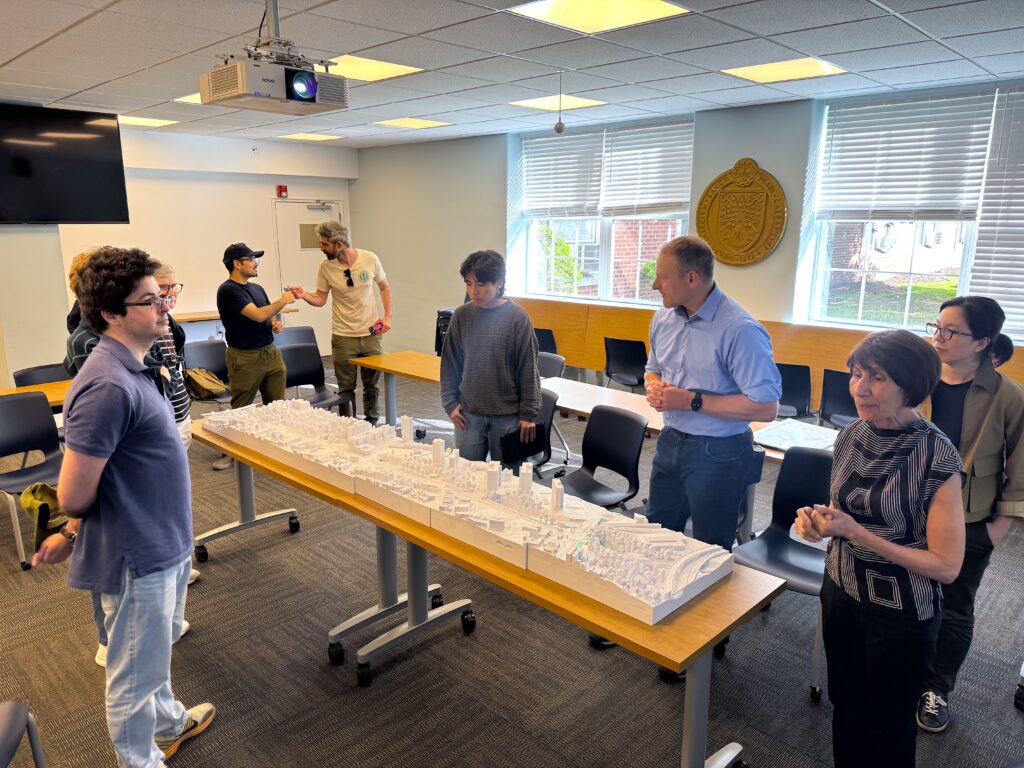
The meeting, hosted by the Bergen Arches Preservation Coalition, took place at Saint Peter’s University, where Slice of Culture was present in the informational session alongside members of the Bergen Arches Preservation Coalition (BAPC), several Jersey City long time residents and the city’s department of infrastructure.

The crux of the meeting centered on the continued dialogue of the green-oriented project of the Bergen Arches’ inner network of a four-track railroad cut that once served as the Erie Railroad’s infrastructure artsy conjoined to the Hudson River waterfront.
Key points from the meeting included:
- The transit space as related to the historical significance of the arches
- The feasibility study confirming rail and Greenway coexistence
- The potential for a bus transit highway, which residents are advocating on the need for pedestrian friendly zones
At its peak, the passage had carried 30,000 passengers daily before the completion of the project in 1910, which expanded the regional connectivity in the region.
The arches traces its origin story to the early 1900s, when the Erie Railroad blasted through bedrock to lay tracks that would carry passenger trains to the Jersey City waterfront area. The corridor runs east to west between the Journal Square and Heights neighborhoods adjacent to State Route 139, as previously reported by Slice of Culture.
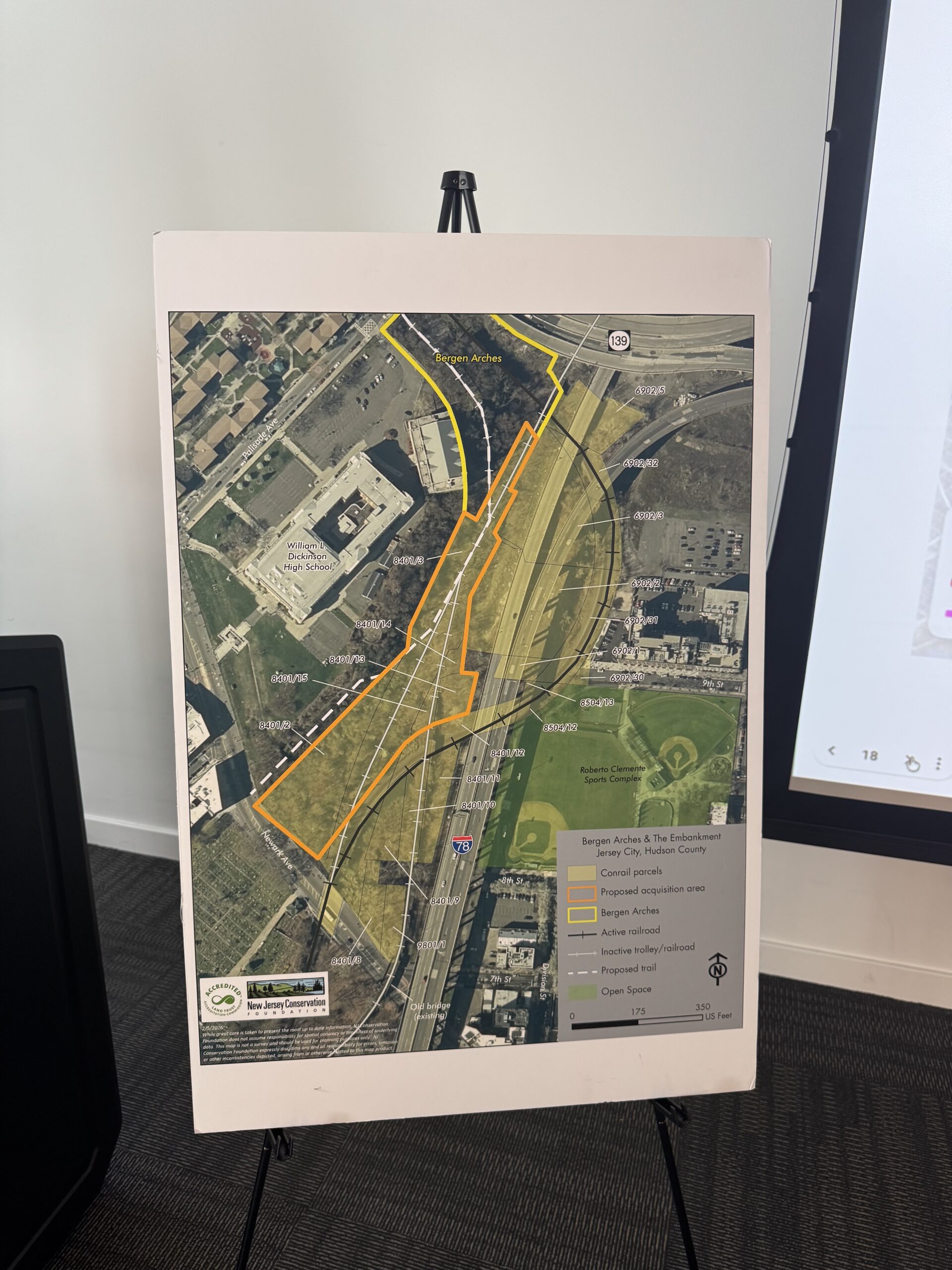
The greenway runs underneath Palisade Avenue, Baldwin Avenue, Oakland Avenue, Central Avenue, Summit Avenue, St. Pauls Avenue, Bevan Street and John F. Kennedy Boulevard. If approved, this development project—the Bergen Arches—would create a greenway bike path connecting to the 6th Street Embankment.
Chief among the highlights in this follow-up meeting for the Bergen Arches is solving an engineering challenge, they told Slice of Culture, which includes: connecting street level to the corridors below via stairwells, ramps, or elevators.
Chris Gratto, a member of the New Jersey Conservation Foundation, cited a study conducted by Rutgers University assessing the ecological impact of the Essex-Hudson Greenway and foliage layout, Bergen Arches and the Embankment corridor.
“It’s a unique condition. A lot of people have questions as to what all this means for me if I live here… ‘Do I still have to walk all the way to Journal Square?’”
Underlining The Benefits Of The Bergen Arches
The project—which would sandwich in a bike and walking pathway for the community—would be an existing rail followed by urban forest on both ends of arches, as viewed by designs shown by the BAPC.
BAPC has championed the revitalization plans for a decade, adding a new layer to New Jersey Transit’s proposed budget of $22 million, funding the bus transit way that aims to link Secaucus Junction and Jersey City through the corridor of the Bergen Arches.
Grotto added that, as the conversations continue with the state’s Department of Transit, the community has also called to implement a bus pilot program to “understand how you connect New Jersey transit’s ultimate goal with Jersey City’s.”
The Essex-Hudson Greenway, a nine-mile rails-to-trails initiative run by the State of New Jersey, would reclaim the Old Boonton Line of the Erie Railroad—transforming outdated infrastructure into a car-free, multi-use recreational trail stretching from Montclair to Jersey City.
The trail would cut through the Meadowlands, connecting Essex County suburbs to the dense, transit-rich neighborhoods of the New York metropolitan enclave. Construction is already underway on portions of the route.
But planners see the greenway as more than a trail.
Its real ambition is to serve as a backbone for a broader eco-friendly transportation network, similar to the High Line in Manhattan.
“The exact scope and communities that we connect are still waiting to be announced,” said Andy Kaplan, Jersey City’s Director of Infrastructure in the meeting. “We want to encourage NJ Transit to consider all the alternatives on ways that the transit can best serve the community.”
Inside Jersey City, the Bergen Arches play a critical role in the city’s urban infrastructure.
It anchors what planners call the “Crossroads Plan,” a larger greenway connectivity framework now formalized in the city’s Greenway Connectivity Plan that envisions a web of off-street recreational corridors stitching together neighborhoods that have long lacked safe connected open space.
“The Bergen Arches deserve to be preserved for the people. It would be a generational mistake to destroy this gift with yet another road, particularly when it’s a redundant one,” said Jack McKee, a longtime resident of Jersey City to Slice of Culture.
“Running the proposed transitway down already-completed Route 139 better serves the interests of all parties.”
Curious about what the Bergen Arches could become?
You can join the conversation on how it fits into NJ Transit and Jersey City’s plans on transit improvements by dropping your comment here.