
Graphic by Chelsea Pujols / SOC Images.
This marks the second part of Slice of Culture’s collaboration with Branch Four, a nonprofit organization that seeks to merge data science and local journalism to inform communities across the country. We will explore Hudson County’s past, present and future through data collection and community-centered story telling.
Leaving behind a rich legacy, the Lenni Lenape opened the doors for the diverse communities that Hudson County is home to today. Whether it is through arts, cuisine or business, Black and Brown communities continue to build on the land.
With a close proximity to New York City, multiple modes of public transportation and new housing development, Hudson County has become a hotspot for New Jersey—but staying becomes even more of a luxury for the working class, local and small business owner.

From 2019 to 2024, Hudson County has welcomed 39,983 housing units, a 15% increase in development. Of those units, 83% are apartments, which can appeal to those new to the county, young people and working class families. According to the 2024 American Communities Survey, 44.8% of the county’s residents are foreign-born. Families, including married couple households (37.3%), families with single fathers (21.8%) and single mothers (32.2%), are the average size of 3.
Though increased development provides space for the county’s diverse populations, median monthly rent increased by 38% in 2024, and with 15.1% of the county living under the poverty line and a 63% increase in unemployment rates, affordability comes into question.
The 2024 American Communities Survey said the median gross rent was $1,998 a month, but sites like Realtor, RentCafe and Rutgers University’s Ralph W. Voorhees Center for Civic Engagement brings rent closer to $2,000 to $3,000 a month for 2025 and 2026, depending on the municipality and size of the apartment.
A common guideline for renters is to choose apartments that cost no more than 30% of their annual income. To be considered very low or low income, families must make 30% or less than Hudson County’s average median income of $96,041, which would be $28,812 a year or about $2,401 a month. A moderate income is 30-50%: $28,812 to $48,020 a year or about $2,401 to $4,000 a month.
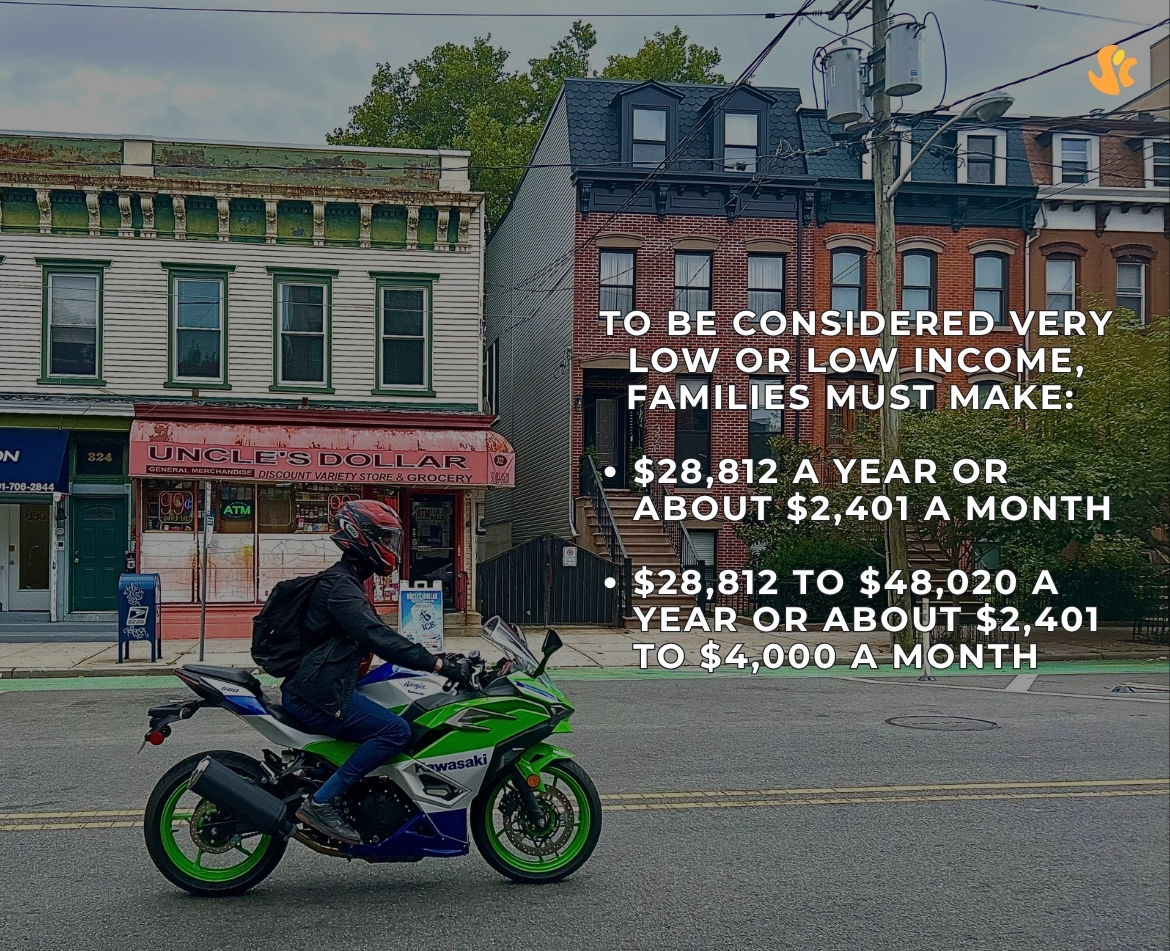
Very low or low income families would have about $400 left for other household costs like electricity and groceries or unable to make the rent at all—making everyday living a luxury.
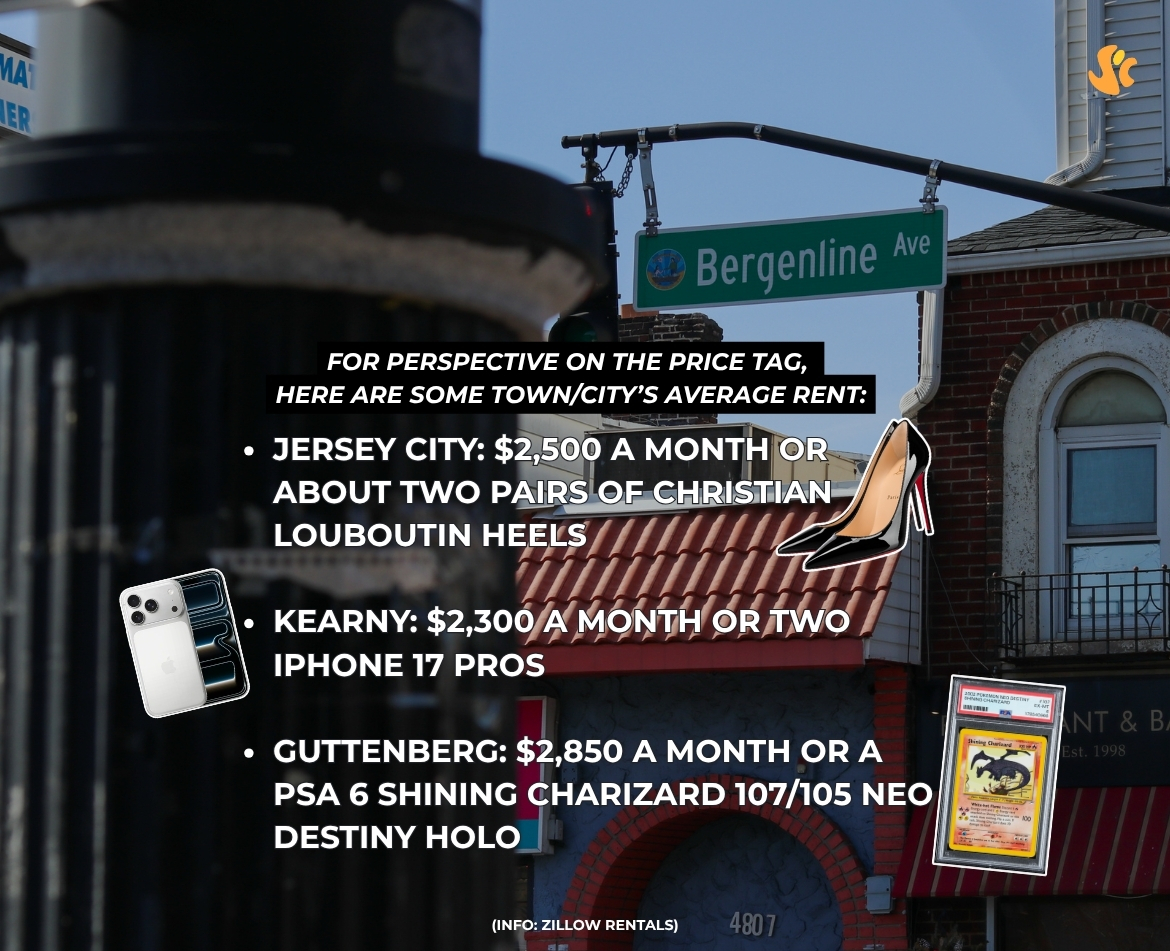
To place perspective on the price tag, here is each town/city’s average rent, according to Zillow Rentals, compared to items like couture shoes and jewelry.
- Jersey City: $2,500 a month or about two pairs of Christian Louboutin heels
- Weehawken: $3,578 a month or a down payment on a Tesla Model 3 Sport Sedan
- Hoboken: $4,275 a month or about three Cartier rings
- Bayonne: $2,100 a month or about three Gucci belts
- West New York: $2,400 a month or about two sets of Le Cruset cookware
- North Bergen: $2,800 a month or one Versace dress
- Secaucus: $2,969 a month or a Chloé Paddington Suede Shoulder Bag
- Union City: $2,550 a month or a Mac Studio Display
- Kearny: $2,300 a month or two iPhone 17 Pros
- Harrison: $2,500 a month or a KHAITE Mini Lotus Tote
- Guttenberg: $2,850 a month or a PSA 6 Shining Charizard 107/105 Neo Destiny Holo
- East Newark: $2,250 a month or one La Mer skincare set
And while the county is marketed as “affordable living” to outsiders, the cost of living and working grows heavier on the pockets of not only residents, but business owners too.
According to commercial space listing sites like LoopNet, renting a retail space can range from $15 to over $50 per square foot a year in areas like Union City, North Bergen, Jersey City and Hoboken.
To help visualize this rate: imagine what was formerly Stan’s Sport Center, a sporting goods staple serving Hoboken residents for 80 years. The 1837 square-foot space now goes for a total of about $121,039.93 a year.
On Union City’s part of Bergenline Ave, a retail space is about $20 per square foot. This first-floor space would cost about $60,000 a year. Bergenline Ave, nicknamed “Miracle Mile,” has been the county’s hub for small and local businesses since the early 1900s and is one of New Jersey’s longest commercial avenues.
In 2025, Business management and marketing degrees were the second-most awarded in the county with 1,230 graduates and programs completed, according to the Hudson County Chamber of Commerce.
For West New Yorker Anthony Baez, fixing his little brother’s phone became Baez Tech Solutions LLC, established in November 2025 and becoming an LLC in February 2026.
Being an IT manager at a doctor’s office by day, Baez fixes phones, gaming consoles, builds websites and does camera installations by night. He visits clients at their homes, coordinates meetings at local coffee shops, or does quick repairs from his car.
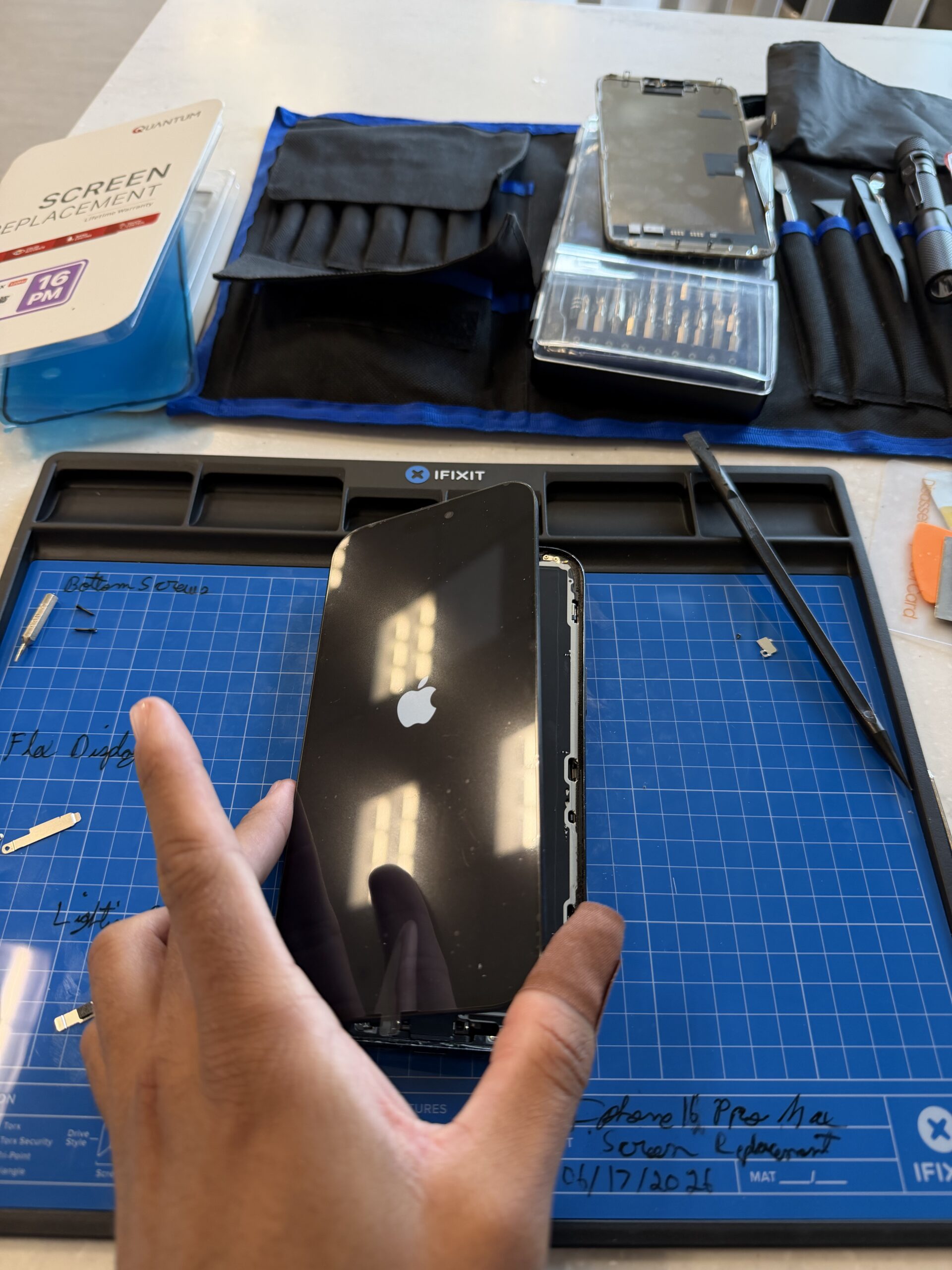
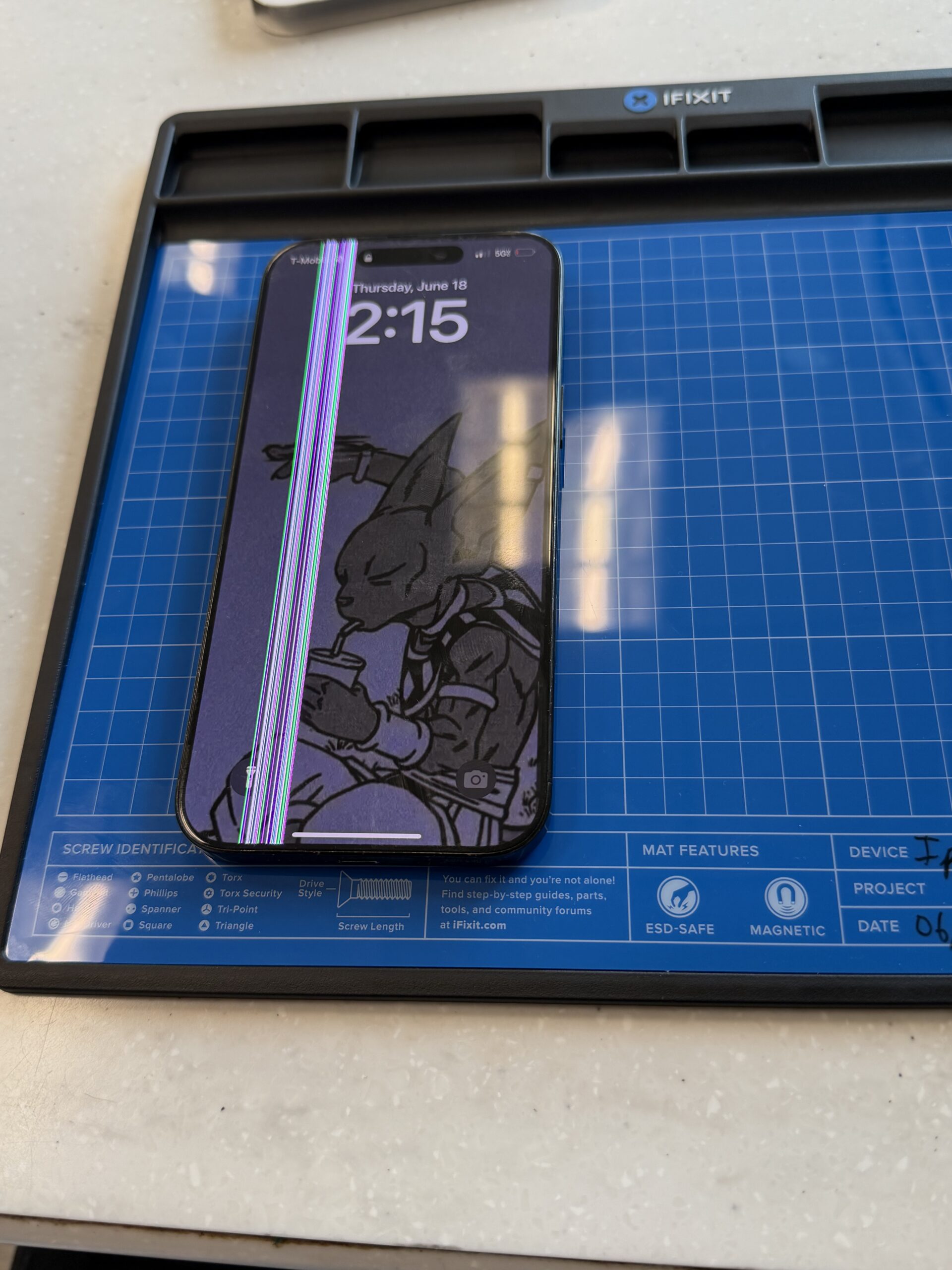
While Baez had originally planned to have a storefront in West New York by 2027, he told Slice of Culture he plans on building a stronger clientele before signing a lease.
“I don’t wanna go to a place where I’m paying X amount of money for renting out a repair shop spot, and I can’t end up paying the rent in the next six months because I’m not getting clients. Because this is a game of you could have a good month, a great month, even that, and then you could have a month where only one client shows up at your door,” he said.
A retail space in West New York currently ranges from $15 to $65 per square foot a year. “We live in Hudson County, money is a very sensitive topic here. The rent is high, but the minimum wage is low,” Baez said.
As he builds stronger relationships with clients, Baez also connects with other businesses for guidance, collaboration and negotiating prices for parts he needs for phone repairs—but also looks to give back to the Hudson County community.
Baez told Slice of Culture that his clients are “good people” and have donated laptops and computers to his business, which he plans on updating and donating to Memorial High School students starting their college careers. This project was inspired by his own high school experiences as a West New York Tiger and watching students struggle with buying laptops: a crucial part of the modern college experience.
“I was thankful and grateful enough to have my parents before I went off to college, but I know a lot of people’s situations are very different,” he said.
Additionally, Baez hopes to hire locals like college students looking for experience and practice. Baez currently hires a veteran to help him on camera installations, but is also looking for colleagues to assist with his website building services.


A few towns over, in Jersey City, Osiris Fonseca started StrawberryNMe in 2019 after her partner’s first-ever Father’s Day present backfired.
“The person canceled the order the same day,” she told Slice of Culture. “So I took my money and went to the store and I decided to make the strawberries myself.”
The chocolate-covered strawberry and treats business also became a way for Fonseca to raise her now-seven-year-old daughter and 11-month old son. Fonseca, recalling going to the tianguis (flea market) with her parents in Mexico, was able to apply childhood memories to her business strategy.
“Entrepreneurship wasn’t completely new to me…we used to sell in the flea markets every weekend. The part of entrepreneurship, I got it from my parents. I just didn’t know it then,” she said.
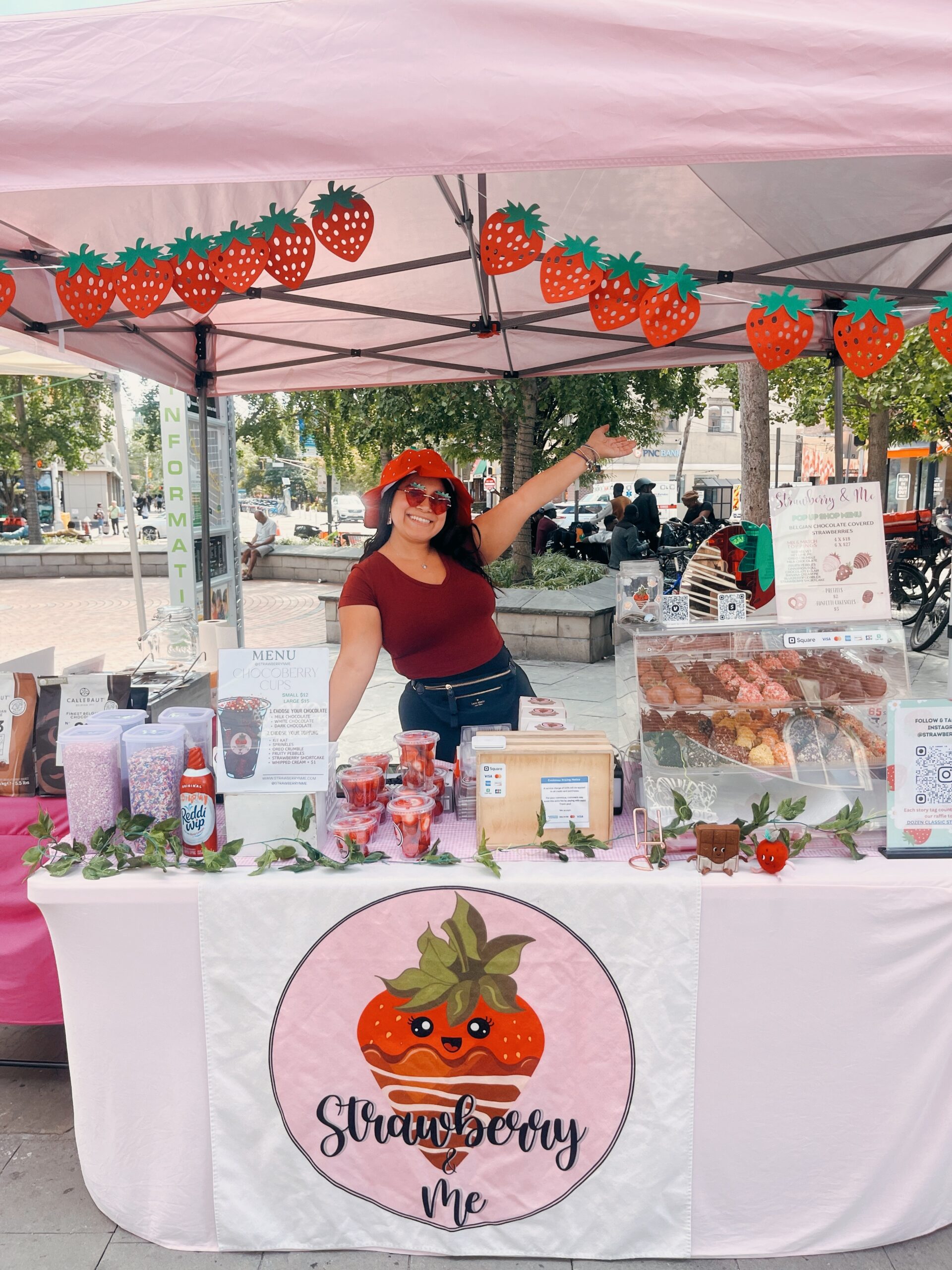
Despite having business in her blood, Fonseca closed StrawberryNMe after four months in 2019, and re-opened in 2020 after learning more about marketing and business from selling Monat hair products.
“I mean, I never made my money back,” she joked. “But from that experience, I learned how to market online. I was used to selling the product physically in Mexico. Here, it was like an online product, I needed to make sales online. That helped me, but I had to figure it out as I go, the pricing, the marketing, the customer service, social media.”
Since then, StrawberryNMe went from a last-minute treat to a full menu of chocolate-covered strawberries, with flavors ranging from chocolate eclair to key lime pie. On Sept. 13, StrawberryNMe was commissioned by clothing brand Edikted to celebrate their grand opening at Garden State Plaza Mall, with custom pink dips of chocolate and a printed logo.

Despite her success, Fonseca does not plan on opening a storefront anytime soon and chooses to focus on connecting with her Hudson County community.
“My goals [changed] and now I see that having a store is not something I will really enjoy, because sometimes more doesn’t mean best or better,” she said.
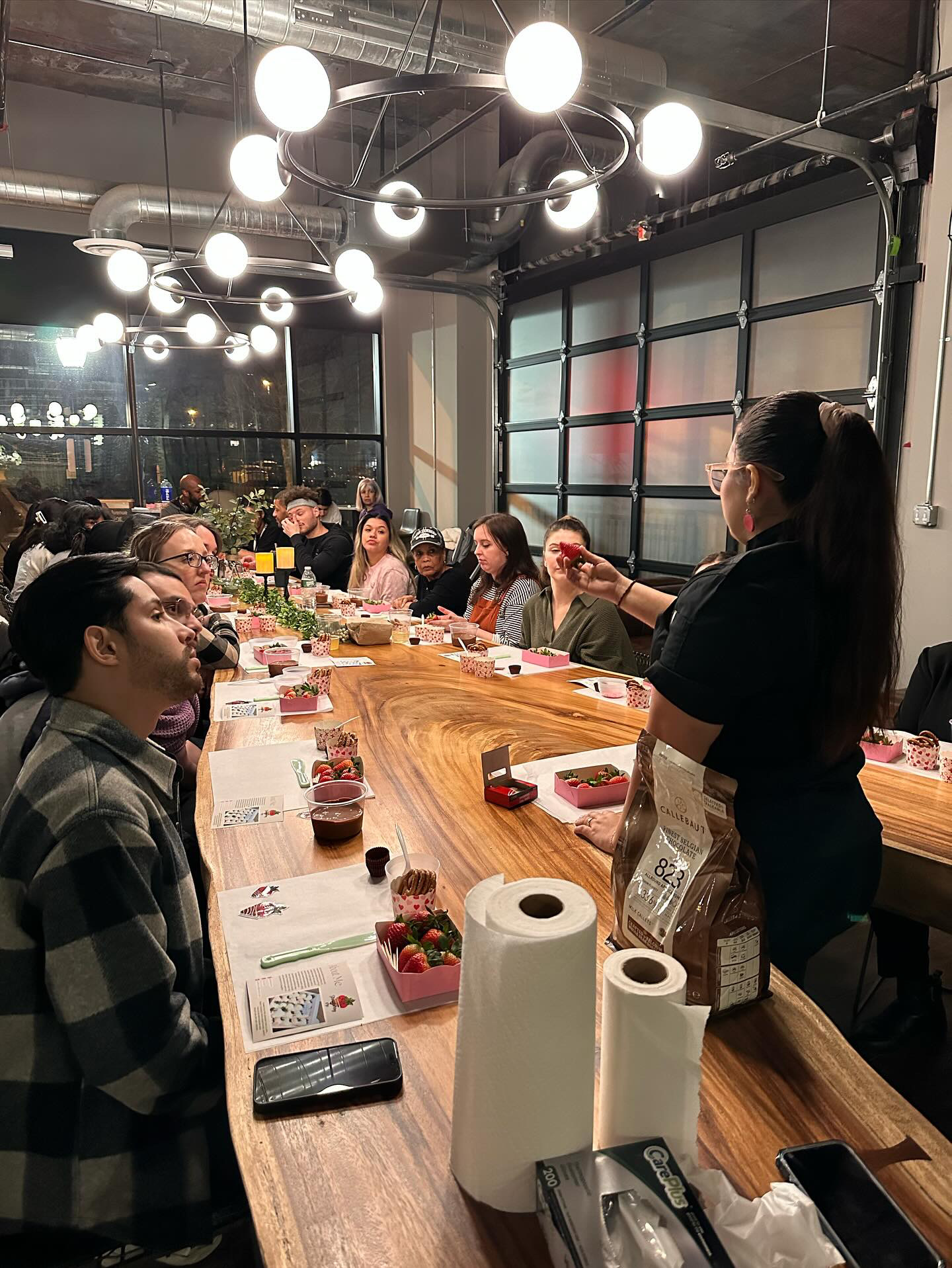
Fonseca describes herself as a “really friendly” person who enjoys connecting with her community, and she hopes to do so via catering for brands, corporate events and parties. She also hosts “Sip and Dips”: or strawberry-dipping workshops for residential buildings.
“I will definitely stay in the county. I really enjoy Hudson County, I want to create memorable experiences, continue growing while keeping that personal touch that makes me connect with people and that connect people to my business.”

As more people chose to stay in the county, more have had that choice taken away from as costs rise. Stan’s Sports Center announced their closing on Aug. 31 this year.
“The truth is, people don’t shop small the way they used to. They don’t walk into local storefronts the way they once did. And for businesses like ours, that change has consequences,” they wrote in a statement on Facebook.
Barcade in Jersey City closed their doors after 14 years of business on Grove Street.
“JC was the second Barcade we opened and so much has changed since then for us and the city,” they said on Instagram.
Supporting Local Matters, You Can Help
Amidst closures, Slice of Culture is looking to help Hudson County businesses open and stay open. We are currently building a business resource guide. If you are a business owner or an aspiring entrepreneur in the county, please consider filling out our interest form.
The following are organizations in the county and state for small and local businesses.
- Hudson County Office of Business Opportunity and Community Services
- Hudson County Economic Development Corporation
- Business.nj.gov– for funding opportunities, business starter kits and tax obligation info
- The New Jersey Business Action Center, a bilingual helpline available at 1-800-JERSEY-7
Your local catch-up! Sign up for our biweekly newsletter for local events, more community stories, exclusive wallpapers and more!