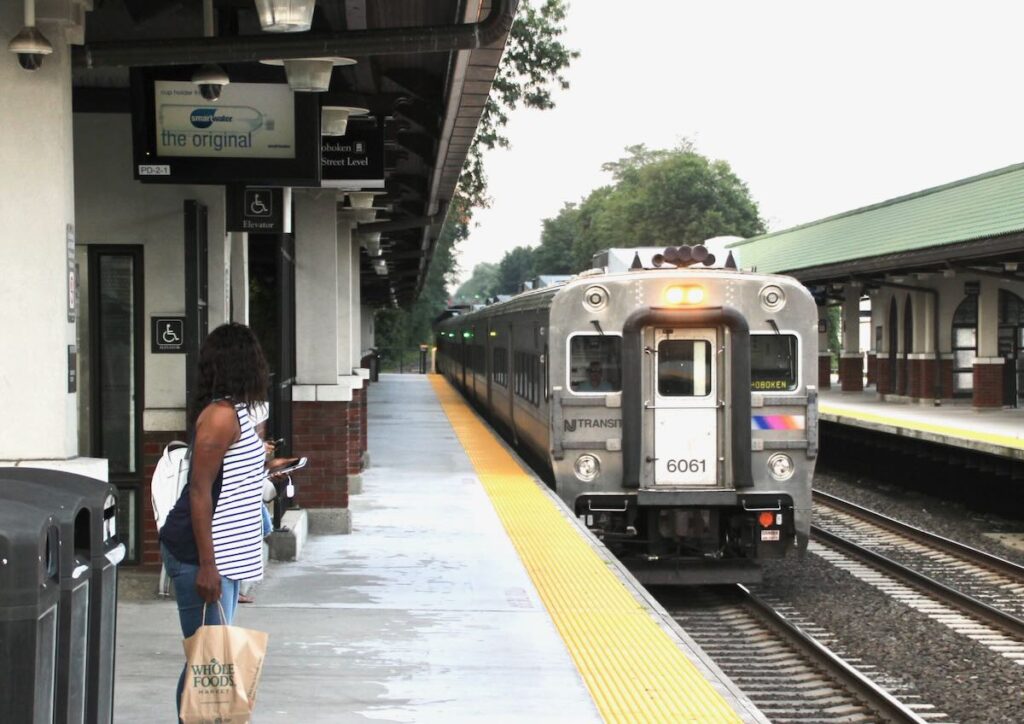
An NJ Transit message board (upper left) displays an ad as a Hoboken-bound train arrives in Ridgewood, N.J. in August 2019. NJ Transit is seeking information on systems to update and unify its real-time information for customers. (David Lassen / Trains Pro)
New Jersey is one of the most public transportation-reliant states in the country—and with that, comes some pros and cons.
Slice of Culture has been speaking with Jersey City residents about their experiences with NJ Transit, where a handful expressed that they get frustrated by ongoing service delays. NJ Transit Director of Media Relations John Chartier shared with Slice of Culture how they’re trying to get to the bottom of the agency’s reliability challenges and preparations for the 2026 FIFA World Cup.

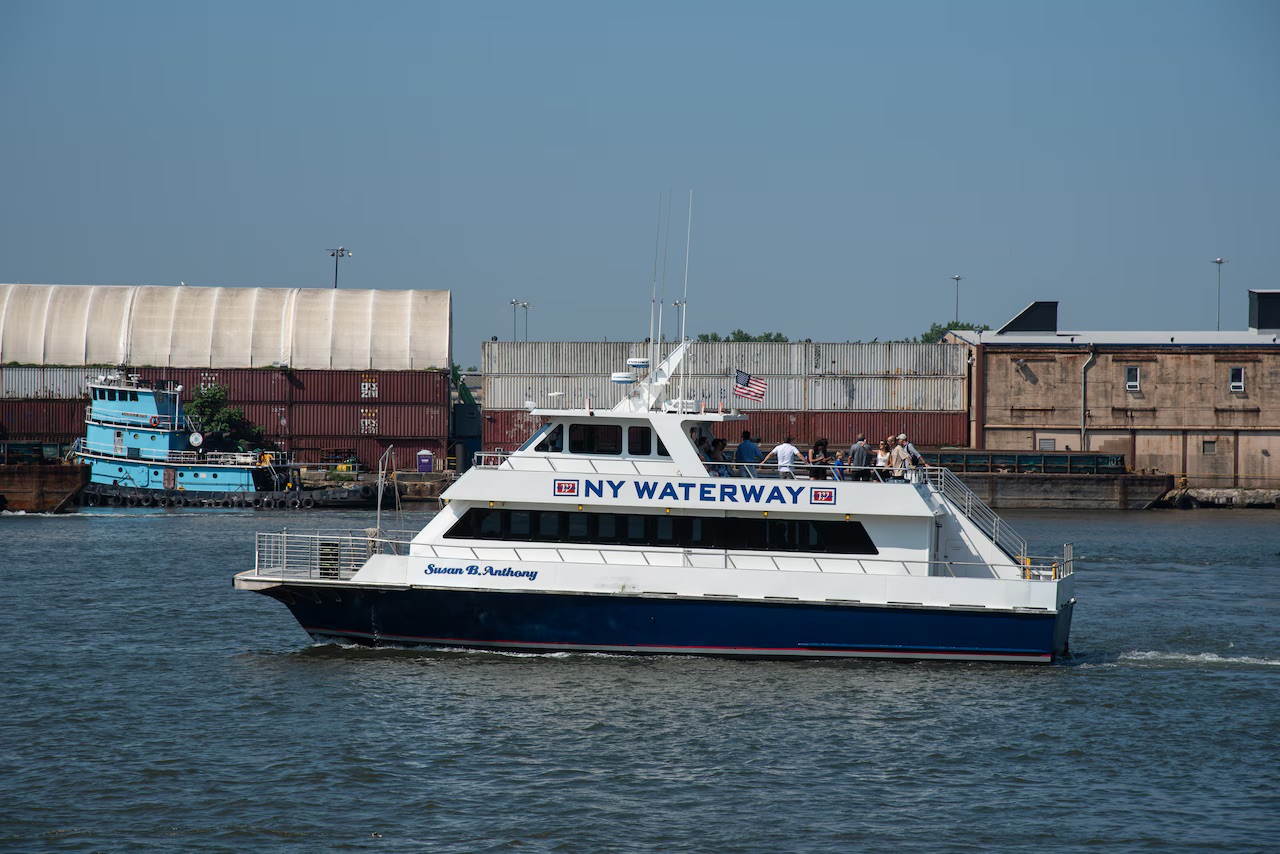
And as thousands of soccer fans travel to NYNJ Stadium for the 2026 FIFA World Cup™, New Jersey Transit has been preparing an unprecedented backup transportation plan: two ferries capable of carrying 600 passengers each across the Hudson River if rail service experiences major disruptions. The contingency plan highlights ongoing concerns about the reliability of the region’s transit infrastructure as New Jersey and New York host one of the world’s largest sporting events.
Some regular NJ Transit riders remain skeptical that the ferry contingency plan addresses the underlying issues facing the transit system.
“I don’t think [NJ Transit services] improved at all. It’s getting more expensive and I don’t see any difference or change.”
– Diana Paredes, Jersey City resident who frequently rides NJ Transit trains.
Paredes said she recently encountered an 85-minute wait between trains after leaving Madison Square Garden, and ultimately had to find another way home.
“I needed to Uber home,” she said. “There was no way I was going to wait 85 minutes.”
When informed about the ferry backup plan, Paredes questioned whether it would meaningfully improve travel times for passengers facing rail disruptions.
“That’s an interesting concept, but if the train doesn’t run on time, the ferry takes even more time and costs people more money…,” she said.
About The Backup Plan
The plan was announced by NJ Transit CEO Kris Kolluri amid growing concerns about service interruptions on the Amtrak owned Northeast Corridor, which serves as a critical link between New York City and New Jersey. Recent weeks have seen multiple delays, signal problems, electrical failures and even a fire near Penn Station, raising questions about whether the transportation network can handle the surge of World Cup visitors expected this summer.
Under the emergency plan, the ferries would be stationed in Weehawken and activated only if rail service experiences a significant failure. Fans leaving NYNJ Stadium would be transported to the ferry terminal and then carried across the Hudson River to Manhattan. Officials emphasized that the boats are intended as a contingency option rather than a primary transportation mode and would mainly be used after matches if train service becomes unavailable.
The ferry strategy is part of a broader World Cup transportation operation that includes more than 500 standby buses and expanded rail service. NJ Transit, the FIFA World Cup New York-New Jersey Host Committee, the Port Authority, Amtrak and other transportation agencies have developed a plan to move approximately 78,000 spectators per match to and from the East Rutherford stadium.
The ferries have not been activated at the time of this writing. The next World Cup™ match is Thursday, June 25 where Ecuador will face Germany.
Chartier, the NJ Transit Director of Media Relations, said the agency has spent months preparing for the transportation demands associated with the World Cup™.
“We’ve been communicating this for several months,” Chartier said. “We’ve asked the public to be aware and to understand that there will be delays… We wanted to have a backup in case there are problems on the line. Those would only be used for egress.”
Chartier said NJ Transit is encouraging commuters to plan ahead and consider alternative travel options on match days.
“If people can work from home, they should, if that’s an option,” he said.
Commuters can plan their travel by reading through the NJ Transit Commuters page: https://njtworldcup.com/commuters/.
Your local catch-up! Sign up for our biweekly newsletter for local events, more community stories, exclusive wallpapers and more!
In a June 10 press release, Gov. Mikie Sherrill emphasized the extensive planning effort behind the tournament.
“Preparing for an event of this scale requires years of planning, coordination, and partnership,” Sherrill said.
“From transportation and emergency management to public safety and communications, agencies across New Jersey have worked tirelessly alongside our local, state, federal and regional partners to prepare for this historic moment. We look forward to delivering a safe, successful, and memorable tournament for residents and visitors alike.”
While Sherrill and NJ Transit leadership project optimism about the transit system’s future, many New Jersey commuters remain skeptical, expressing concerns that go beyond recent rapid action plans.
Maxwell Lindo, a native New Yorker who moved to Jersey City a year ago, expressed frustration with both transit costs and reliability.
“I think they could bring the prices down a bit. Other than that, the main issue is still trains running late,” he said.
Lindo added that he feels public transportation operates more efficiently in New York City. “Everything in New York is much faster than in Jersey City. I noticed fewer delays and traffic issues there.”
High Fares Are Major Pain Point
Transportation has become a major topic of discussion among fans and local residents ahead of the tournament.
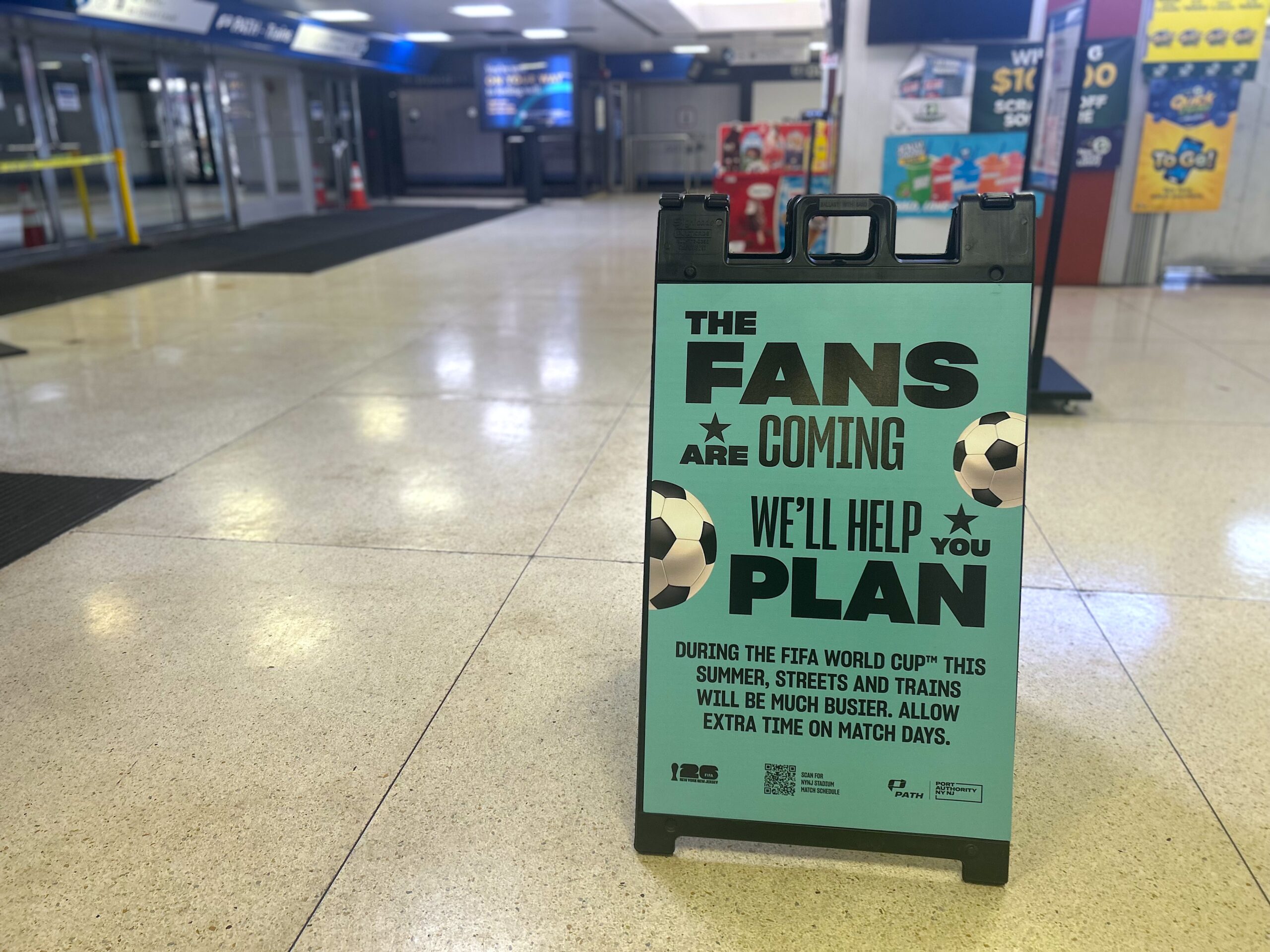
Earlier this year, NJ Transit faced criticism for announcing round-trip World Cup train fares as high as $150 before reducing them to $98 following public backlash and advertisers like DoorDash and Fanduel. The agency argued that the higher fares were necessary to cover the extraordinary costs of operating special event service and managing massive crowds.
NYNJ Stadium, which is hosting eight World Cup matches, including the tournament final on July 19, has also faced scrutiny over accessibility. A recent study ranked the venue among the least convenient World Cup host stadiums due to its limited transportation options and dependence on transfers through Secaucus Junction.
Read our previous FIFA World Cup 2026™ coverage here.
While officials acknowledge that the scale of the World Cup may create temporary disruptions for some commuters, they maintain that extensive planning and contingency measures are in place to help ensure transportation operations run as smoothly as possible throughout the tournament.
But for Jersey City residents like Domonique Santiago, she described what has become a familiar experience for many NJ Transit riders.
“My overall experience with NJ Transit is pretty slow, and on Sundays it’s even slower,” Santiago said. “It requires you to really plan your commute on Sundays because otherwise you’ll be waiting for hours.”
“Its been really packed lately… I feel like they need more trains and more buses so they’re less packed.”
World Cup Transportation Resources for Fans
Due to transportation concerns, NJ Transit has encouraged fans to purchase tickets in advance, arrive early and use official transportation options. The agency maintains that the ferries, buses and rail service together provide multiple layers of redundancy designed to prevent transportation breakdowns from overshadowing one of the biggest sporting events ever held in the region.
But the transportation plan is already affecting regular commuters.
On June 22, NJ Transit announced that trains departing Penn Station New York and Secaucus Junction would be temporarily limited to customers traveling to NYNJ Stadium between 3:20 p.m. and 7:01 p.m. to accommodate World Cup crowds for the Norway vs. Senegal game.
During that period, some commuters were directed to use alternate transportation options, including PATH trains and NJ Transit bus service. The temporary restrictions highlight the challenges of balancing the transportation needs of tens of thousands of soccer fans with the daily travel demands of New Jersey residents who rely on the transit system for work and commuting.
For ways to travel during the global tournament, you can check out the resources below:
Official Transportation Information
NJ Transit Resources
Government And Regional Travel Updates
If you would like to submit any “compliment, concerns or feedback,” you can fill out the form here.