

Illustration by Sakura Siegel / SOC Images.
Jordan Coll contributed to this reporting.
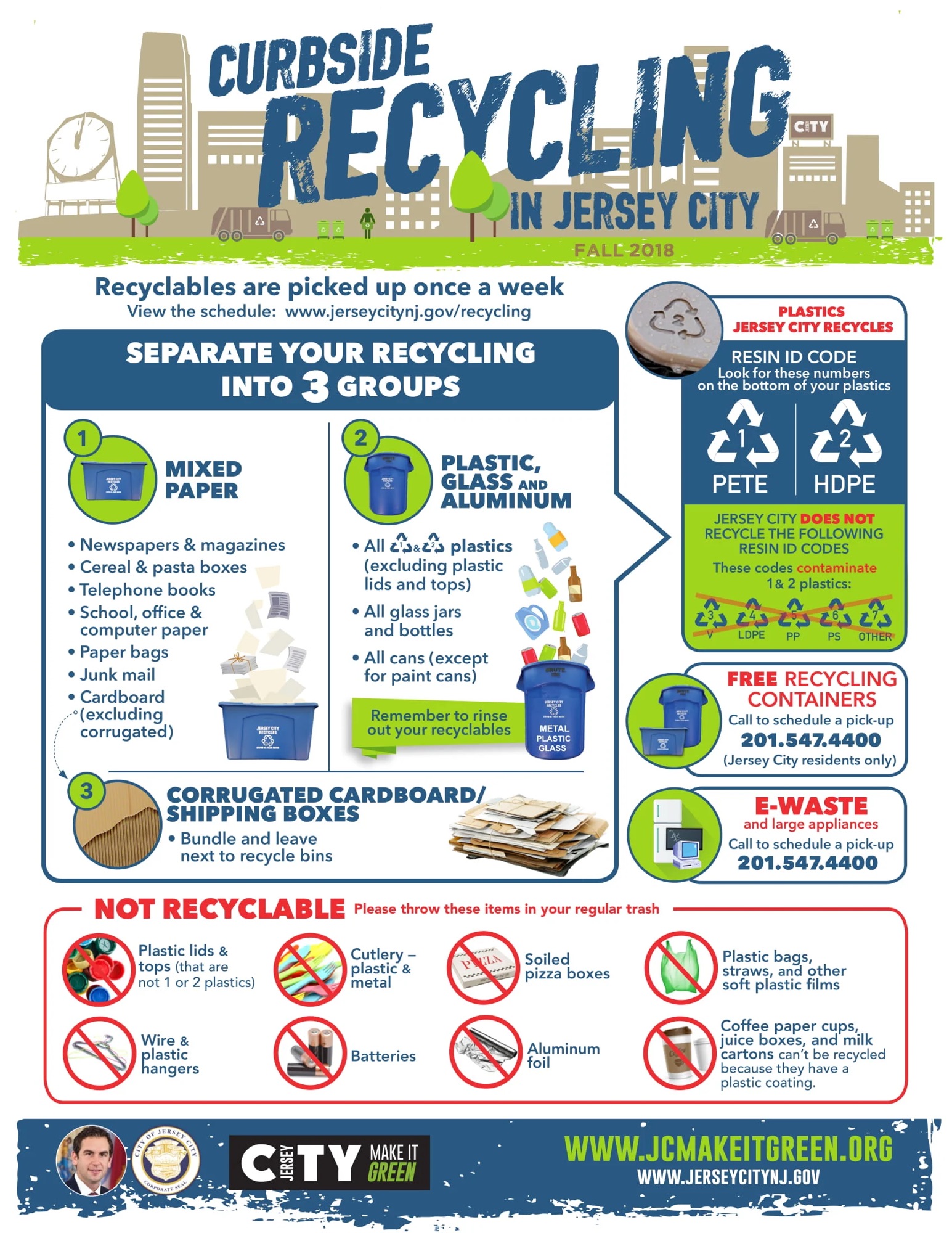
From the start to the end of the day, living in Hudson County presents various challenges–chasing after a NJ Transit bus that left you behind, sitting in traffic on Bergenline Ave or embarking on an endless search for parking after a long day–and yet another challenge presents itself when you least expect it: recycling day.
A lack of educational material and communication from municipalities makes figuring out where to toss a water bottle or get rid of a pizza box confusing or slow down progress in recycling–especially in multi-family homes, which make up 86% of Hudson County, New Jersey.
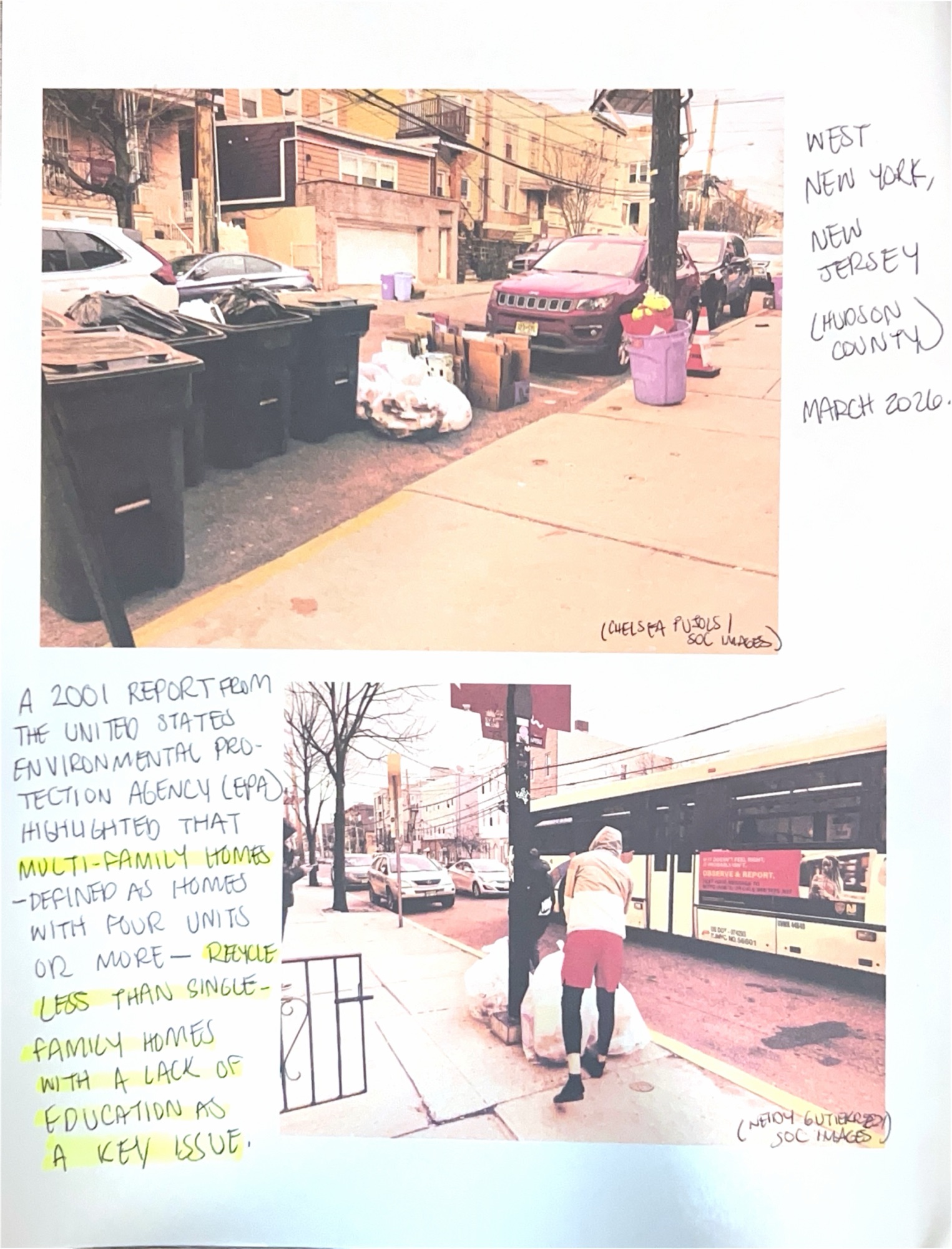
Apartment dwellers recycle far less than their single-family counterparts—a gap that federal data shows has persisted for years, under a recent study by the Environmental Research and Education Foundation (EREF). The reasons are partly structural: too few bins, poorly placed collection points and a lack of clear signage.
Recycling Starts At Home–But How?
Deb Italiano of Sustainable JC says tenants in Jersey City—low and high rise buildings alike— find themselves lacking clarification on what to recycle. “They have trash rooms and they’re required to put recycling bins in those trash rooms. But friends of mine say they’re confused about what to recycle. I said, ‘Well, isn’t it posted in the trash room?’ They say, ‘No,’” she said.
In lieu of landlords and building managers not providing flyers, Italiano shares some with the community, which she has heard of them being torn down. Though it is unclear who tears the flyers down, she told Slice of Culture that managers also play an important role in educating the community on how to recycle properly.
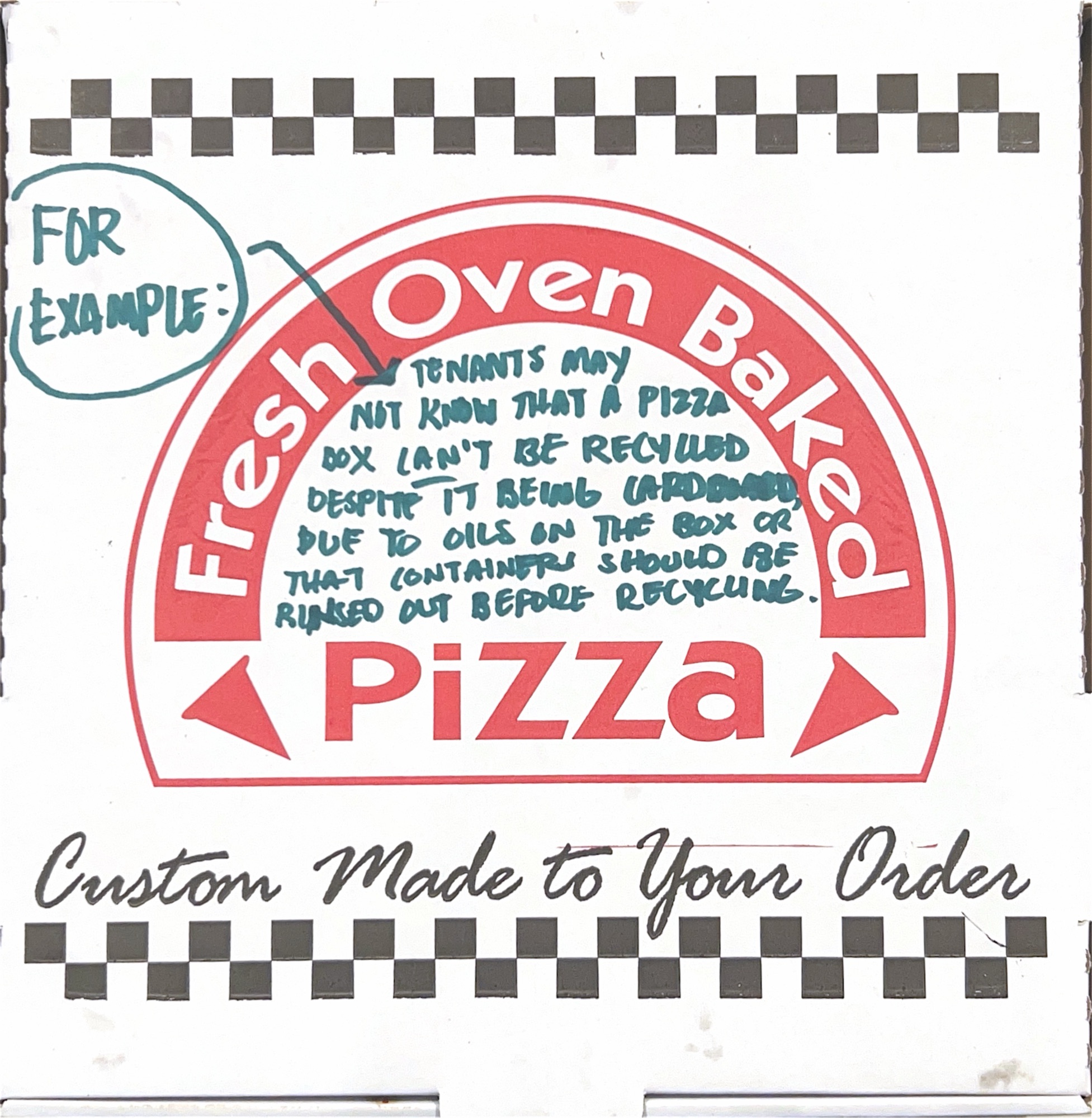
“They are part of the solution and the issue. I think that building management companies should be a part of education. But it really starts with the city asking them to do that, other than saying recycling is mandatory,” Italiano said.
Sustainable JC also collaborates with Jersey City schools to educate students about the importance of recycling to begin conversations at home and build a sense of responsibility for the planet at a young age.
While Italiano says that some schools have productive recycling programs like Cordero Community Schools, the progress was lost when the organization reportedly found out recycling was not being picked up.
“It seems like there is a conversation going on there, but if it’s not possible to be followed through on and they’re making all this effort, that’s problematic…These kids are going home and talking to their parents about it, and the recycling’s not even being picked up,” she said.
Anthony Valdes, a longtime resident of West New York who ran for State Assembly representing the 33rd district in 2025’s election cycle, says enforcement is key to solving recycling issues in town.
“Unfortunately, the town does not implement strong recycling regulations. I believe that strict enforcement of recycling laws can improve not only wasteful spending but also lower costs for the town,” he said. “I don’t believe it’s an issue of accessibility, I believe it’s a lack of enforcement. I see lots of residential properties not putting out any recycling.”
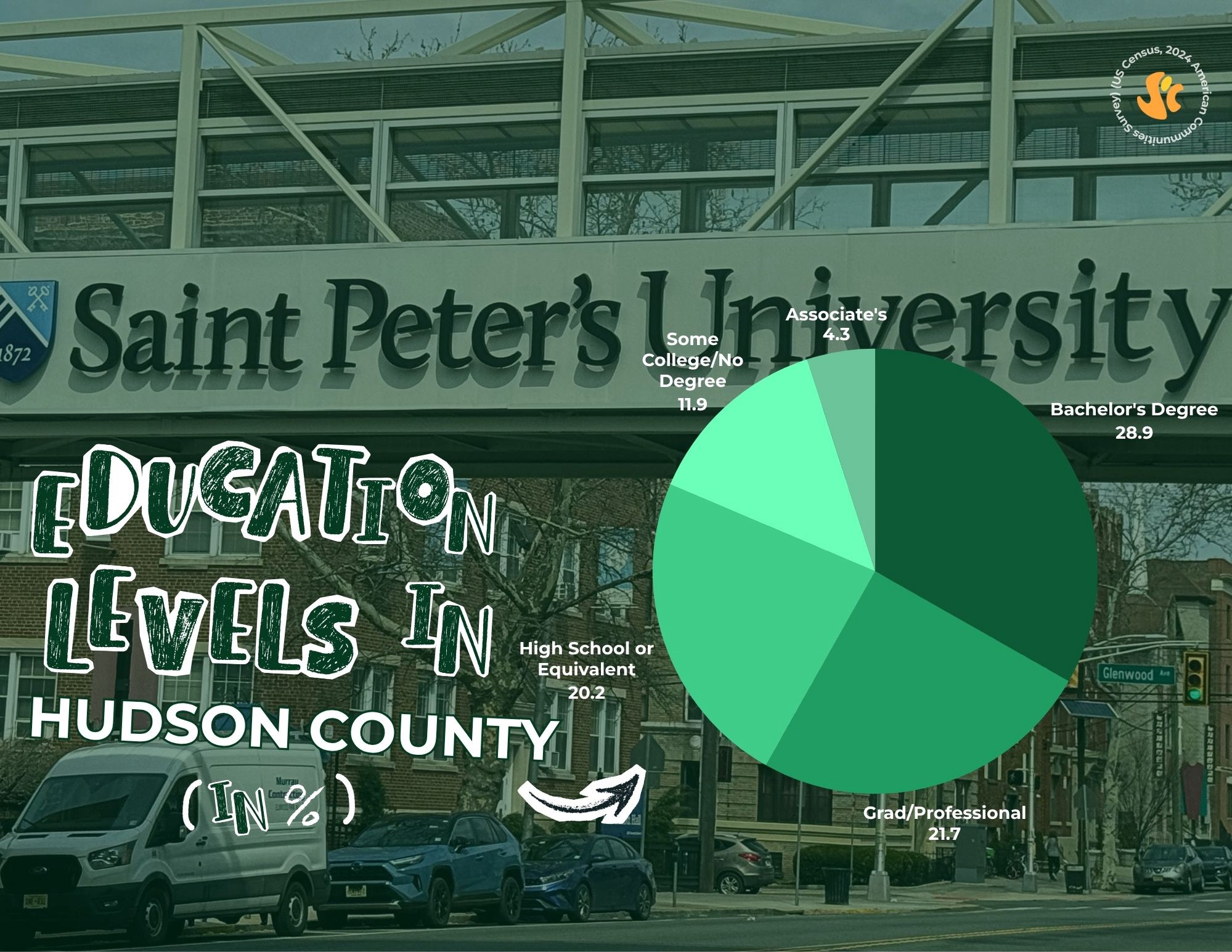
According to the U.S. Census, 50.7% of Hudson County residents have a bachelor’s degree or higher, which can provide enough education to provide a basic foundation on the 3Rs–reduce, reuse and recycle.
How Municipalities Are Currently Educating Communities
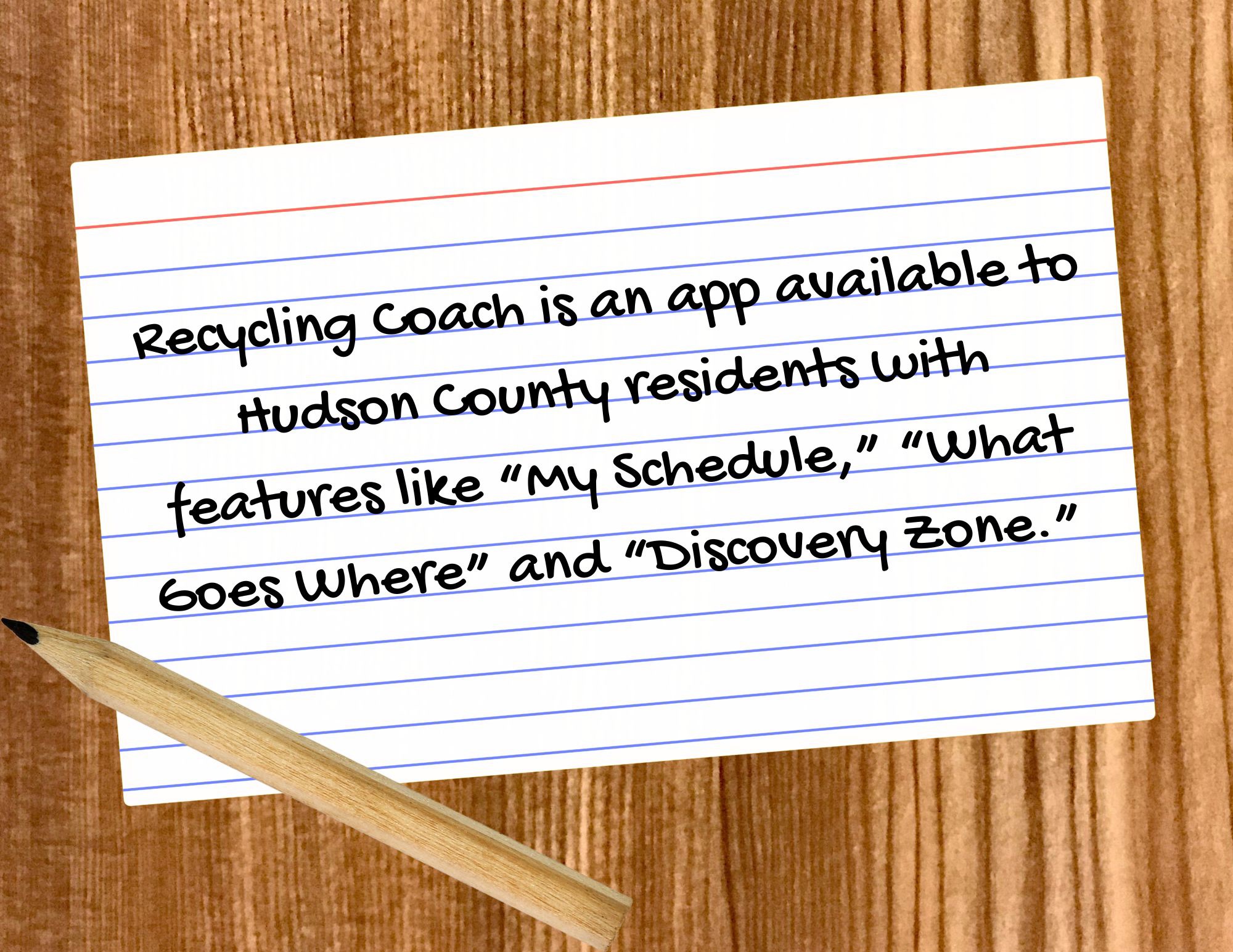
Since Slice of Culture’s investigation, Hudson County has begun to promote the Recycling Coach app, where residents can have access to their municipalities’ recycling and waste pick-up schedules, search how certain items can be recycled and report missed collections.
In collaboration with the Hudson County Improvement Authority, the handle @hudcoinsta uses #HCIARecyclesFridays to inform the community of resources. They also encourage their followers to visit their town or city’s recycling websites.
“We obsess about efficiency, but the most efficient solution is usually not the proper solution,” said Ashwani Vasishth, a retired professor of Sustainability at Ramapo College of New Jersey, who spoke to Slice of Culture, adding that recycling becomes the “least worst option” and highlighting issues like contamination and “inconsistent recycling practices across the municipalities.”
He added that there needs to be recycling coordinators, in addition to the use of the “Recycling Coach” app to help with “properly disposing” recycling and solid waste materials. New Jersey made “Recycle Coach” available statewide through the Department of Environmental Protection, so individuals can apply it, but its usage is voluntary and decentralized, Vasishth said.
Americans generate roughly 30% of the world’s waste, while accounting for just 5% of its population, according to data by Recycle Across America, a nonprofit engaging with the impact of recycling on a nationwide scale.
He added that younger generations, “though more environmentally conscious,” still face significant gaps in information and resources that places an information gap on effective recycling efforts.
“Each municipality has its own rules regarding recycling,” reads out for each municipality as cited by the Hudson County Improvement Authority website.
Hudson County has three communities among the top 100 cities with the highest percentage of foreign-born residents: West New York (65.2%), Union City (5.7%), and Guttenberg (48.7%), according to U.S. Census data.
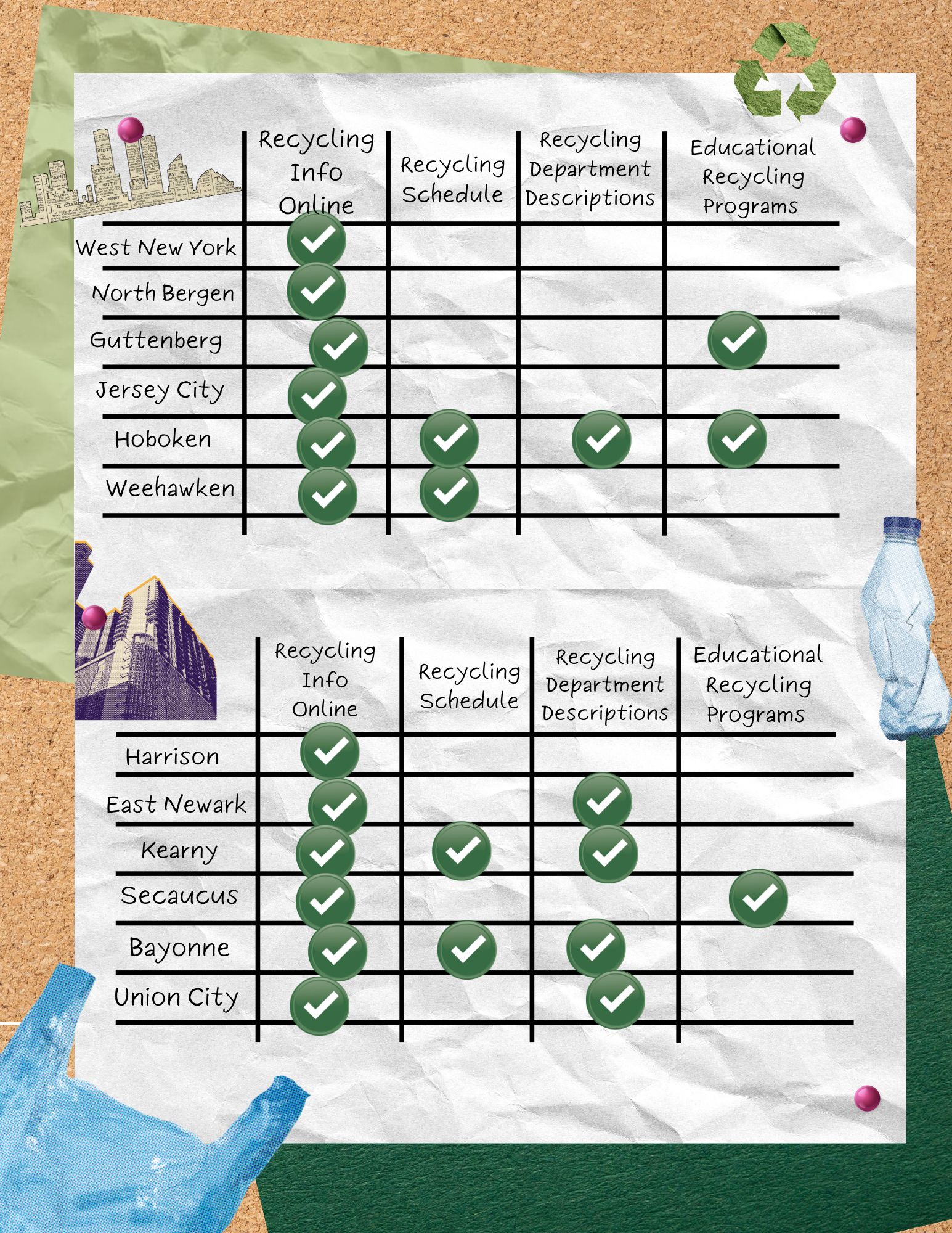
The following are educational materials each municipality in the county has to offer:
Communication And Transparency Remain An Issue, Despite Resources Available
Despite the county’s varying educational programs and available resources on the subject participants in a survey conducted by Slice of Culture say:
- 56.8 % do not know who picks up their recycling
- 27% do not know when their recycling is picked up
- 70.3% say they do not see blue recycling bins in their town or city
The lack of information and resources could come off to residents as a lack of care from municipalities.
“The city doesn’t care, and as a result I don’t think the community cares,” Aurora Vasil from Jersey City said.
Sara Diaz said Jersey City does not offer clear guides on how to recycle.
“Garbage schedules and instructions are confusing and not always consistent, and information about what recyclables are accepted is not super easy to find. [I] would love if they sent out mailers! Like they do for happy birthdays and political campaigns.”
– Sara Diaz
Language barriers may also play a role in miscommunication.
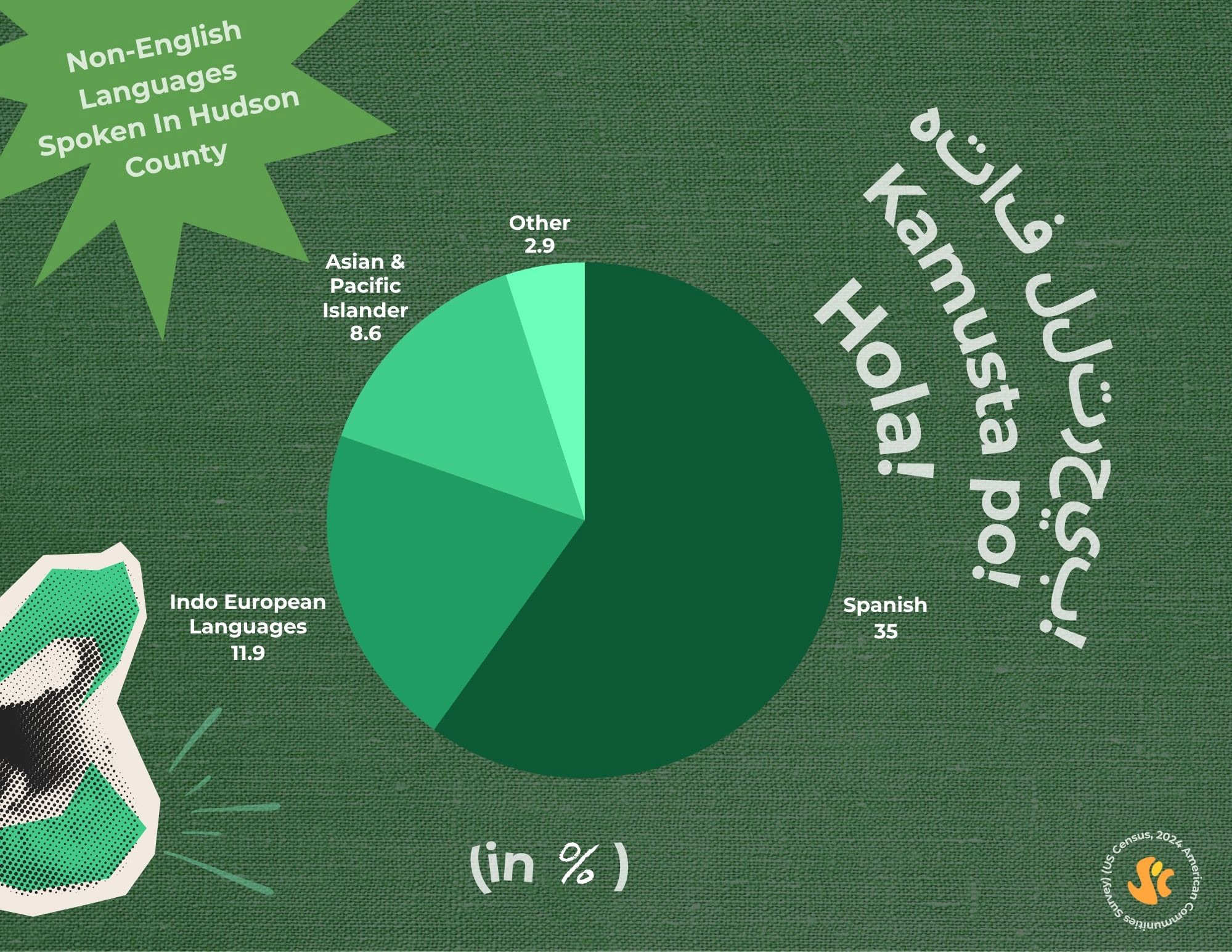
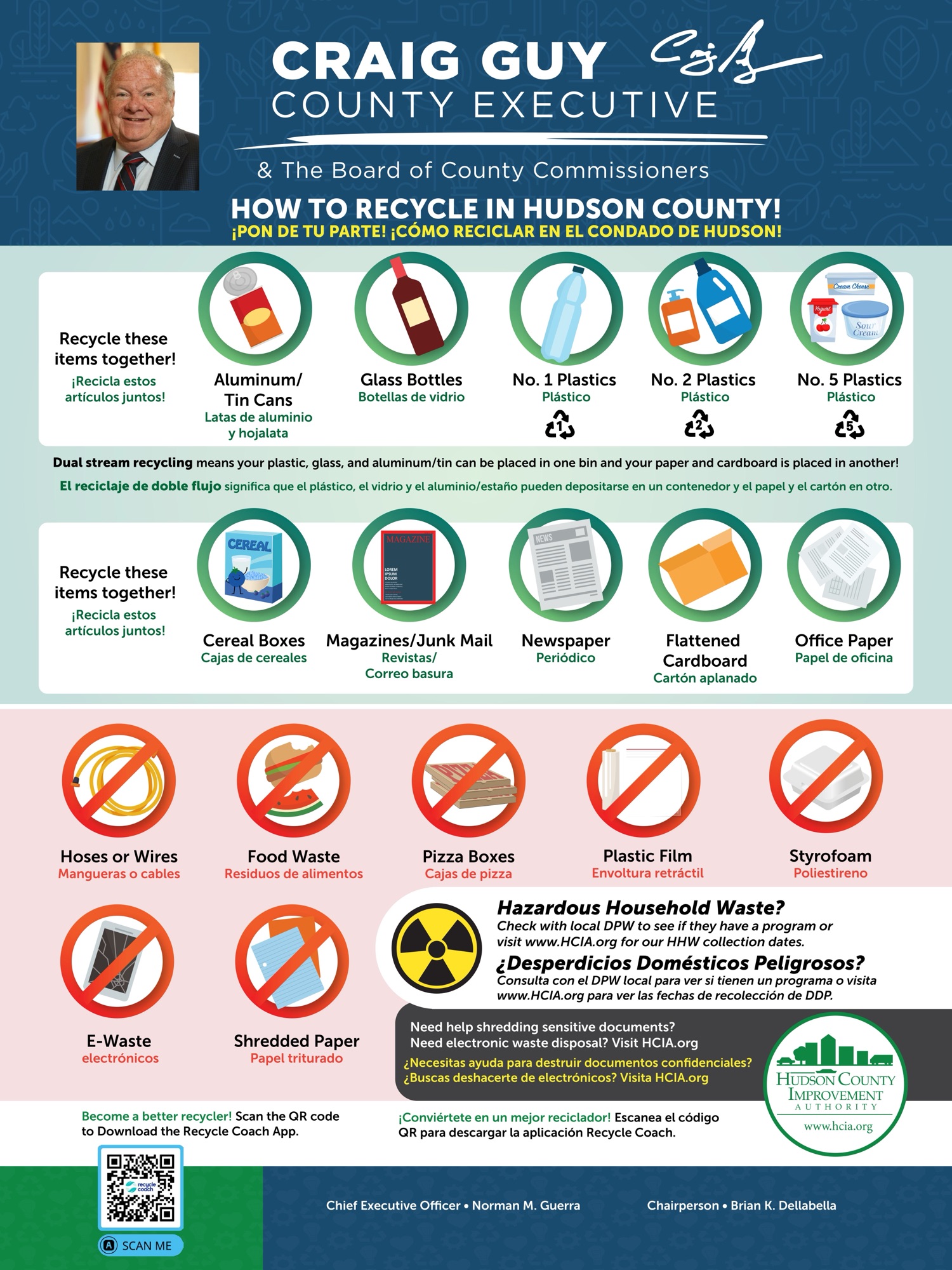
To bridge the gap, the Hudson County Improvement Authority provides bilingual posters to be hung up in apartment buildings in communities.
One shared with Slice of Culture is called “Pon de tu parte! Cómo reciclar en el condado de Hudson” or “Do your part! How to recycle in Hudson County.”
In Hudson County Communities, If You Want More Recycling Info, You Should Ask
For residents looking for more specific information, OPRA—Open Public Records Act— may be the answer. Made into law in 2002, OPRA allows residents to have access to their town, city, or state’s records by making a request.
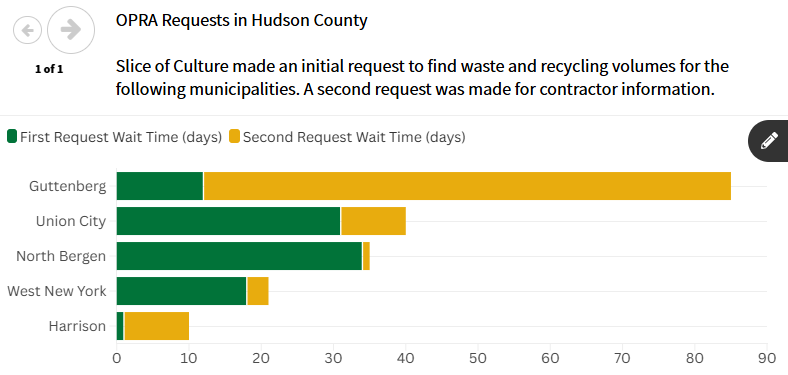
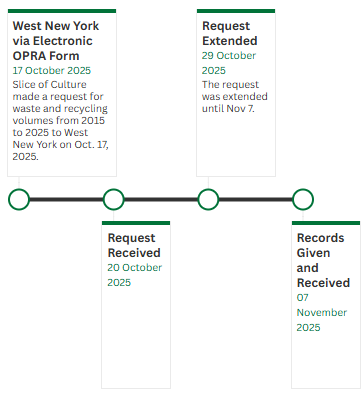
While methods of making the request and wait times differ, by law, all municipalities must acknowledge a request in seven days and provide a response within thirteen days. If the information required needs more time, the municipality must notify you that they are extending the time to provide you with the record requested.
For this investigation, Slice of Culture requested waste and recycling volumes and waste management contractor records from all municipalities. The following is how each municipality handles requests.
This is an active investigation in efforts to bridge the gap of information missing in our communities.
In the second part, we will be addressing recycling and waste management contracts and how public and private waste management affect Hudson County municipalities.
We need your help! Let us know about your thoughts and experiences on recycling here.
Know more things we should include? Email Chelsea Pujols at [email protected] or Jordan Coll at [email protected]!








One Response