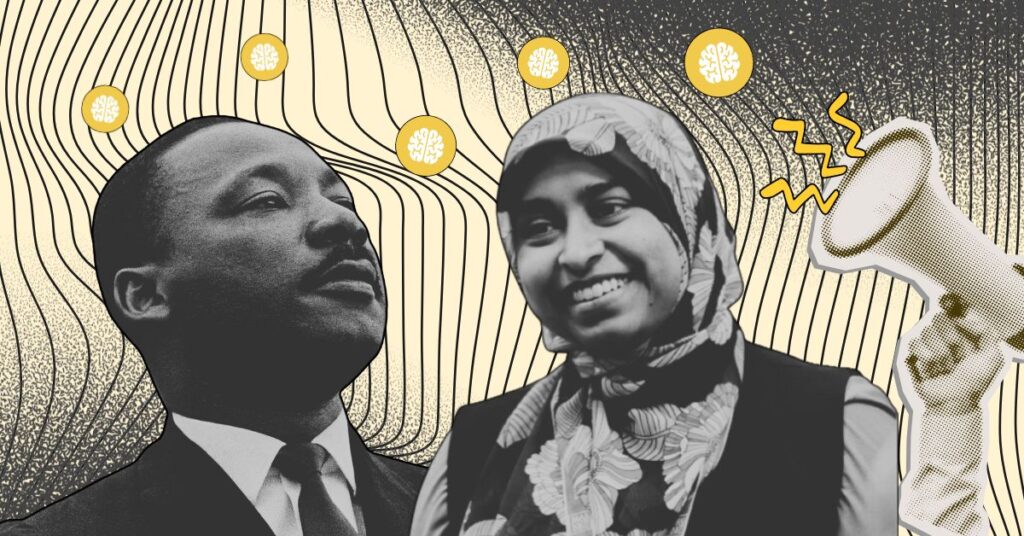
Photos courtesy of HISTORY.com and The Family & Youth Institute. Graphic by Adrienne J. Romero / SOC Images.
Mental Health — we all have it, and now we should all strive to be more open and vulnerable about it.
TheraPieces* is a Slice of Culture column by Mendez, who is a licensed psychotherapist specializing in clinical mental health and has a Master of Social Work degree from Columbia University.
The urgency for ongoing mental health awareness, resources and proper access to services around the world remains crucial, and the conversations surrounding this still need to appear in untraditional spaces and communities.
Mental health is both global and universal, but the experience of mental wellness and the systems that are supported are shaped by culture, history and identity.
As we close off the month of January—Muslim American Heritage Month—and transition into the month of February—Black History Month—let’s take a step back to reflect, and highlight on the unique cultural experiences, psychosocial and historical challenges faced by individuals of both communities and how advocates, researchers and clinicians are bringing open conversations and information on what shaping the conversation of mental health should look like.

Silence: The Impact On Black And Muslim Communities
Within Black and Muslim communities, conversations around mental health are often deeply rooted in silence and shame; in the Black community, it can be traced back to the pain of systematic racism and in the Muslim community, it can be seen as a “lack of faith.” This silence is also accompanied by intergenerational trauma rooted in histories of racism, colonialism, Islamophobia, forced migration and systemic marginalization, which influences how psychological suffering is understood and expressed at a cultural and spiritual level. These are just a few of the factors that could create a barrier to mental health services and conversations. However, it is also shaped by strength narratives and cultural expectations of mental endurance and faith.
But over time, the stigma in these communities result in a lack of awareness, greater severity in mental illness, delayed treatment and poor access to services.
A study exploring mental health discourse among Black African communities in the United Kingdom found that mental illness was commonly perceived as “a sign of weakness or moral failure,” leading individuals to conceal emotional struggles to protect familial dynamic reputations and hold a sense of cultural pride.
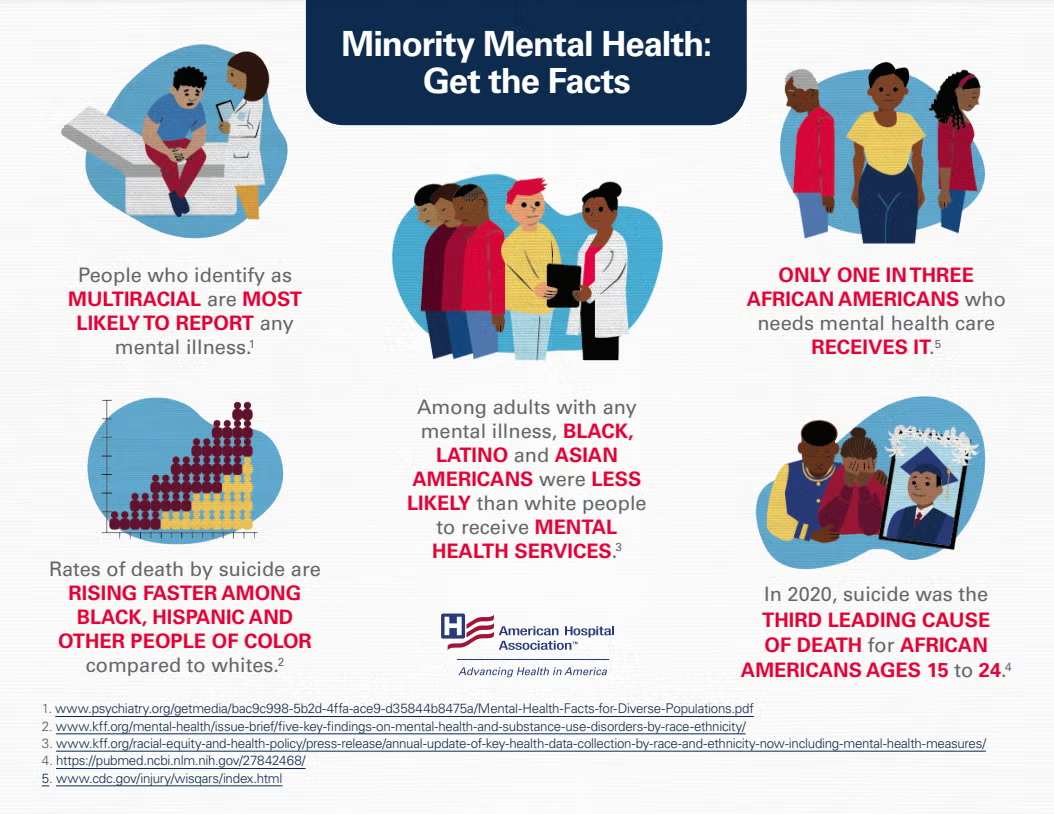
Similarly, research within Muslim communities highlights how they interpret “psychological distress through religious or spiritual frameworks, where symptoms of depression, anxiety, grief, trauma and suffering may be attributed to tests of faith, spiritual imbalance or the need for increased prayer rather than professional intervention.”
According to a 2023 systematic review on Muslim attitudes toward mental health treatment, some participants were concerned that seeking therapy would equate to a lack of trustworthiness and faith in religion and in God, reinforcing the prejudice and stigma resulting in mistrust of healthcare.
Across both communities, expectations of the pressure to be strong and resilient further restrict space for vulnerability, therefore culturally-rooted solutions for one’s psychological well-being such as religious coping styles, faith leaders, community elders and religious counseling are often utilized as first hand sources of support.
Although these supports can provide culturally-affirming care and a sense of belonging, studies advise that they may also unintentionally perpetuate stigma when mental illness is minimized or misframed. While these classify as mental health conversations within Black and Muslim communities, a challenge still remains for a healthy talk that honors cultural standards, but also breaks down the intergenerational silence and shame surrounding mental illness.
Leaders In Black And Muslim Communities Who Have Tried To Break The Silence
Despite the challenge, there have still been advocates, clinicians and researchers who have worked to reshape the mental health conversation within the Black and Muslim communities
Also known as MLK, King was an American Civil Rights Activist, Civil Justice leader, baptist minister and advocate for mental health.
King is a well-known and relevant example of not only for the movement of equal human rights of all races, ethnicities and backgrounds, but also that King’s beliefs and words of activism were very much deeply rooted in healing and the importance of peace, creating change within not only the system, but also within ourselves. He famously stated, “of all the forms of inequality, injustice in health is the most shocking and the most inhumane”. He framed mental health not only as a wellness issue, but also as a social justice issue, and has advocated on how systemic issues contribute to poor mental health outcomes.
Also known as Thema Bryant-Davis, Bryant is a Liberian-American clinical psychologist who specializes in trauma recovery, cultural considerations of mental health and was the former president of the American Psychological Association.
Both a minister and sacred artist, Dr. Bryant’s work has called out racial trauma as a legitimate “psychological injury” rather than an individual weakness. Her work involves intergenerational healing practices grounded in cultural affirmation, spirituality and collective care. Those techniques meshed with a focus on liberation, trauma recovery and resilience, have aimed to normalize conversations within the Black community.
Scholars including Dr. Monnica Williams and Dr. Kenneth Hardy have argued that effective mental health care for Black communities must hold open conversations and confront racism directly in and outside the therapy room.
Within Muslim communities, leaders in mental health advocacy have similarly worked to bridge the gap between religion, faith and psychological care.
Ahmed is the Founder of The Family & Youth Institute (The FYI), where she served as executive director as well as licensed clinical psychologist specializing in couples and spiritually integrated psychotherapy in support of Muslim youth, families and communities.
Ahmed has integrated both evidenced-based-mental health treatment aligned with the religious values of Islam. An influencer to mental health wellness and a community leader, Ahmed’s work embeds practical, faith-rooted tools that “help Muslim families thrive spiritually, emotionally, and relationally.”
Dr. Abdallah Rothman + Dr. Amber Haque
Rothman and Haque have explored how Islamic theology, identity and religious coping influence mental health experiences and treatment preferences. Their research has examined the intersections of Islam, spirituality and psychological well-being, creating models for Islamic psychotherapy as a means of treatment.
Their work offers the potential for both healing and growth while also keeping a preference of therapeutic coping through religious and spiritual beliefs.
What You Can Do
As we reflect on the roles of each intersectionality that shape mental health discussions—including culture, identity, stigma and trauma—within Black and Muslim communities, we can see that meaningful change is underway, but still crucially needed on a global level.
The work continues with you and others who are interested in promoting, representing or helping break the barriers in these communities and beyond.
Some resources include:
If you know more resources or want a specific topic related to mental health covered, Daniella Mendez may be reached at [email protected].