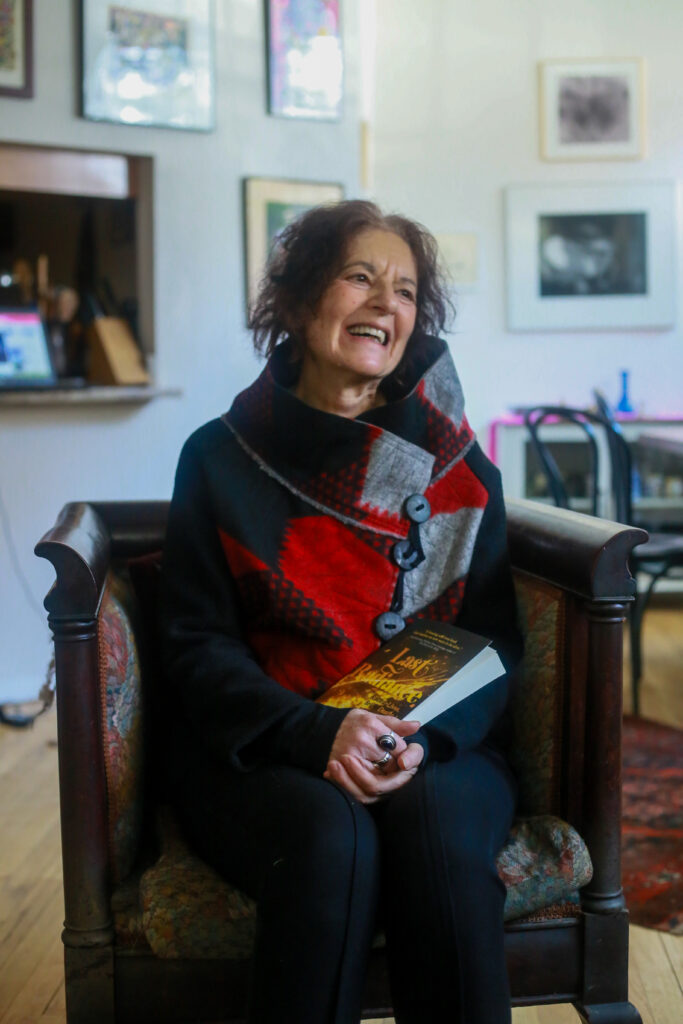
Photo by Elektra Hanna / SOC Images.
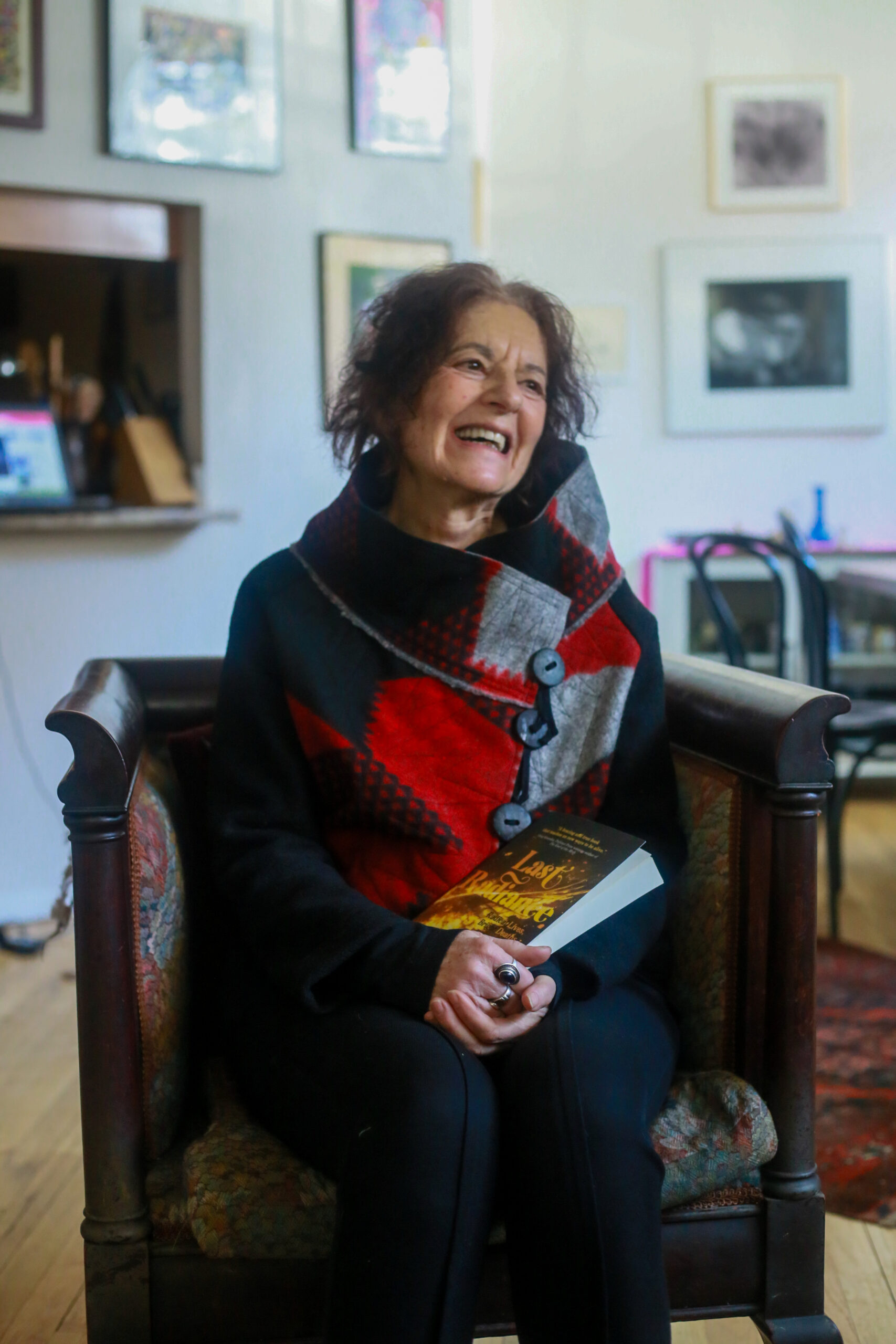
Karen Malpede has dedicated her life to directing, playwriting and activism. The 83-year-old’s passions and talents have propelled her to be a legend that many recognize in New York City’s cultural avant-garde scene.
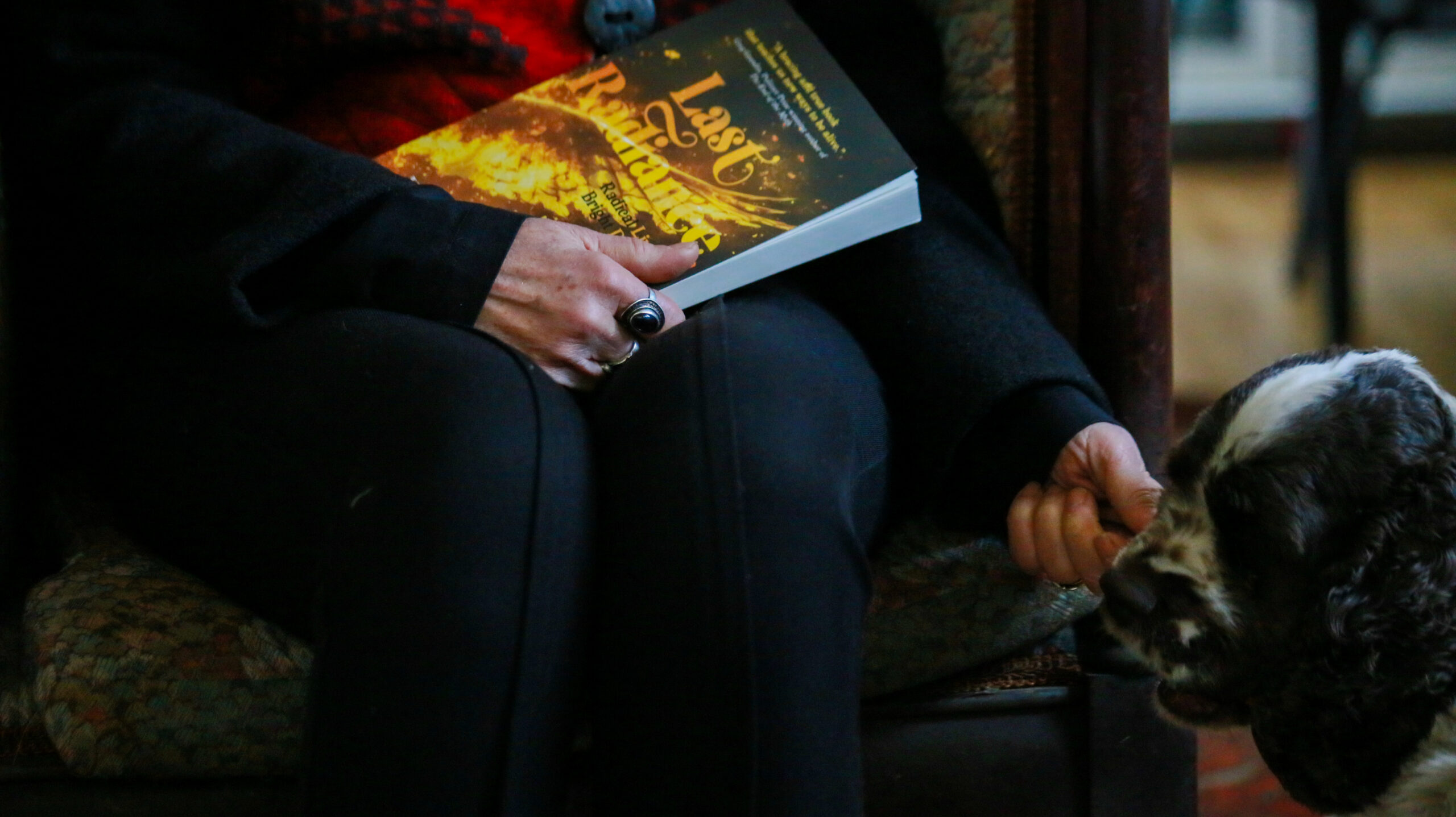
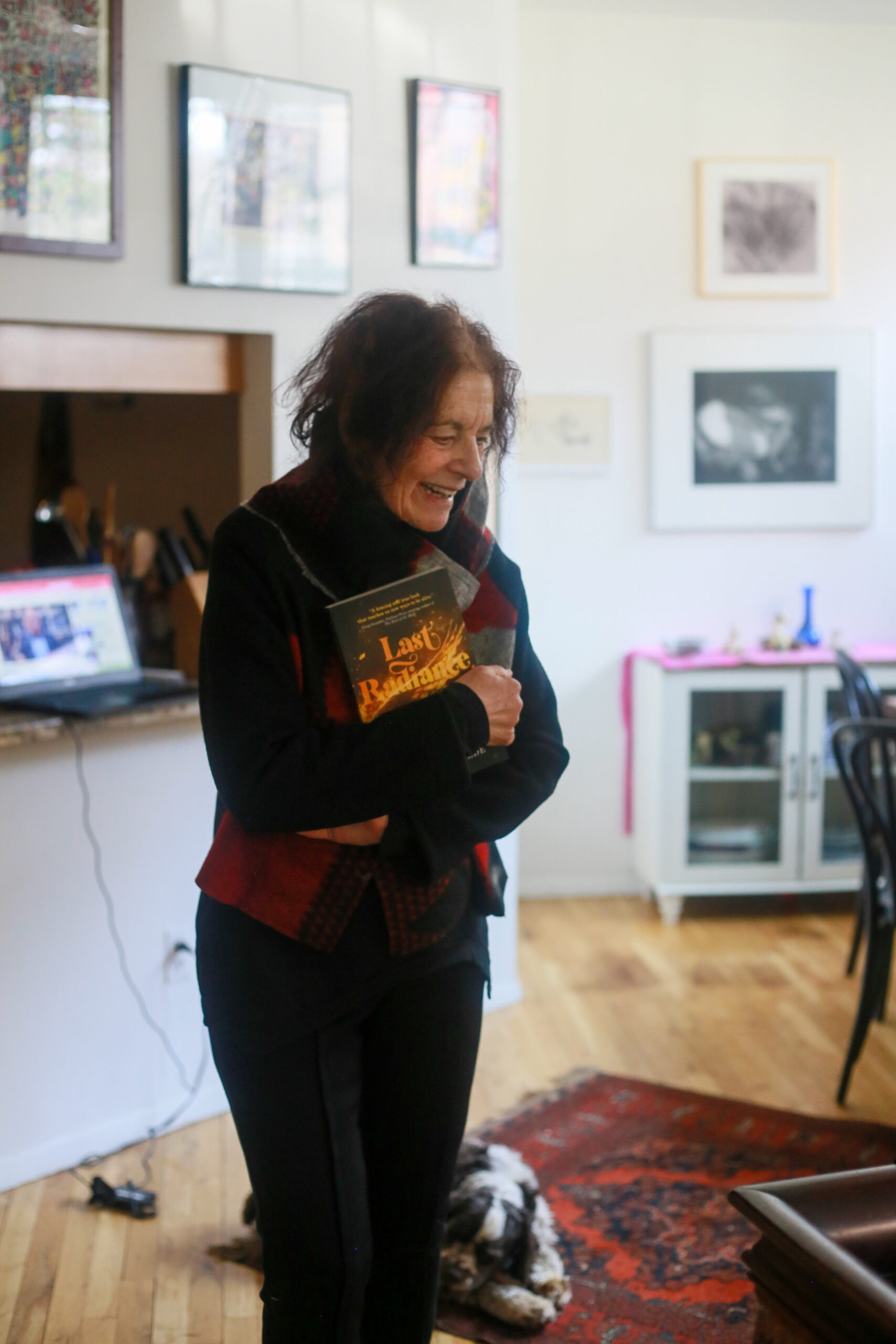
Establishing the Theater Three Collaborative with her late partner, George Bartenieff, allowed her to use her perspective to create socially and politically impactful stories. In her memoir “Last Radiance: Radical Lives and Bright Deaths,” she speaks about triumphs and tragedies in her life, artists that inspired her to be brave in her storytelling and moments that shaped her worldview.
Malpede also speaks about the relationship with her father, meeting her friends Julian Beck and Judith Malina, of The Living Theatre, and how their radical artistry was rooted in ending war. She mentions her play “Extreme Weather,” which was inspired by her eco-feminist beliefs. Eco-Feminism is the fight against the discrimination of women and other marginalized groups in regards to the degradation of the environment due to patriarchal forces.
Myself and one of Slice of Culture’s photographers recently sat down with her to go over her career and what challenges young activists face today.
It was a freezing Saturday in the borough of Brooklyn. I could see my breath as I shivered in the lobby of a large apartment complex. Heat was not an accommodation afforded to strangers in this building it seemed.
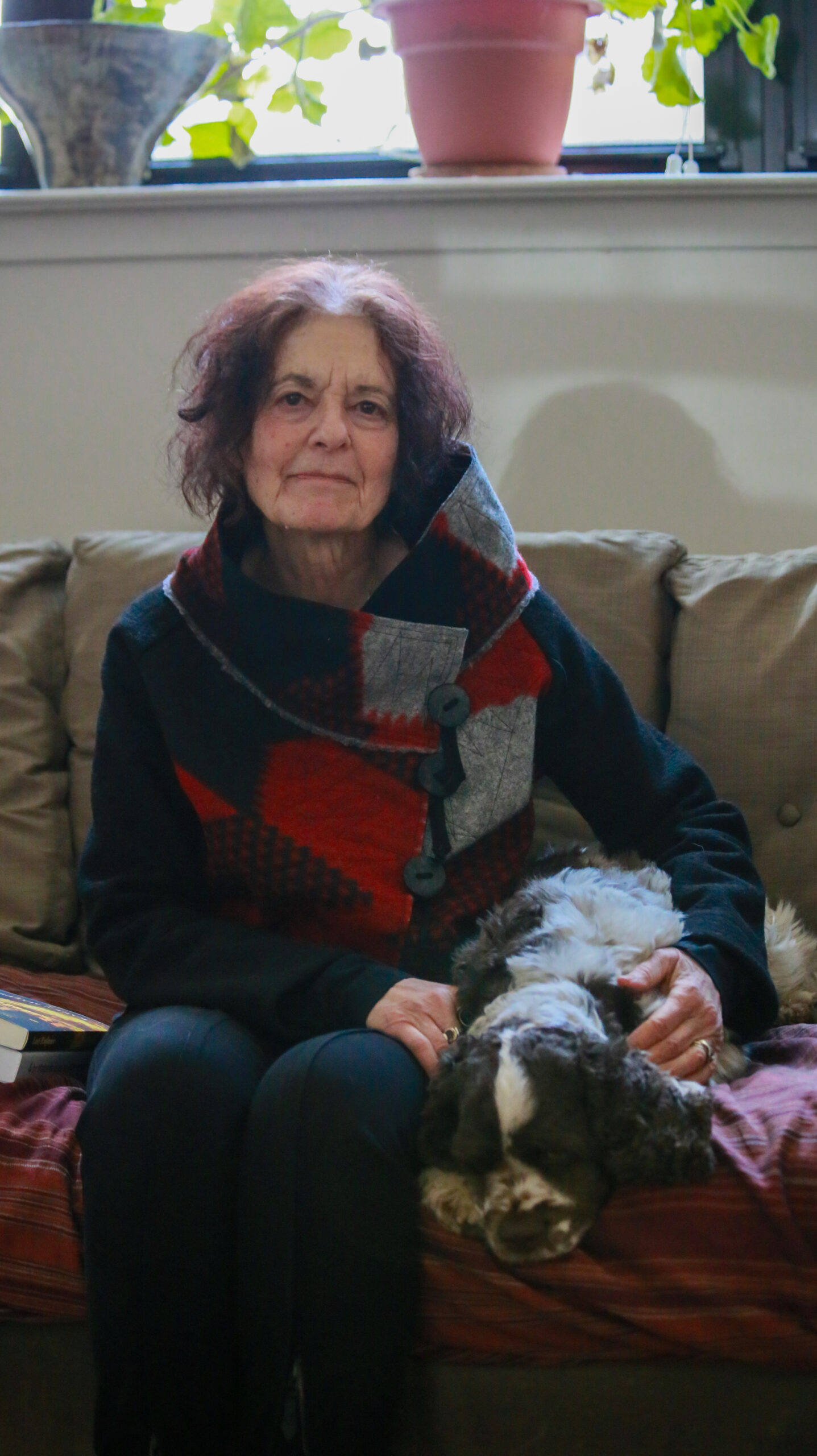
The shivers were only overcome by curiosity as I waited for the renowned author. In the back of my mind, I was thinking of the uncertainty of meeting a person and how their written works would compare to their actuality. This thought was interrupted with the audible scampering of paws and a bark. I was then greeted by the focus of my article: Karen Malpede. I was not cured of my frigid sensations. But I did start to feel warmth.
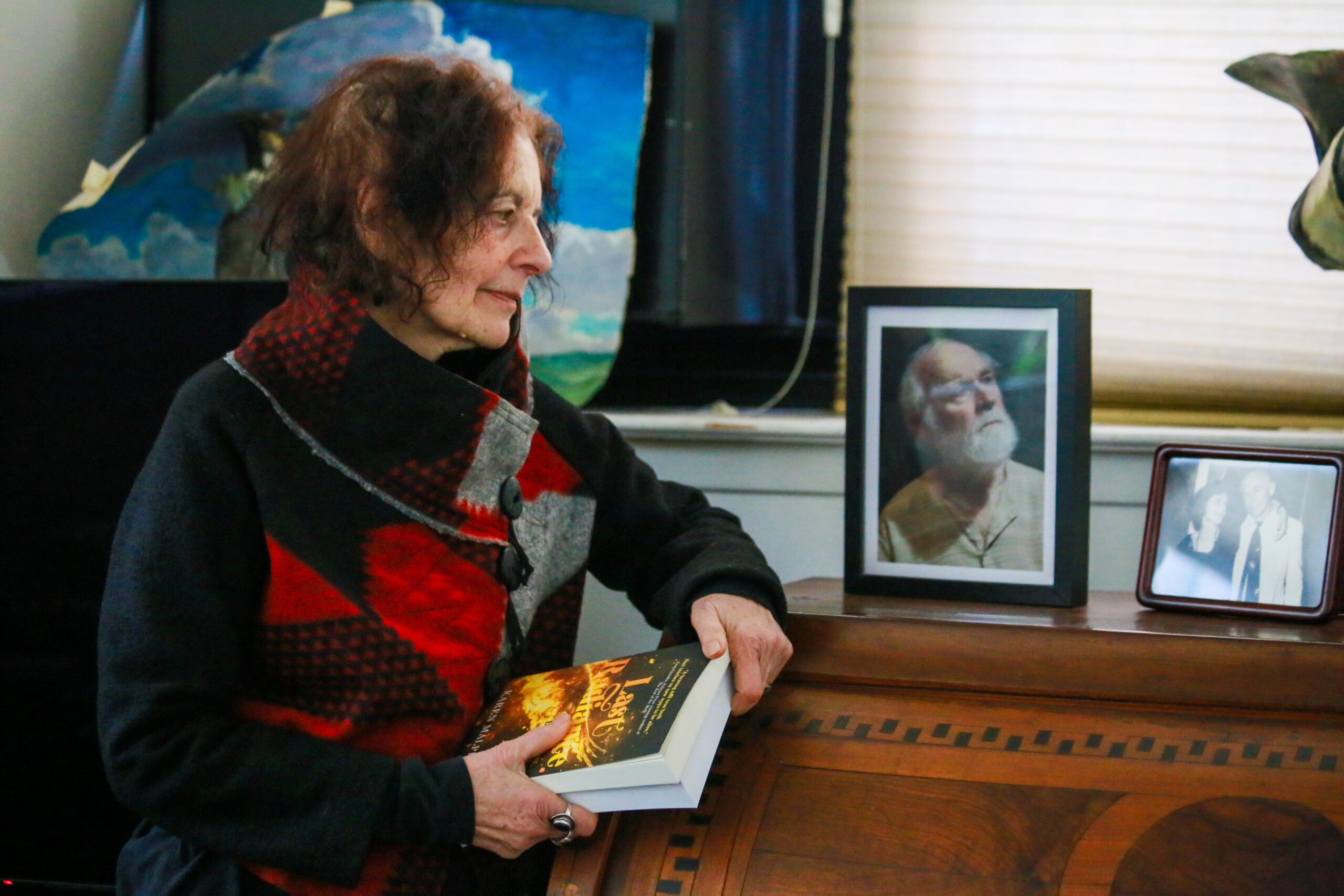
Malpede gave us a tour of her apartment, painting the picture of life filled with stories and memories of people. You don’t only see this in the items that have been acquired, but also when she speaks of fond memories. She points to a picture of her late husband, George Bartenieff, on the top of a closed piano.
The complimentary manner in which she speaks of him made me come to the quick realization that this man was not only her romantic and creative partner, but also one of her muses. An irreplaceable being whose time on this planet she cherished deeply, but misses his presence everyday. Together, they created an uncompromising, socially, politically-charged theatre.
She has attained further accolades—including her role as an adjunct associate professor at John Jay College of Criminal Justice in New York and being a member of numerous activist groups—but the complexity of her life extended far more than our one-hour interview could do. Her works as an author and a director of over 22 plays has been groundbreaking.
Still, we talked with her about how her activism inspired her artistry and what she hopes for in the future.

The first few pages of [Last Radiance: Radical Lives and Bright Deaths] describe a memory of your father having a heated argument with your mother. Can you describe what it was like growing up in that home with your brother?
It was very volatile. My father was a complex person. He was the son of Italian immigrants in Chicago. But he was a very smart and lovely person and he had a temper that would go off… I actually credit him with teaching me how to write… I never heard the cadence and rhythm that contained the power of language. He taught me language could hurt. But language was also a healer. He was diagnosed with Terminal Cancer when he was 42 and lived two years [after he was diagnosed].
Unfortunately the recurrence of cancer seems to be a theme in your life from what I read. [Talk to me more about that].
One in three people have cancer in this country.
When I was teaching, I would often have students, who came in late or didn’t come in for a while and then they would say they were taking care of their mother on chemotherapy and that there was no one else to take care of her; that’s why they haven’t been to class. This was [from] many different students over the years. Cancer is an epidemic in this country and other countries as well.
What was your relationship like with your mother?
My mother was an extremely beautiful, gifted woman.. She was from a very assimilated Jewish family, partly from Russia and Germany. We became very close because she loved my work. She loved my plays and she would come to every play, but in childhood we were less close.
Do you think your mother’s work provided an example of feminism?
Not a big deal was made of it in the 1950s. My father didn’t want my mother to work, but she worked anyway. She modeled. She had a radio show. She also acted in [a] little theater. She was cast as Amanda in Tennessee Williams play, “The Glass Menagerie.” She was a slow study, which meant she had trouble reading her lines. A lot of my life has been spent helping actors learn their lines. I sat with her and helped her learn her lines. I was nine or ten. That was the first play that I ever experienced.
Did you know from that point on that you wanted to write?
I always wanted to be a writer. I remember saying to my twin brother. We were sitting outside the house, “If I could do anything I would write poetic plays.” And he said, “why don’t you do that?”
And I said because women don’t do that.
How was your time at Wisconsin?
Wisconsin is a huge school with about 30,000 people—split between very left, very progressive people and very conservative people.
There were a lot of wonderful professors there and graduate students who recognized the mistakes of the Vietnam War… Because I came out of a violent home perhaps I knew the futility of violence that it never solves anything and that it continues.
How did your friends Julian Beck (producer, designer, actor and director) and Judith Molina (director and writer) inspire you?
They told me to be a brave artist. They taught me how to be a brave artist [and] a cutting edge artist.
In your work you touch upon the stereotypical roles of women as nurturers and men as providers, but you switch it. What made you want to do that?
You know there’s always another way.
There’s the dominant way that we see today, [which is] unfortunately we have an abuser as president; Donald Trump acts like an abusive husband. So that way, of being bossy pushing people around, being violent and ugly, is one way of being.
And then there’s another way, which many people exemplify. This country has always had a tradition of non-violent activism. It goes back to the minute slaves were brought here .There were slave resistors and within the community of slaves and non-slaves… And you know there has always been a movement to solve problems in another way and that means, of course, endowing everyone with their full humanity.
So women are doers and nurturers and men are nurturers and doers.
How would you describe your form of activism?
My general activism is that I’m a pacifist. That comes first. I’m a non-violent activist. That means every war, every system of oppression has to be protested against and, ultimately of course, the eco-feminist movement, the awareness of the earth.
Our jobs as nurturers is to also protect the earth. So I became an eco-feminist ecologist. I wrote a play called “Extreme Weather.”
How do you feel about activism today and about the young people who enter it?
It has never been more important than it is today. I think many people see this. How did this man—President Trump—get elected the second time? How do you vote for your abuser? The racism is so explicit. The sexism is so explicit. I’ve been protesting since the first election. I’ve never stopped hitting the streets.
What makes you scared for the younger generation’s future?
Everything.
Climate Change, artificial intelligence, which I’m just now confronting as a terrible thing. The digitalization of everything. I was listening to a podcast by a young woman and she spoke about the possibility that all of our finances will be online therefore we can be tracked. Leaving us vulnerable to a surveillance state.
What gives you hope about the younger generation?
The younger generation is great…. I think the younger generation is quite special. You are more aware of your rights and your place in the world. I mean we had to discover that women could be artists. That a mother could be an artist. That you could be a modern artist and an activist. This was all news to us. I think the tradition is more unbroken now. There’s always been that tradition, but it gets slowed down, I think now it’s impossible to stop.
So the young hopefully have a sense of their rights and their privileges and their responsibility to others. And I find the younger generation really hopeful and groovy.
What advice would you give to the younger generation?
Love one another and give each other courage. You know, act from your love. That is where your strength is.
Malpede’s memoir “Last Radiance: Radical Lives, Bright Death” is available now on Amazon and in stores.