Photo by Neidy Gutierrez / SOC Images.
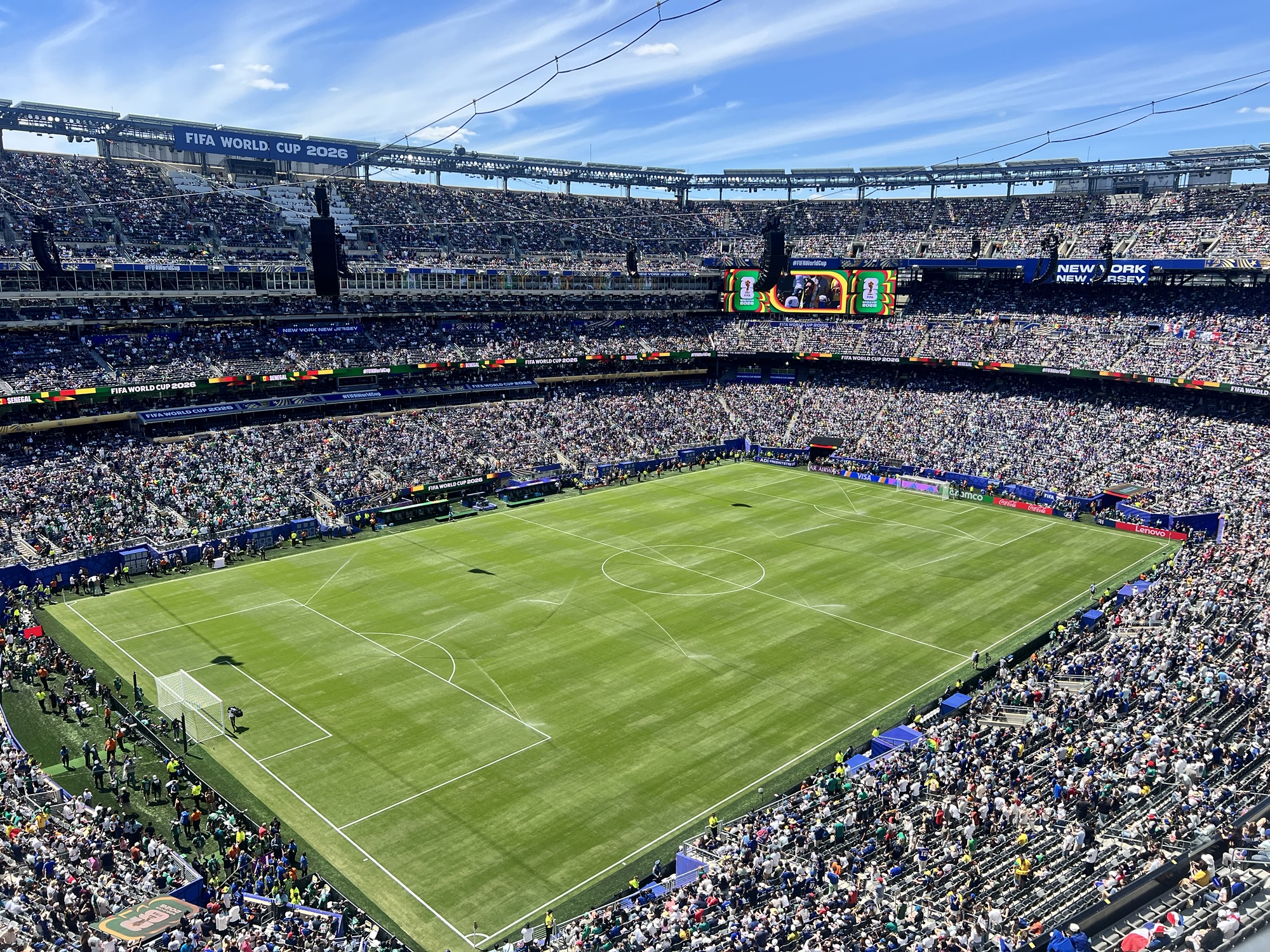
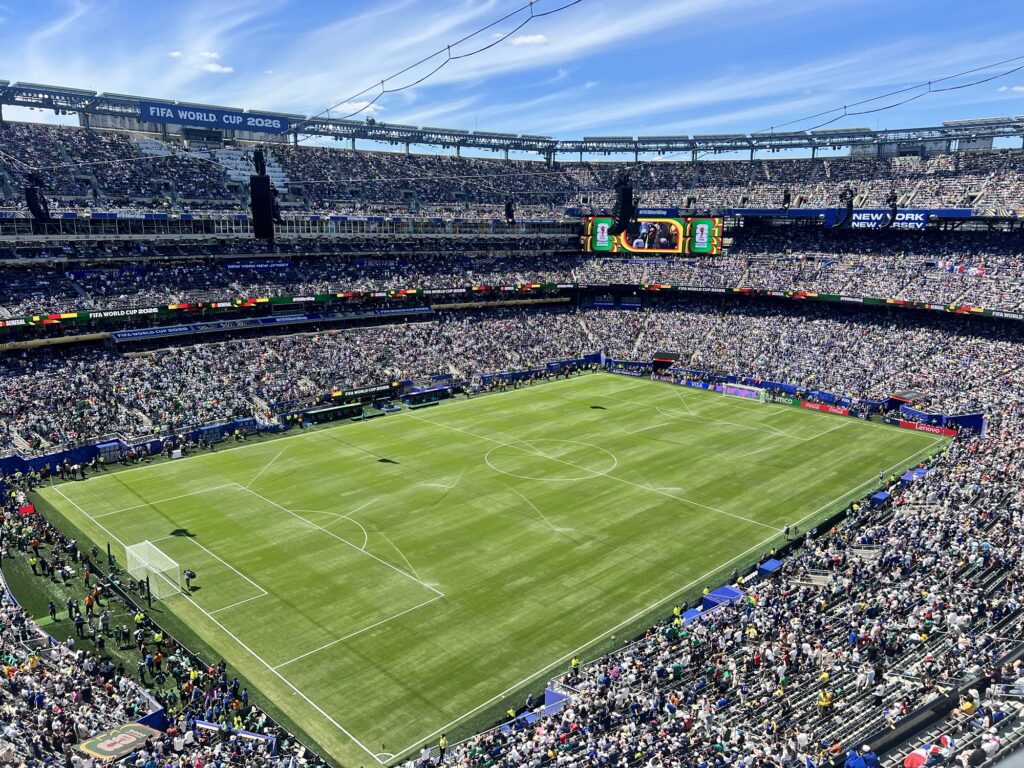
Hundreds of thousands of visitors passed through New Jersey over the summer as the World Cup, one of the biggest sporting events in the world, took place in the U.S., Canada and Mexico. Fans experienced 39 days of games, including eight hosted at the MetLife Stadium—which was temporarily named New York New Jersey Stadium—including the final match on July 19 where Spain was crowned the World Cup champion after beating Argentina 1-0.
Leading up to the games, the World Cup was projected to generate $3.3 billion in economic impact for the New York/New Jersey region. In August, The New York New Jersey (NYNJ) Host Committee announced that the 2026 FIFA World Cup had a total of $3.5 billion in economic impact on the New York and New Jersey region.
Out of the $3.5 billion, $1.9 billion was noted as direct spending including $1.7 billion in “off-site spending by match and non-match attendees at businesses and establishments in the New York and New Jersey region“ and “$286 million in operational spending by FIFA World Cup 2026 New York New Jersey Host Committee, FIFA and other stakeholders.”
With more than 645,000 fans that attended the World Cup matches at the East Rutherford stadium, how much of those funds or benefits did New Jersey get?
What Did It Cost To Get To The Games?
For fans attending matches at the New York New Jersey Stadium, they experienced one of the highest transportation costs. NJ Transit tickets had cost $98 roundtrip, initially a $13 fare, which included unlimited travel across the entire NJ Transit system on match days. The $98 price was cut down from the originally presented ticket price of $150 after additional funding was obtained.
In a report released by the NYNJ Host Committee, about $200 million was spent in airfare, taxis, parking, public transportation, rental cars and ride share by consumers.
The region also offered $20 roundtrip shuttle tickets, initially $80, from New York City to the East Rutherford Stadium. And if ticket holders chose to drive, parking had cost up to $225.
On the other hand, one of the neighboring major hosting cities, Philadelphia, charged fans only $2.90 to use public transportation.
Locals like Cosy Cup owner, Jess, previously told Slice of Culture, that the expenses of attending the World Cup matches might have affected the customer traffic in some areas.

“Even though [the World Cup] is so big, [customer traffic] is not like trickling anywhere.
“It seemed like the World Cup took a little bit of business away just because even a [train ticket] is almost 100 bucks if you want to go see [World Cup matches]…. So it’s like, people are spending a lot more money just to go see the game, but that it’s not providing anything around the game area itself.”
According to CBS, one of the reasons why mass transit in MetLife Stadium had higher prices than other U.S host cities would be the lack of parking and no viable walking route in New Jersey, forcing the majority of fans to have to rely on mass transit.
For the final game of Argentina versus Spain, Argentinian fans were seen crossing Route 3 to get to the stadium.
How Fans Celebrated At Fan Fest And Local Activations
World Cup Fan Fests and activations gathered millions of fans from all over.
Philadelphia’s Fan Fest, which was free to the public, set record attendance very early on and accomplished to have the most attendance on a single-day among the U.S host cities. An estimated 575,000 visitors attended the FIFA Fan Fest at Lemon Hill contributing to the tourism and city economics.
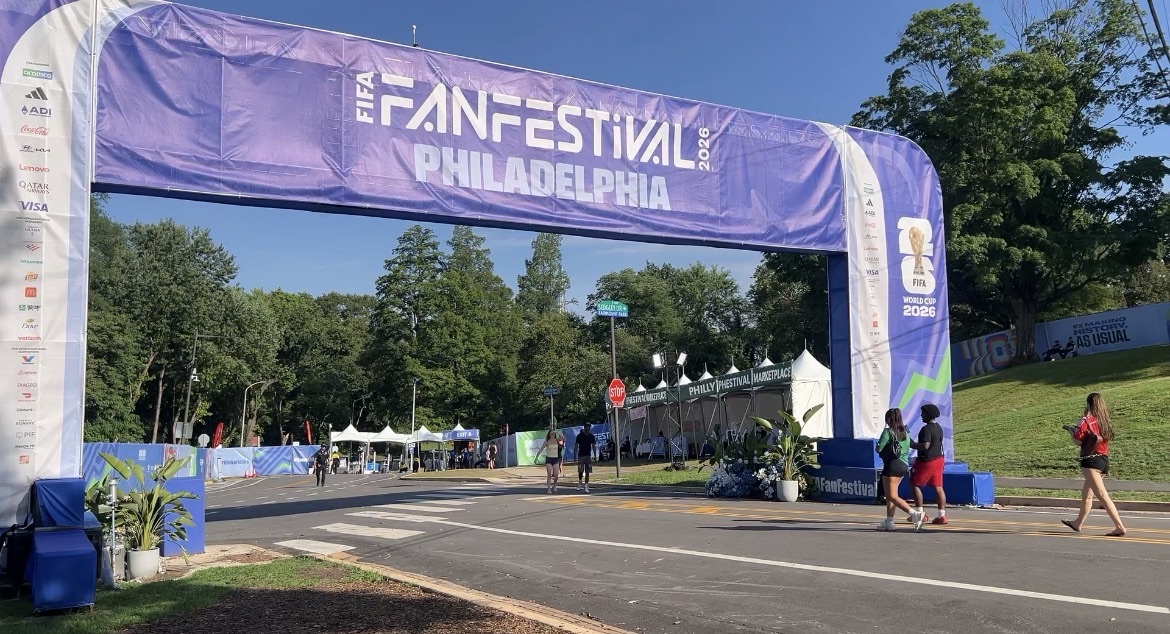
Philadelphia stayed free and was open for all 39 days of the World Cup. Philadelphia was also able to have various sponsorships such as Coca-Cola , Michelob Ultra, Kia and Diageo’s Casamigos tequila brand, giving the Philadelphia Fan Fest a bigger boost of activities and special events. According to Sports Business Journal, the fan fest featureds a 10,000 square-foot FIFA merchandise shop.
New Jersey and New York held many free fan fests all throughout the region from Jersey City and Harrison to Queens and Staten Island. About 1.8 million out of the two million people who attended the official fan events, were from the New York and New Jersey region. Originally New Jersey was scheduled to host a fan fest in Liberty State Park in Jersey City, with a $10 ticketed entry, but was cancelled, and instead the committee focused on creating a program to bring the World Cup to communities throughout New Jersey according to the Athletic.
Gov. Mikie Sherrill launched a $5 million World Cup community initiative that focused on small business, communities, cultural associations and community nonprofits, according to NJ.Gov. But according to some business owners, not many of the Hudson County businesses benefitted from this money.
“FIFA’s initial ask, as per a contract reviewed by The Athletic, was that every host city would provide an official Fan Fest free of charge to spectators for every day of the competition. Yet this will now not be the case in any market, as cities have pushed back on the cost and responsibilities involved,” according to the Athletic.
Comparing NYNJ To Philadelphia: The World Cup’s Overall’s Impact
While each host city had its own ups and downs, NYNJ faced backlash, according to NJ.com, where fans were stuck at MetLife Stadium more than three hours after Brazil and Morocco ended their World Cup match in a 1-1 tie on June 13.
“The problems started Saturday [June 13], well after the game ended. At 10:15 p.m., fans who started walking toward the rideshare pick-up were told by stadium workers that no more Ubers or Lyfts were being allowed into the pick-up area,” NJ.com reported.
Meanwhile in Philly, the opening night at Lincoln Financial Field—which was renamed Philadelphia Stadium for the tournament—was a successful opening night, and fans were able to quickly make their way to one of the city bars, which won state approval to stay open until 4 a.m. during the World Cup, according to The Philadelphia Inquirer.
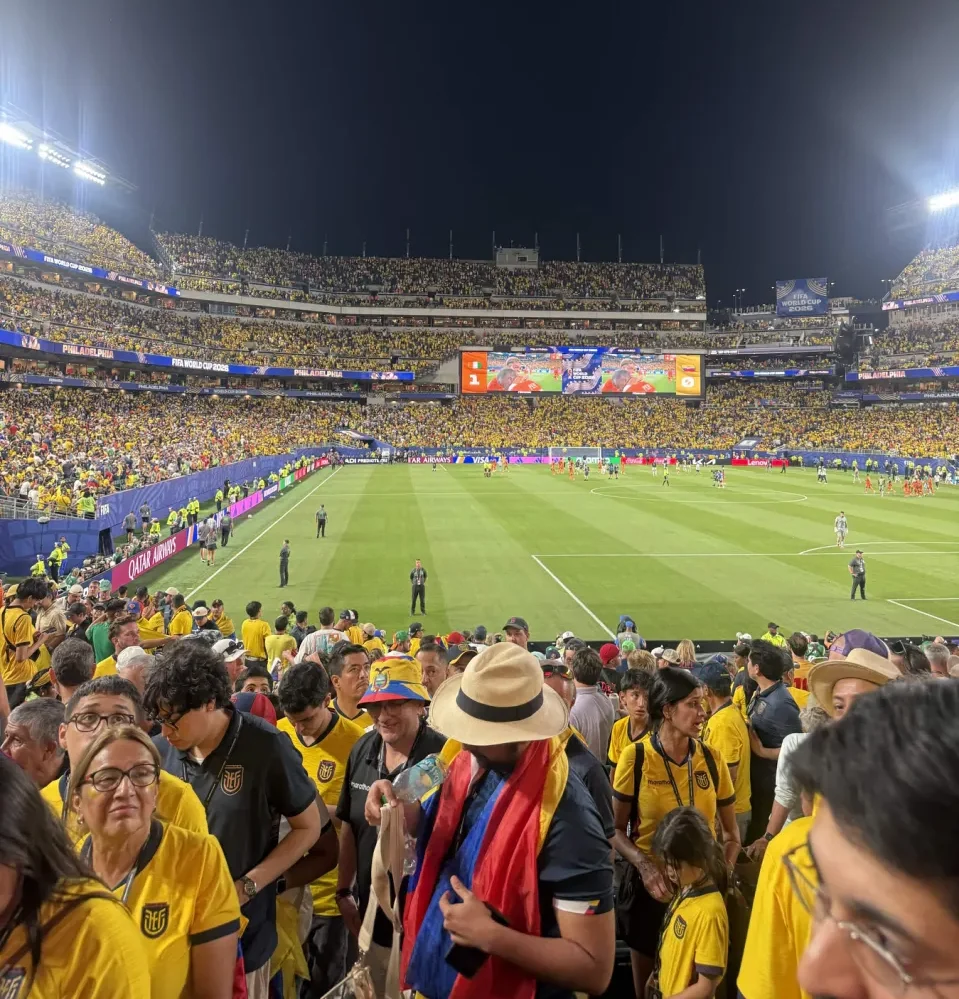
More than 500,000 people were estimated to have visited Pennsylvania for the World Cup, hosting six matches at the stadium. Philadelphia projected the matches would inject over $770 million into Pennsylvania’s economy, creating 6,615 jobs and generating $51 million in tax revenue, according to the Pennsylvania Department of Community & Economic Development.
While NYNJ hosted the final game, Philadelphia had pitched itself as an “affordable” choice for World Cup fans and had reportedly offered the opportunity for daily crowds of 15,000 to watch matches, sample local foods and have entertainment at Philadelphia’s Lemon Hill Fan Fest.
Meanwhile in New Jersey, the state launched a digital rewards program that encouraged residents and visitors to support small businesses during the World Cup and attend community events across NJ. Gov. Sherrill announced the “ Welcome World Program,” which was designed to drive visitors and residents to local small business and community events during the FIFA World Cup, while visiting fans can redeem points for exclusive prizes and experience.
Fans who reached the milestone were eligible for opportunities to attend one of the matches as a guest of the NYNJ Host committee, among other special prizes. However, there were reports of ongoing revenue losses for businesses such as the Carnegie Diner & Cafe in Secaucus, which is a five minute drive from NYNJ stadium, but is an over 30-minute ride via public transportation.
According to CBS News, people have only gone to local restaurants in close proximity to the stadium.
“People cannot come to the restaurant. All the major routes are closed. Our entrance from Route 3 is closed. You have to come from the side streets,” Stathis Antonakopoulos said, according to CBS.
For local business owners further away from the stadium, such as Luna Restaurant and Bar in Downtown Jersey City, owner Julian Muscio expressed how with the World Cup, the restaurant didn’t have a huge economic boost.
Compared to the New York Knicks championship run, which drew large local crowds to the restaurant when the team won in June, Muscio said he believes the World Cup didn’t generate the same level of excitement for many locals. He explained that people are less interested in watching foreign teams compete, especially if they are not among the tournament’s biggest or most recognizable teams.
“A lot of the locals didn’t really come out to watch a game they didn’t care about, which I totally understand. Whereas with the Knicks, they did care, so we saw more of a boost on the nights where the Knicks were playing. Plus, they were playing at like 8 p.m. or 7 p.m., which is more of a prime time hour,” Muscio said.
Luna Restaurant, which has operated since 2017, participated in programs such as the “Welcome to the World” program and Jersey City Restaurant Fest, but Muscio expressed how it was not enough to capture people’s attention to Jersey City and steer them away from a trip to New York City.
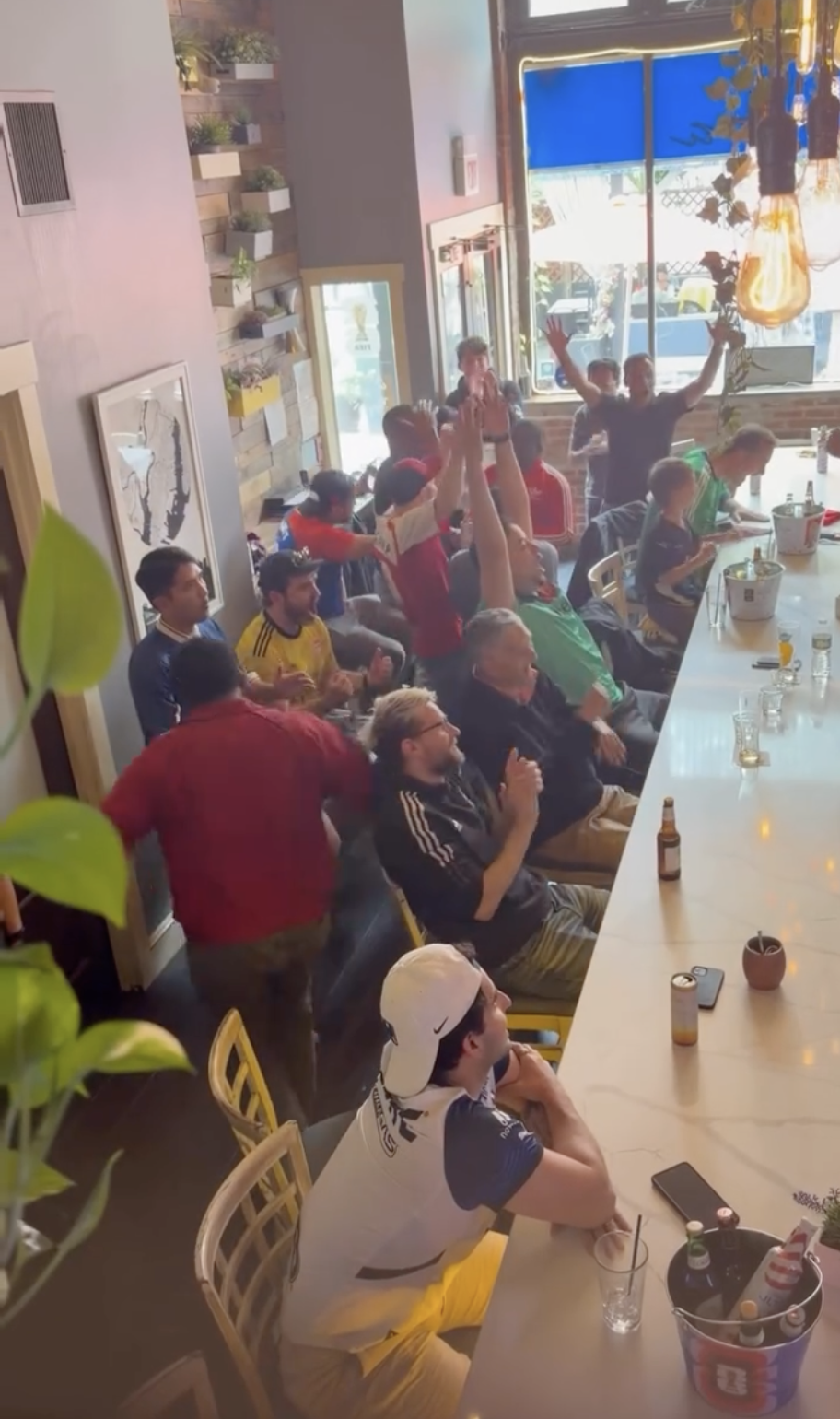
The restaurant invested in outdoor seating and wifi for the game viewing, but saw minimal benefits with sales remaining average and no significant surge in the restaurant.
“There’s not a lot of sightseeing to be done in Jersey City. Everyone’s going to go to New York for that. So then your only other option is to do something that’s World Cup related, which would have been the fan fest at Liberty State Park, right? That would have brought in thousands of people who were visiting,” Muscio said.
Prior to the World Cup starting, Luna Restaurant and other local businesses who were part of the restaurant coalition, teamed up to organize a street festival where vendors and restaurants can set up tents and have their own parties, according to Muscio.
But according to Muscio, they faced numerous obstacles and weren’t able to set the festival up, which caused a lot of frustration that the city didn’t capitalize on the opportunity to attract more visitors and support local business.
Slice of Culture posted a Reddit thread where users discussed how many roads were closed and prevented people from coming into New Jersey communities and visiting local businesses.
One user mentioned , “Everyone who came here for it stayed in NYC. So all it did was add to the travel pains and $$ for the state. It’s very cool that it’s in the US and getting attention for the sport. But NJ didn’t benefit at all, really. They even say NY most of the time during the broadcasts.”
said Steven Fulop, the former mayor of Jersey City and current president of the Partnership for New York City, an business group.
For New Jerseyans who live farther away from the stadium, they mentioned not having any impact on their everyday life and being clueless about when the games were taking place.
“We hear about how the hospitality economy got a boost in the other US host cities, NJ seems to have gotten the short end of the stick with visitors spending all their time and money in NYC or Philly,” another user noted.
While others have mentioned having a great time at the watch parties, such as one comment mentioning, “I had fun going out to watch the games. At my local bar , there’d always be at least a few people there specifically for that reason. I went to a few watch parties hosted by municipalities; those were fun and gave me a chance to try new restaurants. Liberty Science Center hosted a watch party, too.”
How do you feel the World Cup affected or impacted New Jersey? Tell us in this quick poll!