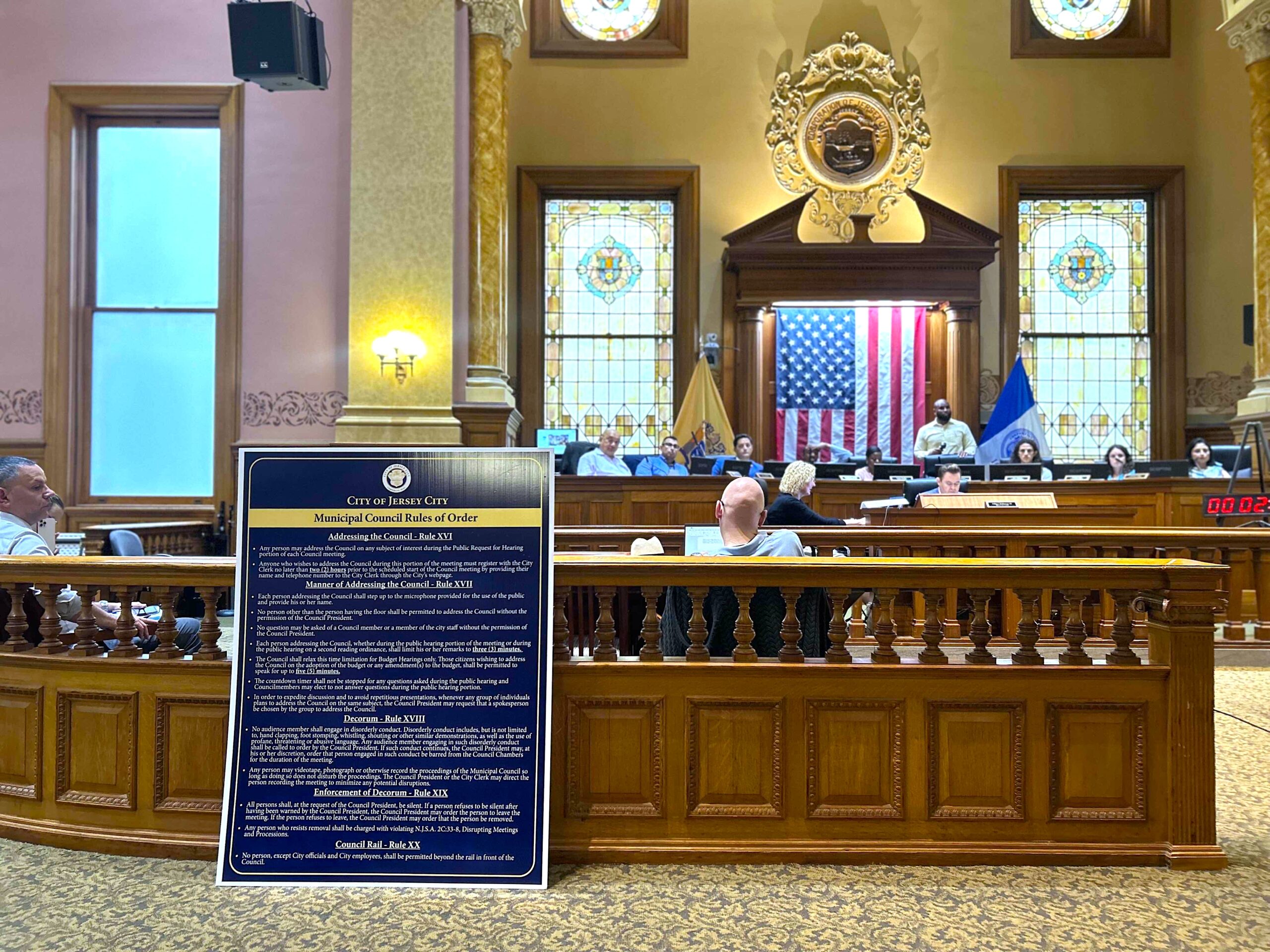
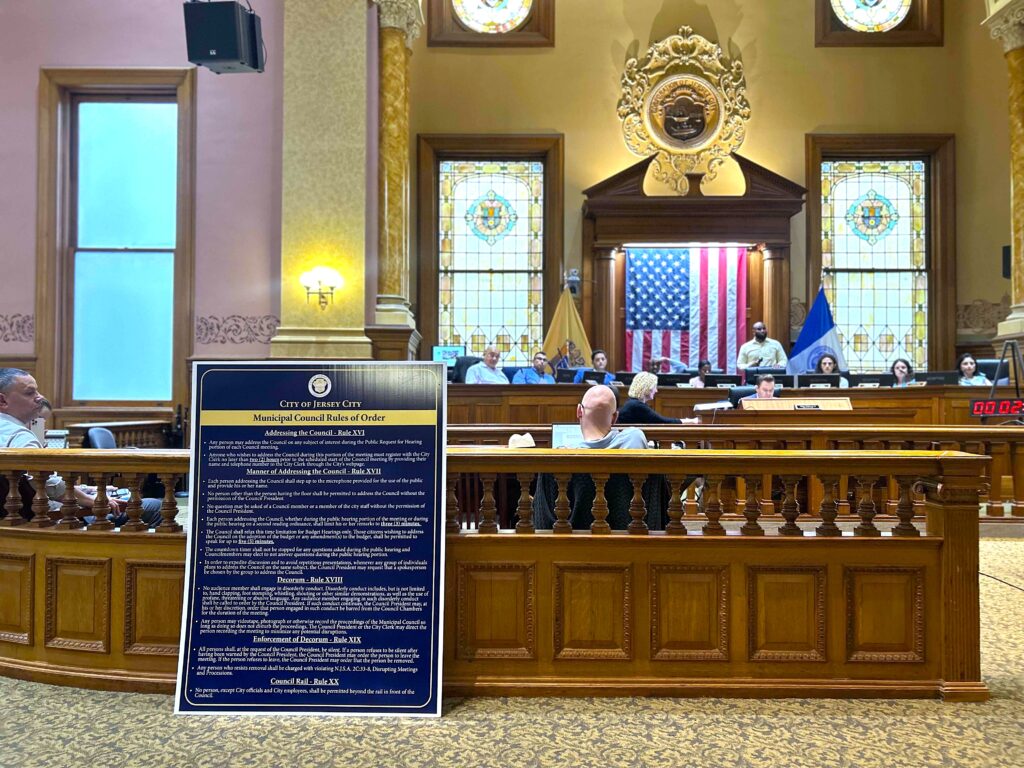
Photo by Adrienne J. Romero | SOC Images.
Laws and politics shape so much of our everyday lives, but a lot of people who want to get more involved in their communities may not know where to start or how local government actually works. One place to start is by understanding how decisions are made—let’s look at Jersey City.
The next city council meeting is this Wednesday, Sept. 23 at 6 p.m., which is where you get a chance to see the local government in action. Before you head over to 280 Grove Street, let’s help you learn more so you can show up and make your voice heard! But before you do, you may be wondering: How does a law actually become a law?
Before a proposal becomes local law, or an “ordinance,” it has to go through several steps involving the Jersey City Municipal Council, public input and, ultimately, the mayor. Here’s how it works.

It Starts With The Municipal Council
Jersey City has a nine-member Municipal Council made up of six ward representatives and three at-large members who represent the city as a whole. The council introduces, debates and votes on legislation covering issues that can directly affect residents, ranging from housing and parking to public safety and development.
These local laws are known as ordinances. And an ordinance does not become law with just one vote.
Step One: Introduction And First Reading
First, an ordinance is drafted and introduced to the Municipal Council. It then receives its first reading, where council members vote on whether it should move forward.
This is not the final vote.
Approval on first reading simply allows the ordinance to continue through the process. Residents can keep track of proposed ordinances, resolutions and other council business by checking the city’s publicly available meeting agendas.
Step Two: Second Reading And Public Hearing
If the ordinance moves forward, it returns to the council for a second reading and public hearing.
This is where residents get a voice.
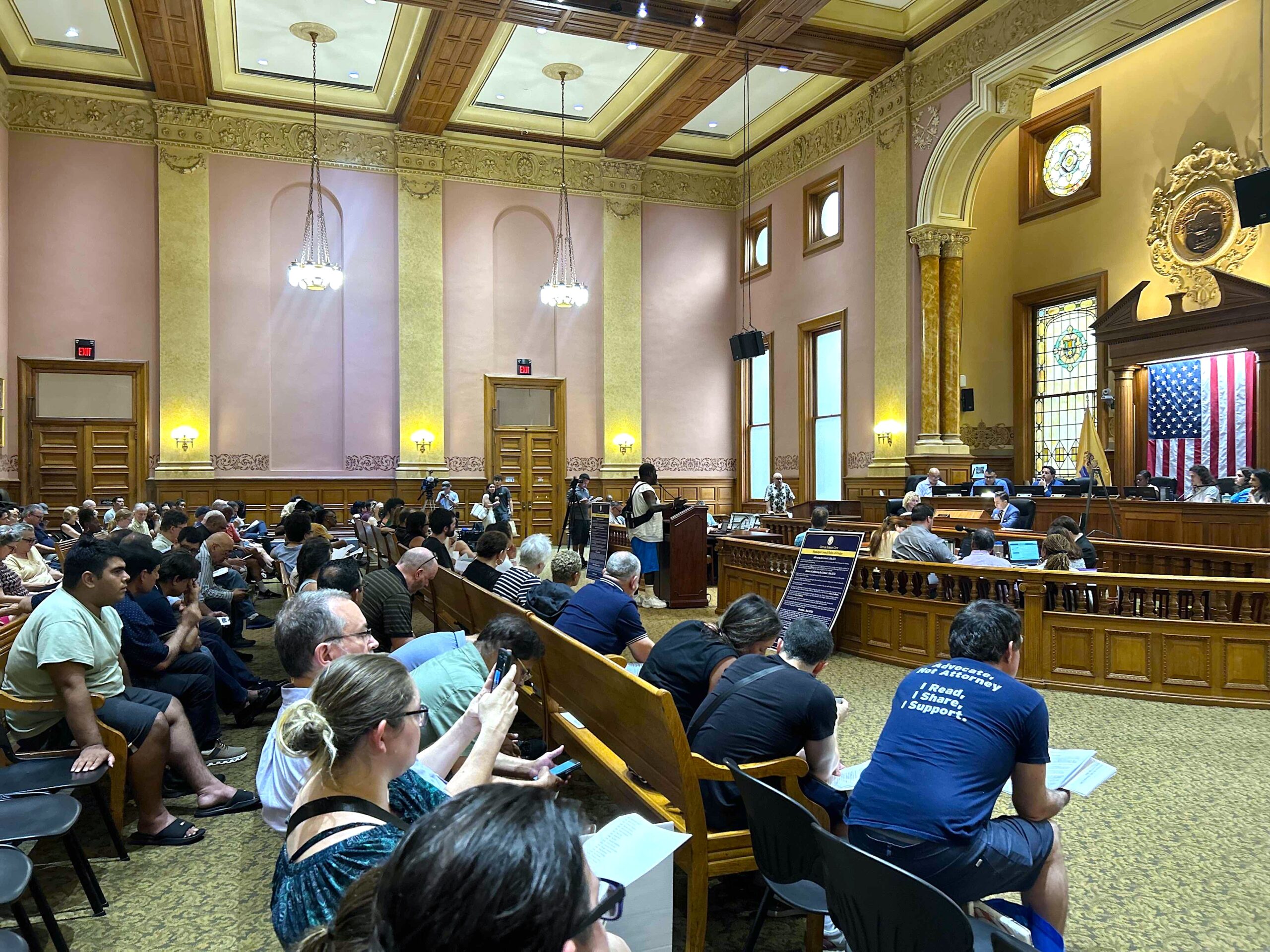
Before council members take their final vote, members of the public have an opportunity to speak about the proposal. Residents can voice their support, raise concerns or explain how they think the ordinance could affect their neighborhood or community. It is one of the most direct opportunities residents have to weigh in before the council makes its decision. Information about upcoming meetings, agendas and opportunities for public participation is available through the city.
Step Three: The Final Vote
After the public hearing, the council can take its final vote on the ordinance.
If the Municipal Council passes it, the ordinance goes to the mayor, who can approve or veto it. If the mayor vetoes the ordinance, the council can override that veto with a two-thirds vote, which is six.
Once the process is complete and the ordinance takes effect, it becomes part of Jersey City’s local laws. Residents can also search the city’s existing ordinances and municipal code online.
Why Does This Matter?
The decisions made inside City Hall can have a real impact on everyday life in Jersey City. And residents do not have to wait until an ordinance becomes law to start paying attention.
You can check City Council agendas, follow proposals as they move through the process and speak during public hearings before council members cast their final votes.
Knowing how the process works makes it a lot easier to know when and how to get involved.
Want To Get Involved?
Start by checking when the next Municipal Council meeting is happening and what is on the agenda.
Local government is happening right in your community. Stay informed and show up.
Jersey City
- https://www.jerseycitynj.gov/cityhall/citycouncil
- https://www.jerseycitynj.gov/cityhall/citycouncil/citycouncilmeetings
- https://www.jerseycitynj.gov/cityhall/HousingAndDevelopment/constructioncode/codes___ordinances
Bayonne: https://www.bayonnenj.org/meetings
Hoboken: https://www.hobokennj.gov/departments/city-council
Union City: https://www.ucnj.com/meetings
West New York: https://www.westnewyorknj.org/meetings/
Guttenberg: https://www.guttenbergnj.org/meetings
North Bergen: https://www.northbergen.org/Meetings
Weehawken: https://www.weehawken-nj.us/departments/township-clerk/council-meetings
Secaucus: https://secaucusnj.gov/government/meeting-documents
Kearny: https://www.kearnynj.org/council-meeting-videos-and-agendas/
Harrison: https://townofharrison.com/210/Meeting-Dates
East Newark: https://www.boroughofeastnewark.com/Meetings
Hudson County is also hosting a community meeting on Wednesday, Sept. 23 at 6 p.m. to hear from residents about bringing Bus Rapid Transit (BRT) to Jersey City. If you can’t make it to 280 Grove Street, head over to 71 Sip Avenue on the sixth floor to make your voice heard!