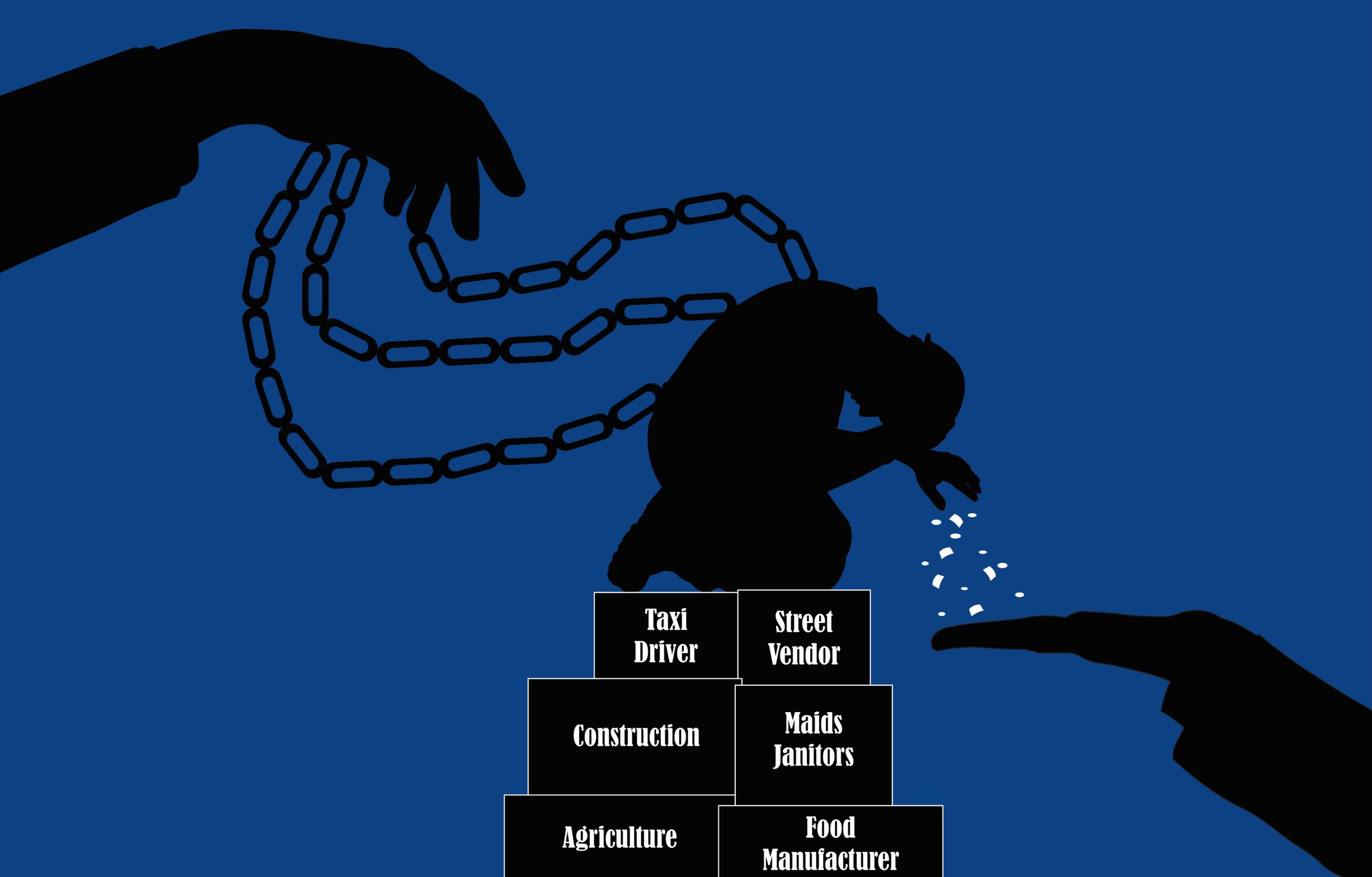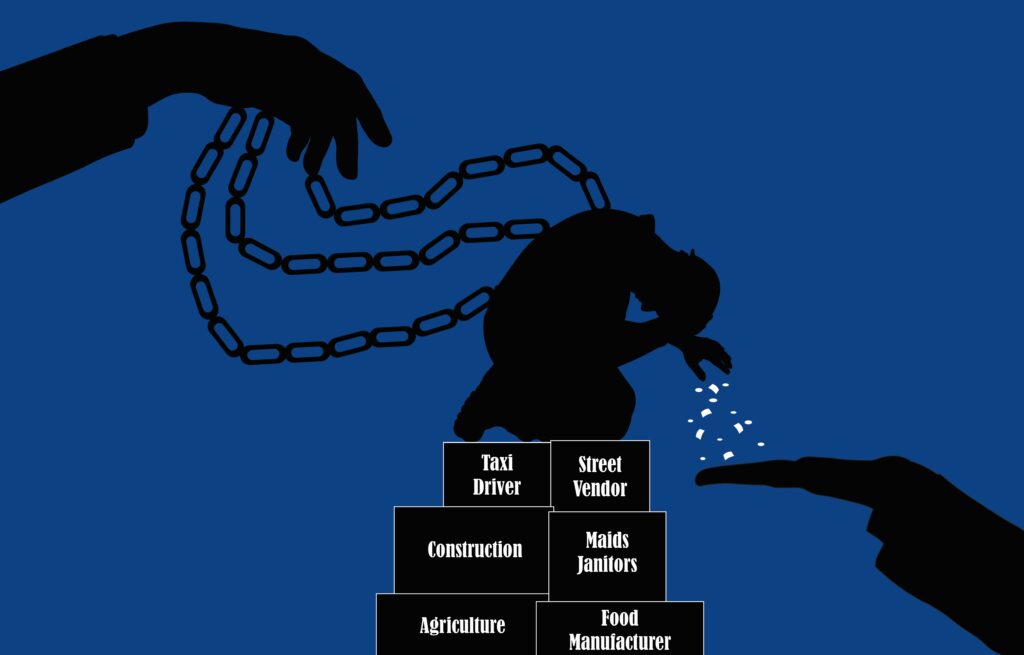
Illustration by Edward Andilema / SOC Images.
As you walk the streets of Bergenline Avenue, crossing through West New York, you’ll see restaurants with authentic food that remind many of us of home, stores offering some of the best deals in town and locals’ famously-recognized Hispanic-owned supermarkets like El Mercadito or Las Palmas.
West New York is a densely populated Hispanic and Latino town, most of whom are 42.8% foreign-born residents who typically can’t afford high rents and don’t always come from high income backgrounds. According to World Population Review, the average per capita income is $39,193, and approximately 21.39% of residents live below the poverty line.
It raises the question: How are these new immigrants making a living in the United States and how are they surviving day to day in one of the most expensive states in the country?
This is when agencias, or temporary employment agencies, play a major role in the communities’ labor market. These agencies, which operate throughout Bergenline Avenue, connect workers to short term jobs in warehouses, factories and processing facilities.
Slice of Culture interviewed a former temporary worker to hear about their experience in the temporary employment agency industry. Due to safety and privacy purposes for the worker, Slice of Culture will refer to the worker as Jane Doe.

Doe described the system as “a job for people with lots of necessity, that need money to send back to their families, their country and give their kids a better life.”
Temp work is often assumed and associated with gig work like jobs such as Uber or Doordash. Jobs like Uber and Doordash offer on demand jobs that’s usually short term where one can choose their work hours and select shifts. However, exploited immigrant labor also falls into that category. According to The American Immigration Council, “this is how many chicken processing plants in the South find workers.” This practice has been documented nationwide across the United States, not necessarily and solely in New Jersey.
Under this model, “the plant doesn’t have to worry about whether new workers are authorized to work in this country. Rather, the contractor doing the hiring is obligated to ensure that all employees are work authorized. This workaround increases the chances of employers exploiting undocumented minors.”
According to OEM America, “Staffing firms, [also known as temporary agencies] serve as the middleman between firms and employees.” Rather than hiring workers directly, many businesses outsource their labor needs through these agencies. In this arrangement, the staffing agency is typically the employer of record, which can shift certain responsibilities, including payroll, benefits administration and compliance with labor laws, away from the client company.
The American Public Health Association notes that client firms often retain temporary staffing agencies to reduce costs and limit legal liability. Critics argue that this structure can create gaps in accountability and leave workers, particularly immigrant and undocumented laborers, more vulnerable to exploitation or less likely to report abuse due to fear of retaliation.
Doe told Slice of Culture that wage rates and work hours were never explained in advance.
“No, they never explained the salary or hours. We just want and need the work, so we conform with whatever the pay is,” they said.

On Bergenline Avenue, you might’ve seen groups of people waiting on the corners of streets to be picked up by work vans. According to Doe, transportation is another way these agencies have control over the workers.
“If we didn’t take the transportation from the agency, they wouldn’t give us a job, forcefully we had no other option but to use the van,” Doe said.
Workers also mentioned deductions from their paychecks for various fees, including transportation, equipment and insurance. The former temp worker said they were charged approximately $10 for safety vests and another $10 for transportation, even when some job sites were within walking distance.
“I used to hear some of my friends say they would live close to the companies, some were as close as walking distance, but equally they would make them pay the fine for transportation.”
Federal labor standards require many employers to provide protections such as workers compensation, unemployment insurance and payroll contributions to Social Security and Medicare. According to the U.S. Bureau of Labor Statistics, these benefits are typically tied to formal employment relationships. Temporary workers, however, may lack access to these protections depending on their employment classification.
Injuries sometimes occur on the job, but many of the workers don’t have health insurance to help cover costs.
“Once I was checking clothes that had been returned, through the return department, these clothes had been used by models and had lots of pins. When I was checking the cloth, a pin stabbed me but [not] very deep since I pulled my hand fast,” described Doe. “People were telling me to be careful cause you never know if they come infected with disease. I ended up growing an infected ball on my finger that I had to go to the doctor for, but I had to pay out of pocket.”
“They would also charge us for Healthcare insurance, that in reality we never had, I never had any insurance,” Doe explained.
Another challenge workers faced was verbal abuse and racism with no one to report to.
“I remember that in one of the companies I worked, I was constantly told ‘You f–king Mexican,’ ‘Go back to Mexico,’ [and] ‘You’re not good in this country.’ I would get told that a lot. And to others ‘You’re a monkey, you’re ugly.’ I knew a little bit of English, but they thought I didn’t, because most people working there were people that had just immigrated so they didn’t know any English at all, so they assumed the same for me, but I would understand and they were very cruel.”
– Jane Doe
All Workers Have Rights
Labor advocates note that fear of termination, blacklisting or immigration consequences can discourage workers from speaking out about workplace conditions. Losing a job may also mean losing access to future work through other staffing agencies.
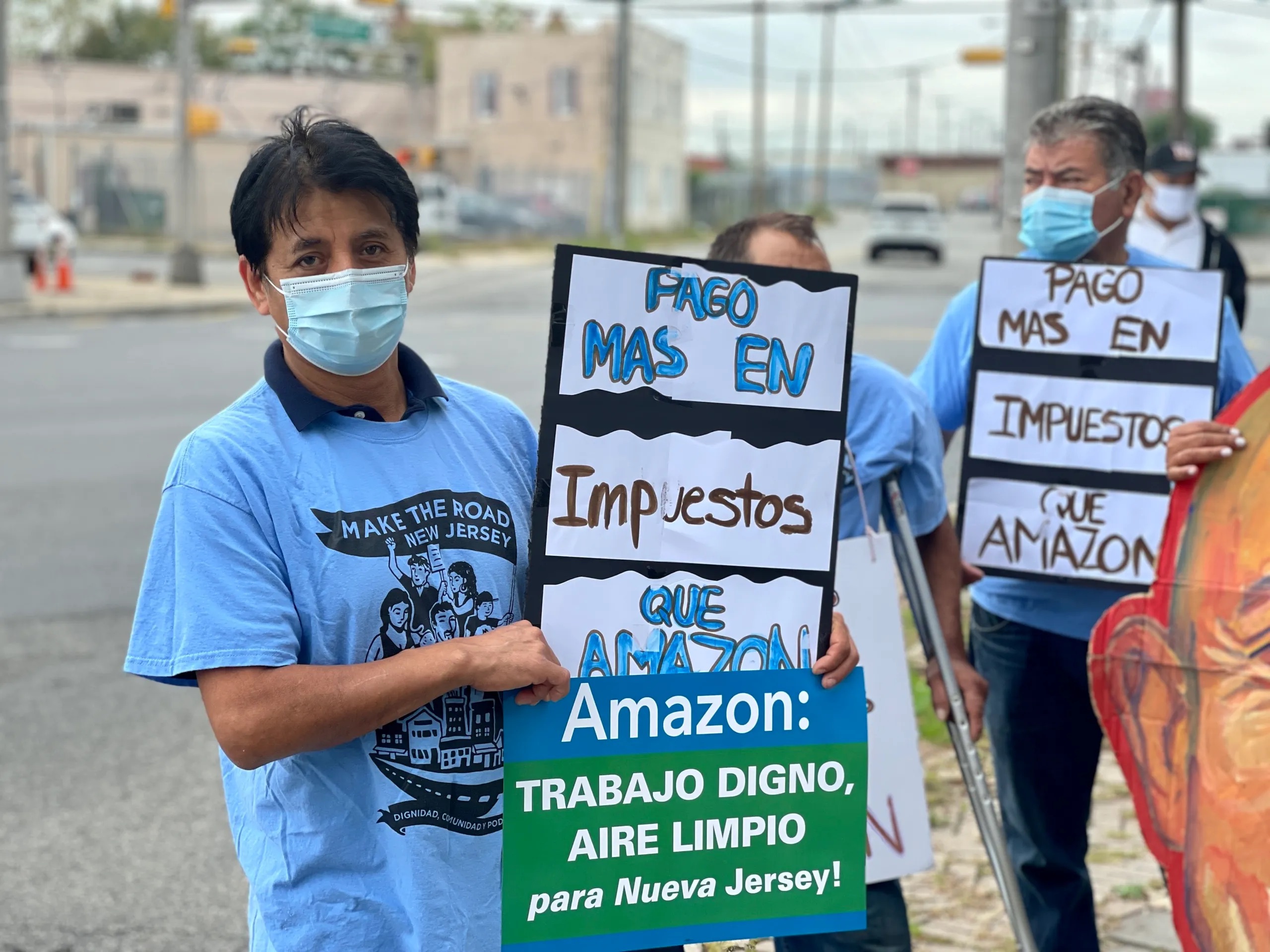
For many workers, staying silent felt safer than retaliation. But according to Attorney Cesar Martin Estela and Nicole Vicchione, Director of Research for Laborers Eastern Region Organizing Fund (LEROF), speaking up can be much more powerful and could ultimately make a better and safer working environment for all.
Estela, who is familiar with labor law in New Jersey, told Slice of Culture that staffing agencies are required to follow state employment regulations outlined through state business guidelines, including wage payment laws, workers’ compensation coverage and proper notice when workers are hired or discharged. Agencies are generally expected to disclose pay rates and comply with minimum wage and overtime laws.
Estela further explained that some employers rely on staffing agencies to shift responsibility, particularly regarding work authorization verification. However, undocumented workers still have labor rights under both federal and New Jersey law, including the right to minimum wage and safe working conditions.
If ever found in a situation, Estela recommends workers to, “report to the Department of Labor, they will investigate and take cases.”
The attorney also addressed threats involving the U.S. Immigration and Customs Enforcement (ICE), which workers say are sometimes used to intimidate them into staying silent.
“It’s not as easy to deport someone as people make it seem,” the attorney said. “They weaponize law enforcement when getting threatened by ICE. They use it as fear.”
According to the U.S. Immigration and Customs Enforcement, “Everyone ICE encounters is entitled to due process under the law. ICE officers remove aliens from the United States only under lawful orders, including when a judge has issued a final order of removal.”
This means ICE cannot just deport someone because of a phone call, there has to be a final order of removal first, and the person is entitled to due government procedure before that happens.
Despite this listed protocol, many videos have circulated social media that capture situations in Hudson County where a person is handcuffed and detained, sometimes even without a judicial warrant. In the Jersey City Heights neighborhood, one ICE agent was caught on camera saying ICE “doesn’t need a warrant.”
Local organizations like SOL Jersey City and Estamos Unidos have been working to inform community members about federal ICE protocols and their rights.
Additionally, Vicchione, the director of research for LEROF, further emphasized that immigrant workers, regardless of their documentation status, are protected under New Jersey law. LEROF focuses on advocacy to improve wage theft, safety and promotes the benefits of unions around New Jersey and New York.
“Workers should know regardless of their employment documentation status they have the same rights as anyone in the state of New Jersey. This includes the wages they earn, [the ability to] form and join a union, safe work environment [and] freedom to retaliation.”
– Nicole Vicchione, Director of Research for Laborers Eastern Region Organizing Fund (LEROF)
She shared that industries such as construction often rely on labor brokers, subcontractors and informal hiring systems that can obscure accountability. In some cases, workers are paid in cash and off the books, a practice that falls under misclassification under New Jersey law.

Viccione added that employees should know that “If you work over 40 hours as a wage employee you’re due time AND a half, after the first 40 hours.”
She also echoed Estela’s points out that under New Jersey law, employers are prohibited from using a worker’s immigration status as a form of retaliation.
Despite these challenges, Vecchione emphasized that workers have options.
Complaints can be filed with the New Jersey Department of Labor and Workforce Development, which does not require individuals to disclose their immigration status. One advice that she really recommends is employees documenting everything in their workplace, in order to build a strong case.
“What every worker should know, regardless of what their situation is, document everything,” she said. “Make sure you’re paying attention to the hours you’re working, where you’re working, and who you’re working for.”
She encouraged workers to keep records such as photos of job sites, document time logs and even cash envelopes—anything that can help demonstrate patterns of wage theft or labor violations.
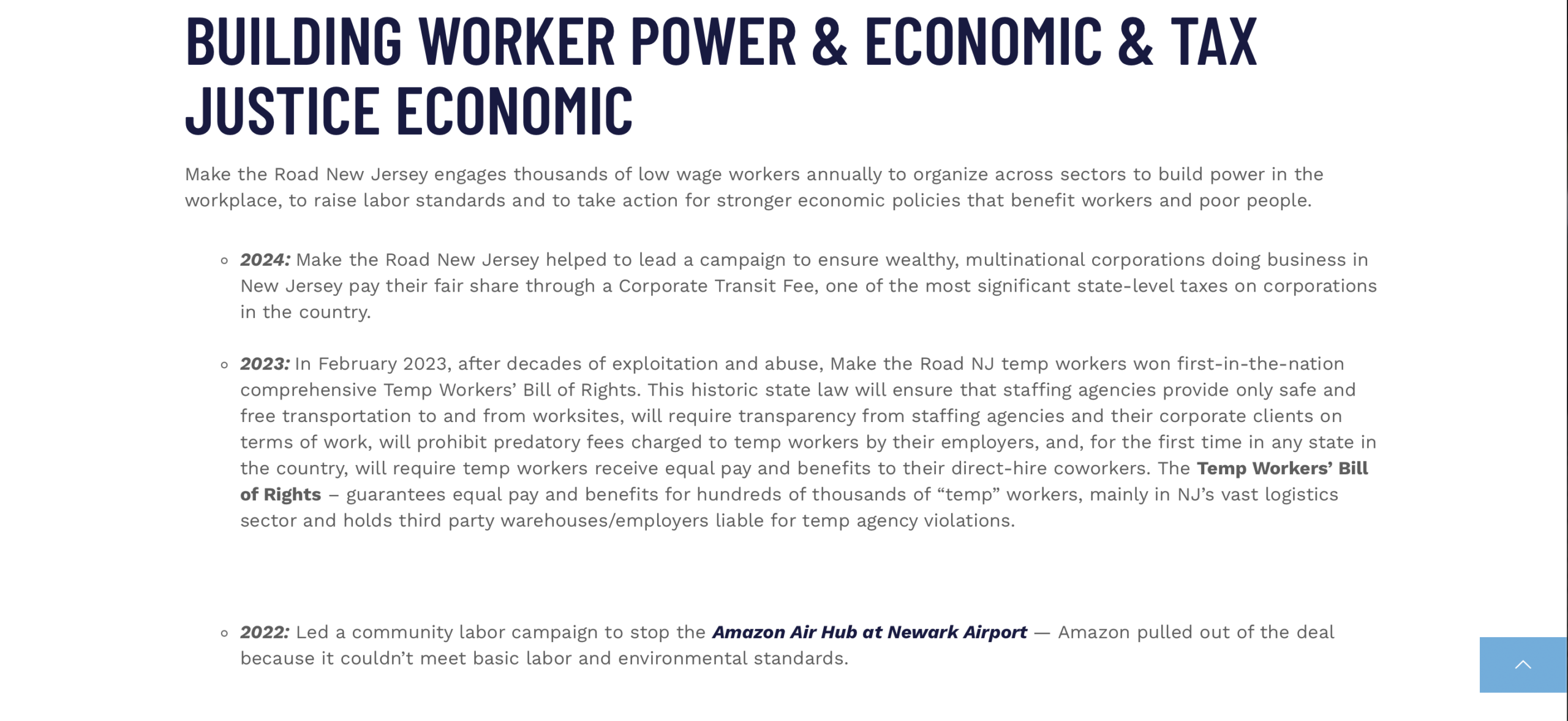
Other community-based organizations, including Make the Road New Jersey and Estamos Unidos, also provide support for workers navigating these challenges.
West New York has long been shaped by immigrant labor.
The abuse of labor workers often hides in plain sight, and the impact of these practices extends far beyond individual workers—it affects the entire town. Wage theft and exploitation keep families in cycles of poverty, making it nearly impossible to save money, pursue education or move into stable employment.
As discussions around labor protections and enforcement continue at the state and federal levels, advocates say greater transparency and oversight of temporary employment agencies could help address the challenges faced by vulnerable workers in communities like West New York.
Ultimately, Vecchione said long-term change depends on collective action.
“The best solution to an exploited economy is for every worker to join a union, so you have an organization behind you protecting you,” she said. “Collective action is the best way to address not just any problem but to actually change the system so it’s harder to exploit workers.”
She acknowledged that speaking out can be difficult, especially for immigrant workers, but pointed to recent cases in Jersey City where workers have successfully recovered unpaid wages after coming forward.
“If people want to see change in their employment and the way the economy functions, they have to be part of the change, and it’s very hard but speaking up and actually organizing your job site is the best solution,” Vecchione said.
“Collective action is the best answer.”