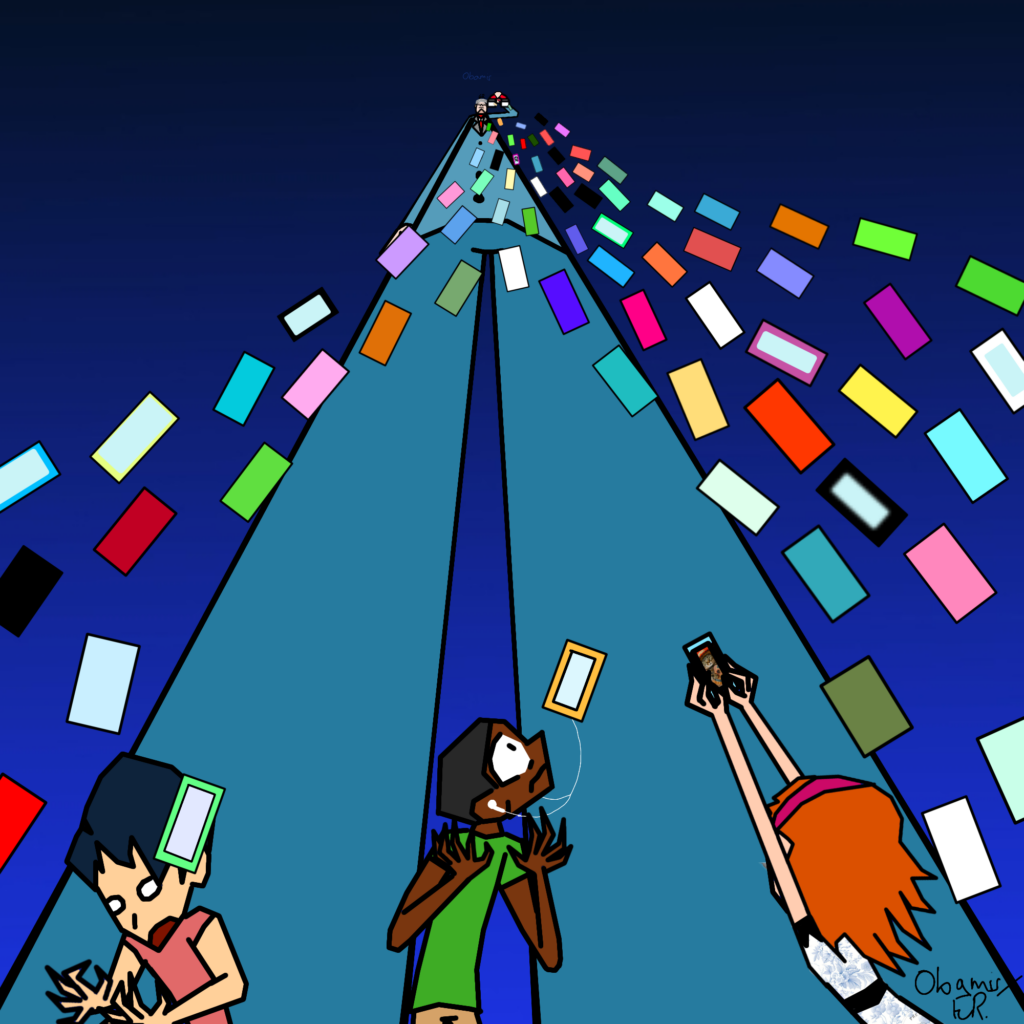
Illustration by Elizabeth Romage / SOC Images.
Editor’s note: This story was updated to include an interview with Ashley Kurasz, a teacher at the Professional Performing Arts School in Manhattan.
Starting with the 2026–27 school year, every New Jersey public school district will be required to adopt policies restricting students’ use of cell phones and other internet-enabled devices during the school day.
Former Gov. Phil Murphy signed the legislation into law on Jan. 8, aiming to reduce classroom distractions, improve student engagement and increase face-to-face interaction while still allowing districts flexibility for emergencies and medical accommodations. And while lawmakers say this is needed, some Jersey City high school students don’t agree as much.
Sam Snyder, who’s entering her senior year at Beloved Community Charter School in Jersey City, emphasized the importance of having access to a cell phone in case of emergencies or when students need to contact a parent.
“Anything can happen in school,” Snyder said. “It just makes us feel less safe without our cell phones, especially if something could be happening personally and you need to call a parent.”
While public and charter schools must comply with the New Jersey Department of Education (NJDOE) guidelines, private institutions remain legally exempt. Individual districts have the flexibility to implement the ban using one of four approved storage options:
- magnetic locked pouches
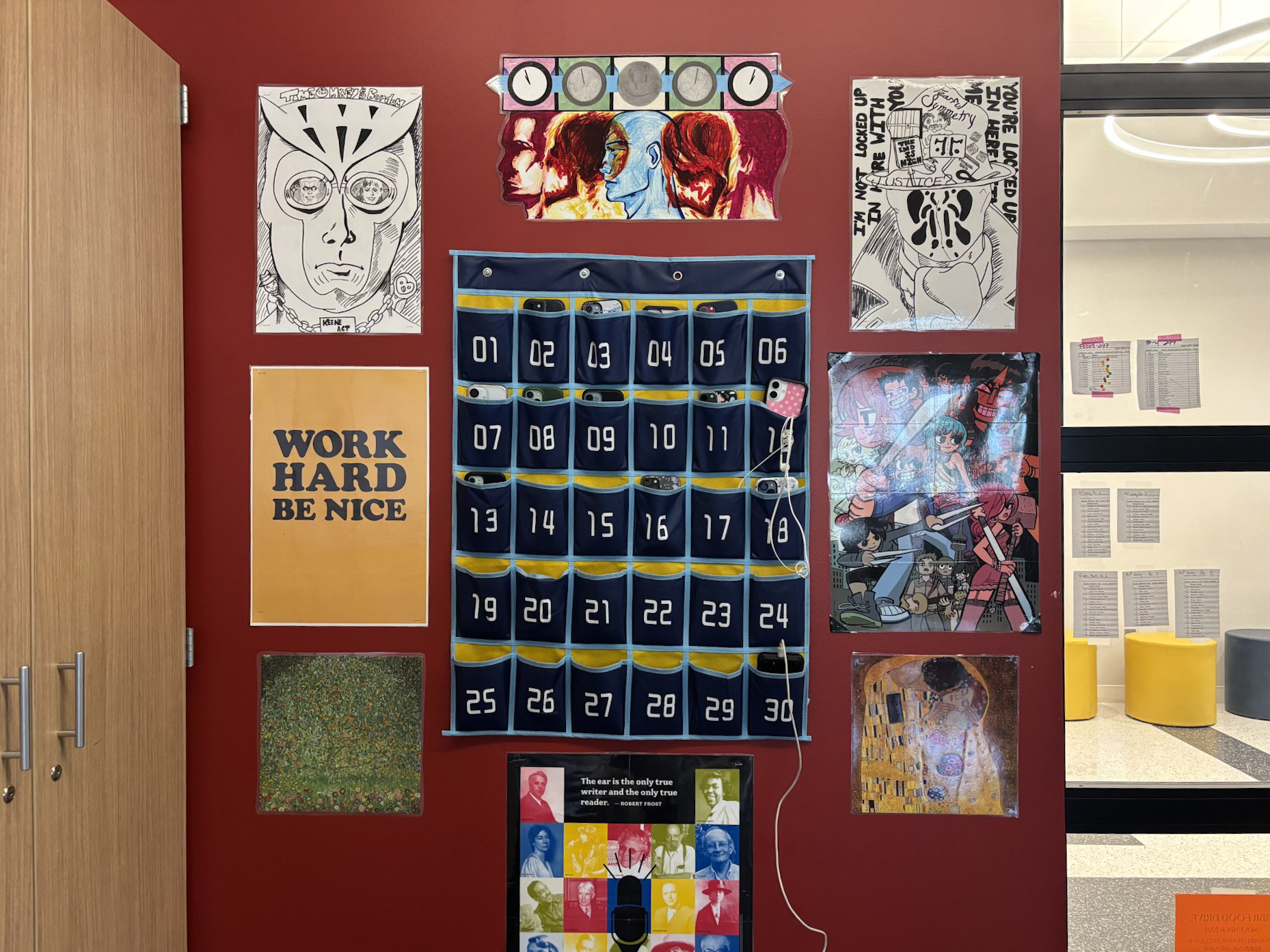
- classroom wall caddies
- centralized lockers
- student-managed “off-and-away” backpack policy
Because enforcement is handled at the local level, there is no single statewide punishment for violations. Instead, most schools utilize a progressive discipline model.
Snyder questioned whether students would comply with the new restrictions.
“I really don’t believe anybody’s gonna put it in the pouch or will give their phone to a teacher,” she said. Instead, she believes many students will find ways around the policy.
“People will find their ways regardless of the ban,” Snyder said, recalling that “in middle school, I used to talk through Google Docs.”
A first infraction typically results in a verbal warning from a teacher. A second offense may lead to the device being confiscated and held in the main office until dismissal. By the third offense, some districts require a parent or guardian to physically come to the school to retrieve the phone. Chronic violators may face disciplinary actions for insubordination, including mandatory detention, loss of school privileges or in-school suspension.
Although Snyder said she understands the state’s intentions, she worries the policy could have unintended consequences.
“I feel like that’s just gonna have a lot of students suspended,” she said. “They’re gonna lose education more.”
“If someone is on their phone, I feel like suspending is just doing too much,” she said. Snyder said she would rather have the existing phone pouch system than impose harsher penalties.
Why Lawmakers Say The Law Was Needed
Former Gov. Murphy signed the legislation into law after state officials and education leaders raised concerns about the effects of social media and constant device use on adolescents. Current Gov. Mikie Sherrill has also expressed support for the policy as schools begin implementing it statewide.
Lawmakers in New Jersey say the statewide K-12 cellphone ban is intended to improve student mental health, reduce classroom distractions and increase academic engagement.
Snyder acknowledged the policy could help address issues such as cyberbullying and student academics, but she questioned whether phone use was a significant distraction at her school.
“Personally, I never really used my phone in class,” Snyder said. “Not many people did that either.”
Because the law is taking effect for the 2026–27 school year, there is not yet New Jersey-specific data measuring its impact. Instead, educators and researchers are looking to states that have already implemented similar cellphone restrictions for insight into what New Jersey schools may experience.
Florida was one of the first states to enact statewide restrictions on student cellphone use, and similar policies have since expanded to dozens of states across the country.
Research from those states have produced mixed results. Many schools have reported improvements in classroom engagement, reduced cellphone use during instructional time and increased face-to-face interaction among students. At the same time, some districts experienced temporary increases in disciplinary referrals as students adjusted to the new policies.
Other states that have implemented similar restrictions are already reporting positive outcomes.
Teacher surveys found that students actively using cell phones during class fell from 61% to 13% after the policies were introduced. Some school districts have also reported declines in unexcused absences, which educators attribute in part to students being less able to coordinate meetings in hallways or bathrooms during class via text messages.
Researchers have also found that standardized reading and math scores increased by approximately 2 to 3 percentile points by the second and third years after the restrictions were implemented.
In addition, some districts reported increased library use and more face-to-face social interaction during lunch periods, suggesting students may be spending less time on their devices and more time engaging with classmates.
On the other hand, some schools also reported implementation challenges during the first year of enforcement. Administrators experienced an increase in disciplinary incidents as students adjusted to the new rules, particularly involving disputes over phone confiscation.
Researchers also found that restricting phones did not completely eliminate off-task behavior. Instead, some students shifted their attention to school-issued laptops, where they continued messaging classmates, browsing the internet or playing games during instructional time.
Student opinion, however, remains divided. Surveys found that many students opposed cellphone restrictions because of concerns about communicating with parents during emergencies, staying connected throughout the school day and maintaining personal autonomy.
Research has also found that schools where student opposition to cellphone bans was highest faced greater implementation challenges. In one study, 73% of students said they strongly opposed the restrictions, and schools experienced about a 25% increase in suspensions during the first year of implementation, largely due to conflicts over phone enforcement.
What Studies Say Too Much Phone Time Does
The effects of excessive cellphone use extend beyond the classroom, influencing both mental well-being and cognitive performance. Studies have found that frequent exposure to carefully curated social media content can contribute to unhealthy social comparison, which has been linked to higher rates of anxiety, depression and body image concerns among adolescents.
Excessive screen time, particularly late at night, can also disrupt healthy sleep patterns, contributing to fatigue and reduced concentration the following day. Research has also identified fear of missing out (FOMO) as a factor that encourages frequent notification checking and compulsive phone use.
In the classroom, heavy smartphone use can make it more difficult for students to maintain sustained attention. Frequent notifications and the habit of rapidly switching between tasks can reduce focus, making it harder for students to retain information while reading, studying or listening to lectures.
Smartphone dependence also increased during the COVID-19 pandemic, when remote learning normalized constant device use for education, communication and entertainment. Although in-person instruction has resumed, many educators say some students have remained heavily reliant on their phones, making it more difficult to rebuild pre-pandemic classroom habits and attention spans.
Nathaniel Amparo, a 16-year-old rising junior at Beloved Charter School, said he understands why lawmakers approved New Jersey’s statewide phone ban but believes the policy goes too far.
“Academically, it may help them but socially, it’s gonna cripple them,” he said, arguing that teachers—not the government—should be able to manage students’ usage of cellphones.

He feels the problem stems primarily from lack of student discipline.
“The issue goes both ways: lack of student responsibility and poor educators,” he said.
Amparo is also concerned about emergencies, “What if there’s a school shooting that happens, and I’m unable to contact my parents?”
He also questioned whether the state was focusing on the right priorities, calling the phone debate “a mouse that convinced themselves it’s an elephant,” and adding, “We got bigger fish to fry.”
Despite criticizing the law, Amparo admitted that technology dependence is a real issue, noting his own average daily screen time is around 12 hours and saying, “We’re so glued into our devices that some of us don’t know when to put it down.”
Smartphones Became ‘A Headache’
Kimberly Hadley, who taught mostly ninth-grade Spanish class at Beloved Charter School and will be teaching 11th and 12th grade this fall, said smartphones had become “the number one headache of being a teacher,” describing many students and their dependence on devices as “an addiction.”
From Hadley’s experience students are not learning when they use a phone in the classroom, “kids aren’t really learning what they need to learn because they have access to AI.”
Although she expects the statewide cellphone ban to face resistance, she believes the law will ultimately strengthen the classroom. She also argued that reducing phone use could improve students’ mental well-being, saying phones can fuel cyberbullying and social drama while “taking away our human connection.”
Reflecting on the years after the pandemic, Hadley said phone dependency became dramatically worse: “After COVID, it got harder for them to give it up,” adding that smartphones had become “like a part of their body.”
Overall, she said she supports the statewide ban because she believes the educational benefits outweigh the occasional convenience of using phones in class, concluding, “I would sacrifice that… to have their attention.”
Across the Hudson River, New York City teachers have already had a year to see what happens when phones disappear from classrooms.
For Ashley Kurasz, a teacher at the Professional Performing Arts School (PPAS) in Manhattan, one of the biggest changes wasn’t just fewer distractions during lessons; it was seeing students interact with each other again.
“There were just kids staring at their phones… not talking to each other, not joking around,” Kurasz said. “I feel like the socializing got better. People are more connected with each other without them.”
Kurasz said compliance was strong at PPAS middle school in part because the school had placed an internal phone ban policy a while before it had legally become one.
The transition was more complicated at the high school level which did not have the policy before it became a law. Before the school received Yondr pouches, enforcement could vary by classroom. Some teachers used hanging cellphone pockets or collection boxes, while others simply required students to keep devices out of sight.
Once the pouches arrived, administrators gradually introduced a more standardized enforcement system. Teachers who spotted a student using a phone could report the violation through a Google form, while administrators handled conversations with students and parents and tracked escalating consequences.
“So much of teaching is relationship building, and if I have to be yelling at you and taking your phone and being like a police officer, that becomes an added part of my job that is also undermining my relationship with the kid,” she said.
Kurasz explained that students still found ways around the restrictions where some high schoolers would place an old or fake phone in their pouch while keeping their actual device with them.
But compared with previous years, she said visible cellphone use became far less common as students understood that using a phone openly could bring consequences.
Her recommendation is for administrators to establish clear expectations and consequences from the beginning—and explain to students why the rules exist.
“Kids are gonna be kids. They’re used to having their devices 24/7. So, duh, they’re gonna try to skirt the rules. Just get everyone on the same page about why this is not just an arbitrary law, but something that actually helps them,” Kurasz said.
“We have to do what’s best for kids’ brains. Less time on their screens, more time actually interacting with people around them is just a good thing.”
For schools looking to implement or refine cell phone usage policies, they can refer to this page via New Jersey’s Department of Education.
Alternatively, there’s a number of petitions that have been circulating, calling for an end or reduction to cell phone usage policies. You can find them here and here.
Overall, limiting phone use during the school day can reduce digital distractions and help students stay more engaged in the classroom. Research and guidance from organizations such as the Child Mind Institute also point to concerns about unrestricted smartphone and social media use, including increased stress, social pressure and disruptions to learning.
Below are resources on the effects of student phone use, the potential benefits of phone-free schools and New Jersey’s new bell-to-bell cellphone law:
- Phones Out, Focus In: Crafting Classroom Policies That Work for Everyone: https://childmind.org/blog/phones-out-focus-in/
- Keeping Our Students Safe, Healthy & In School: https://www.nj.gov/education/safety/
- New Jersey Legislature Bill S3695: https://www.njleg.state.nj.us/bill-search/2024/S3695/bill-text?f=S4000&n=3695_I1