Photo by Adrienne J. Romero / SOC Images.
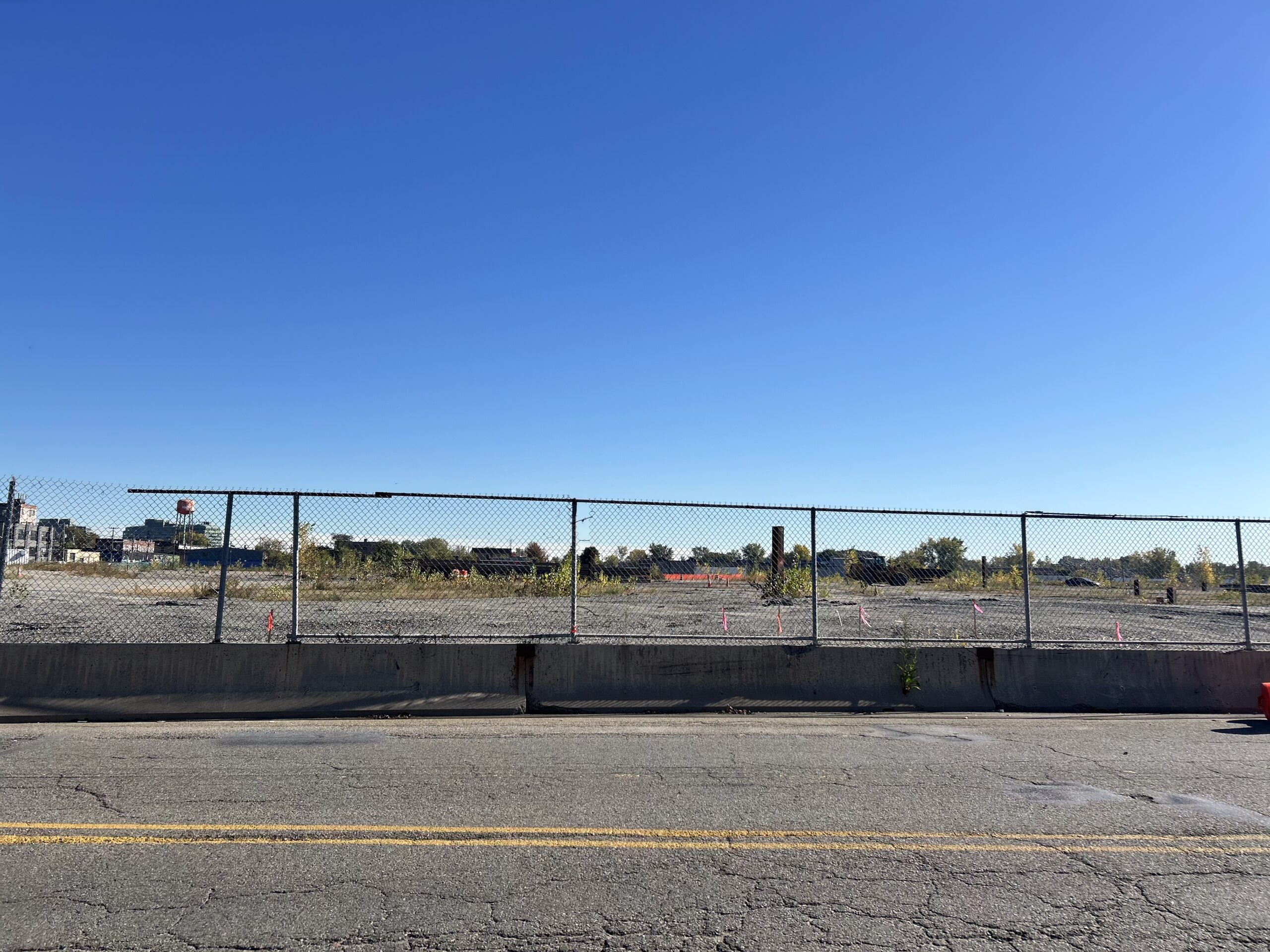
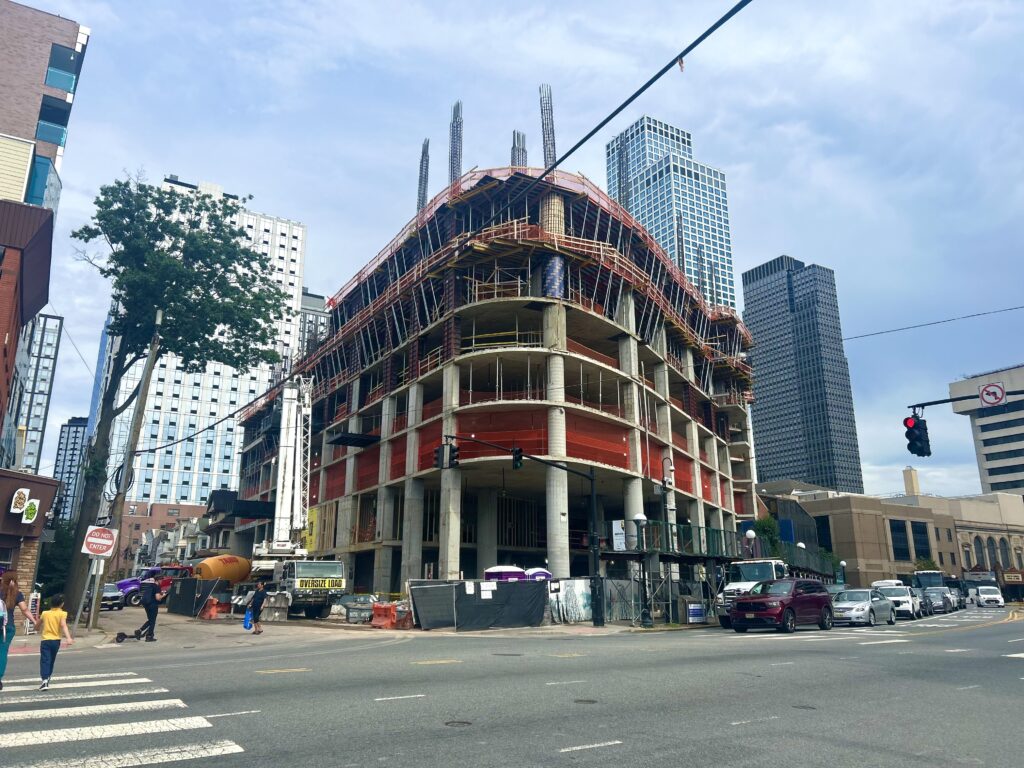
One of the newest additions to Jersey City’s rapidly changing skyline is the Imperial Tower, a luxury apartment complex under construction since 2023 at 2966 John F. Kennedy Boulevard. Standing outside the site, several residents told Slice of Culture they view developments like this as symbols of a city becoming increasingly unaffordable.
To understand those concerns, it’s important to look back at how Jersey City’s transformation unfolded.
The Rise Of Gentrification In Jersey City
Jersey City’s transformation from a former industrial hub into a modern financial and residential center has arguably drastically altered its skyline and character. While skyscrapers have spurred economic growth, they have also accelerated gentrification, leaving longtime residents and small businesses struggling with skyrocketing rent and displacement.
Gentrification in Jersey City began in the early 1980s, primarily taking root in the Downtown and waterfront areas. In the following decades, developers profited off of New York commuters because of Manhattan views, an easy PATH ride to the city and trendy shops and restaurants taking over. For many newcomers, Jersey City offers a vibrant alternative to New York City, with waterfront views, easier access to Manhattan than many outer borough neighborhoods and comparatively lower housing costs.
Yet the benefits of growth have not been shared equally. Critics argue that gentrification is more than an economic issue—it is a cultural one.
As luxury developments and chain businesses move in, many longtime Black and Latino communities are seeing the character of their neighborhoods change, with local businesses and cultural institutions increasingly displaced. A study by the Pratt Center for Community Development found that unchecked gentrification can transform cities like Jersey City into extensions of wealthier neighboring communities, threatening the diversity and local identity that made them attractive in the first place.
As residents of Jersey City notice gentrification, it was hard for them not to notice the massive Imperial Tower being built.
Over the past 10 years, rents in Jersey City have surged by roughly 50% overall.
“More than five or six years ago, it was much cheaper. Today, people struggle more just to survive every day.”
– Louis Allen, a Newark resident, told Slice of Culture.
Longtime residents report being priced out through rent increases, higher property taxes and rising maintenance costs. Development has been concentrated around transit hubs such as Journal Square and Exchange Place.
Today’s Jersey City
The 56-story Imperial Tower will reportedly become a prominent addition to the Journal Square skyline and rank among the tallest buildings in Hudson County.
The luxury development will feature an extensive list of amenities, including a rooftop pool, fitness center, rock climbing wall, cinema room, valet parking and a restaurant with sweeping views of New York City. While the project will add 542 apartments, only 57 units, about 10.5% of the total, will be designated as affordable housing, with the remainder offered at market rates.
Slice of Culture contacted Imperial Tower developer Sunny Kumar multiple times by phone, text message and email but did not receive a response by the time of publication. During one phone call, Kumar hung up immediately after the reporter introduced herself.
Developments like Imperial Tower have sparked debate among residents, raising questions about whether they represent progress and investment in Jersey City or contribute to the city’s ongoing gentrification and rising cost of living.
Thomas Zuppa, Jersey City Ward C councilman, said new developments are intended to meet the city’s growing housing demand while also requiring affordable housing. He said the redevelopment plan amendment for Journal Square now mandates income-restricted units in larger developments, resulting in more than 10% of Imperial Tower’s apartments being designated as affordable.
“We’re trying to meet the demand for people to live in Jersey City, but being responsible enough to ensure that we have affordable units for our current residents so that they don’t get priced out,” Zuppa told Slice of Culture.
Zuppa acknowledged that construction can be disruptive but said he believes redevelopment will ultimately strengthen Journal Square. He said his office now asks developers to meet with him before projects move forward so residents can provide input on issues such as affordable housing, public amenities and retail before proposals reach the planning board.
“I schedule a community meeting so that the residents can be heard and have a voice in what development we see,” Zuppa said.
He added that while some longtime residents have concerns about change, many are hopeful Journal Square’s redevelopment will bring new businesses and investment while preserving affordability.
Celia Sanchez, a teacher at Golden Door Charter School who has lived in Jersey City for two years, said she is already feeling the effects of the city’s rising housing costs.
“I’m literally looking for apartments right now, and they’re just so expensive. This is really affecting me,” she said.
Sanchez also expressed concern about the impact rising rents could have on the families she works with, “I’m worried that some of the families that go to the school are getting pushed out.”
Some residents argue that gentrification removes the culture and character of neighborhoods while driving up housing costs and forcing longtime residents to move. Others contend that redevelopment brings new opportunities, attracts businesses and fuels economic growth. Jersey City has experienced decades of rapid transformation that rivals, and in some ways mirrors, the redevelopment seen in parts of Brooklyn and Queens, making it a focal point in the ongoing debate over growth, affordability and community identity.
Sanchez further added that the city’s transformation reminds her of neighboring New York City boroughs.
“The pricing here is comparable to Queens or Brooklyn. It used to be a little more affordable, and now it’s becoming like a mini Manhattan.”
While Jersey City saw a modest rent increase of 1.9% ($64 more per month) over the past year, New York City outer boroughs experienced much steeper hikes. Rent in Queens rose by 2.6% (about $86 per month), while Brooklyn surged to record highs, climbing 7.5% year-over-year to a median rent of $4,296.
For many residents Slice of Culture spoke with, Imperial Tower is not simply another addition to the skyline. It represents a broader trend that they say has made Jersey City increasingly unaffordable for longtime residents and families.
Addy Dirkr, who said he has lived in Jersey City since 1970, believes the influx of new residents and luxury development is contributing to higher costs.
“The more people there are, the more demand there is, and the higher the prices,” he said.
As construction moves forward, the debate surrounding Jersey City’s future continues.
Looking ahead, many hope Jersey City can continue to grow and prosper without pricing out the people who have long called it home. Whether the city’s wave of new development represents progress or comes at too great a cost ultimately depends on one’s perspective.