

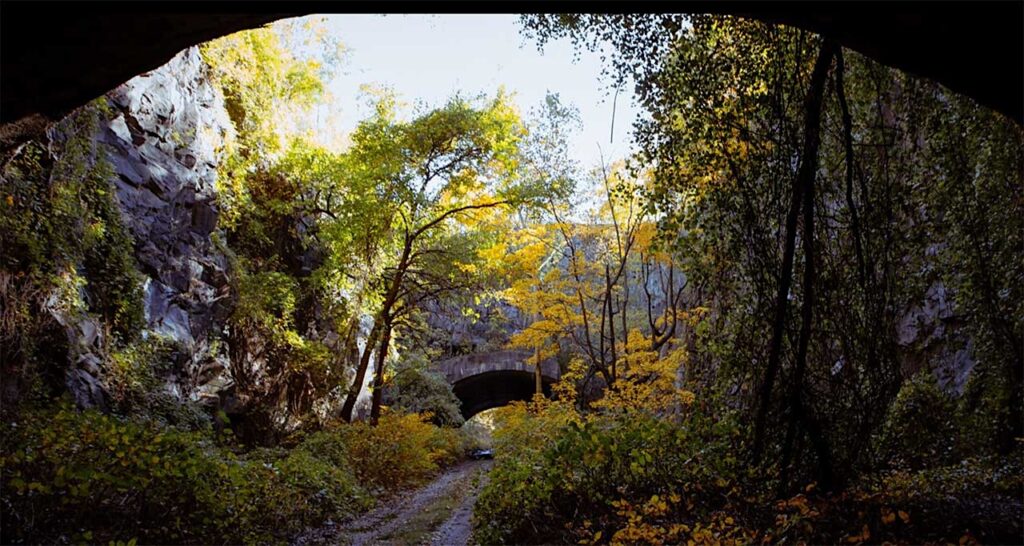
Photo courtesy of Bergen Arches.
Jersey City can be congested.
From the rush-hour traffic to the city’s rapidly growing population mixed in with—what seems to be—constant construction, it can be easy to forget about the trees and grass that once covered and nourished the land, especially when it’s tucked well beneath the concrete and tall buildings in neighborhoods like Journal Square.
But somewhere just below street level near Dickinson High School and the new Honorable Frank J. Guarini Justice Complex, there’s the “Bergen Arches,” a natural, green oasis that the Bergen Arches Preservation Coalition (BAPC) and New Jersey Conservation Foundation are working to make into an accessible, shared green space and transitway for residents and commuters to escape the congestion and, ultimately, invest and empower the potential of green spaces.
And they need your help to make it happen.
“I think this will create a sort of bigger movement of activating green space that already exists in Jersey City. If you look at a Google Earth map, you’ll notice there is a lot of green space. It’s just not accessible. I think that taking these already existing green spaces and activating them will sort of build it into the urban fabric and then also activate all this green space that is lacking in Journal Square and throughout the city,” BAPC Project Director Rahid Cornejo told Slice of Culture.
What Are The ‘Bergen Arches’?
The Bergen Arches, previously called the Bergen Archways or Eerie Cut, are bridges that cross over a once-active rail-trench from the 1900s that connected passengers to New York City through the Pavonia Terminal in Jersey City, according to the BAPC website.
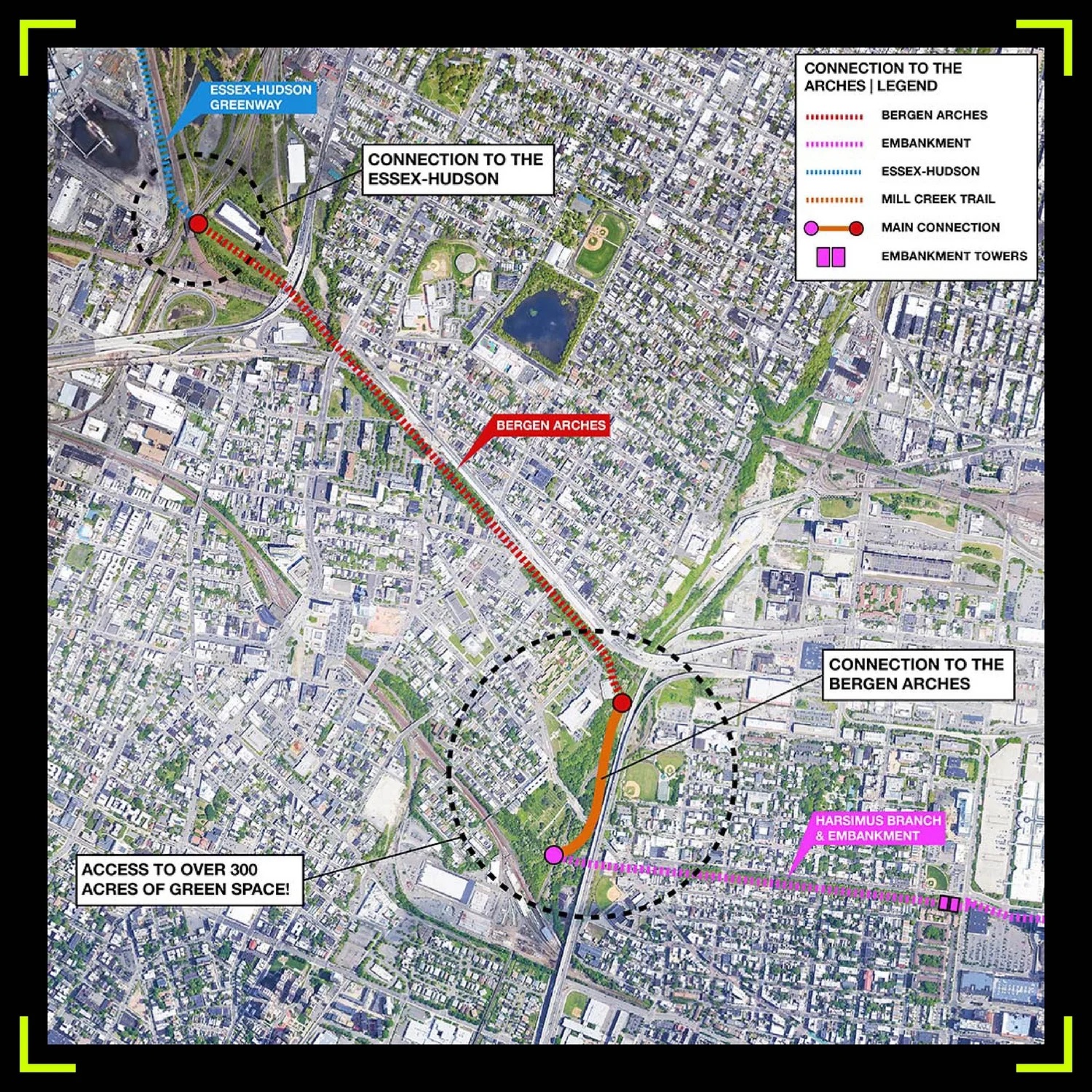
The Arches are tucked away from everyday traffic, but still exist today, running parallel to Route 139 near Dickinson High School at 2 Palisade Avenue and the new Hudson County courthouse at 595 Newark Avenue.
While it benefitted mass public transit from 1906 to 1909, the construction “divided neighborhoods, damaged homes and killed many underprivileged people who worked and lived near the site.”
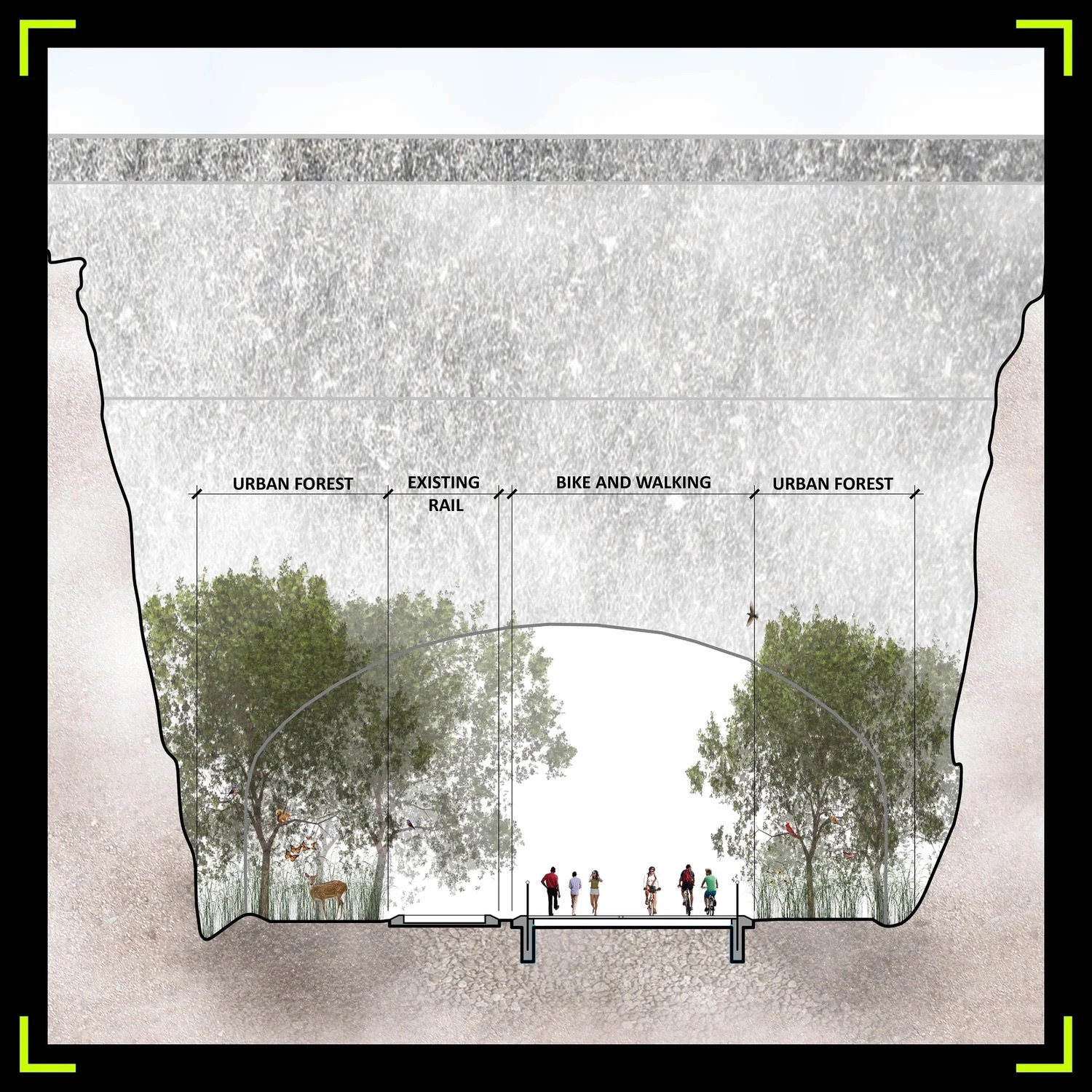
But now, roughly 117 years later, BAPC wants to reimagine the space “to stitch” communities together.
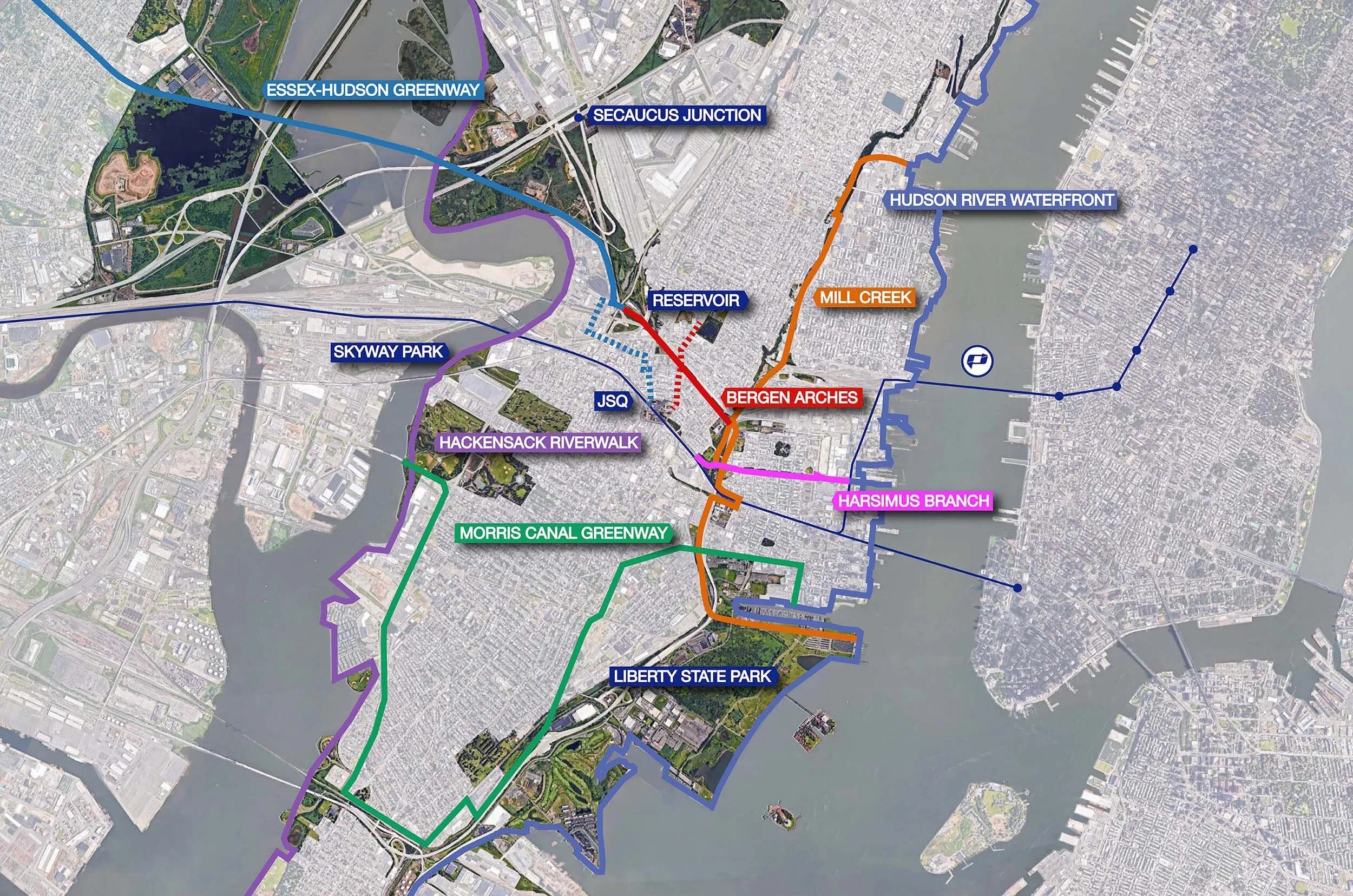
Chris Gratto, of the New Jersey Conservation Foundation, emphasized that they’re thinking about how to connect existing green spaces in New Jersey through the Bergen Arches, Essex-Hudson Greenway in Montclair and Liberty State Park.
“The first opportunity [of re-using Bergen Arches] is the green space. It’s in a neighborhood that has very limited park space right now. It’s been a long term goal of the community to have more green space,” Gratto said.
“Secondarily… It’s green space that connects to even more green space. So someone can access it locally or they can use it as a bridge to get into either Downtown to the [Jersey City] Embankment where the city’s putting significant resources to have truly a global level space.”
BAPC has been working on this revitalization for 10 years, but it recently picked back up following a recent NJ Transit plan that stated they plan to create a $22 million bus transitway between Secaucus Junction and Jersey City via the Bergen Arches.
BAPC is not opposed to NJ Transit’s plan, the nonprofit organization just additionally advocates for implementing the greenway component alongside it.
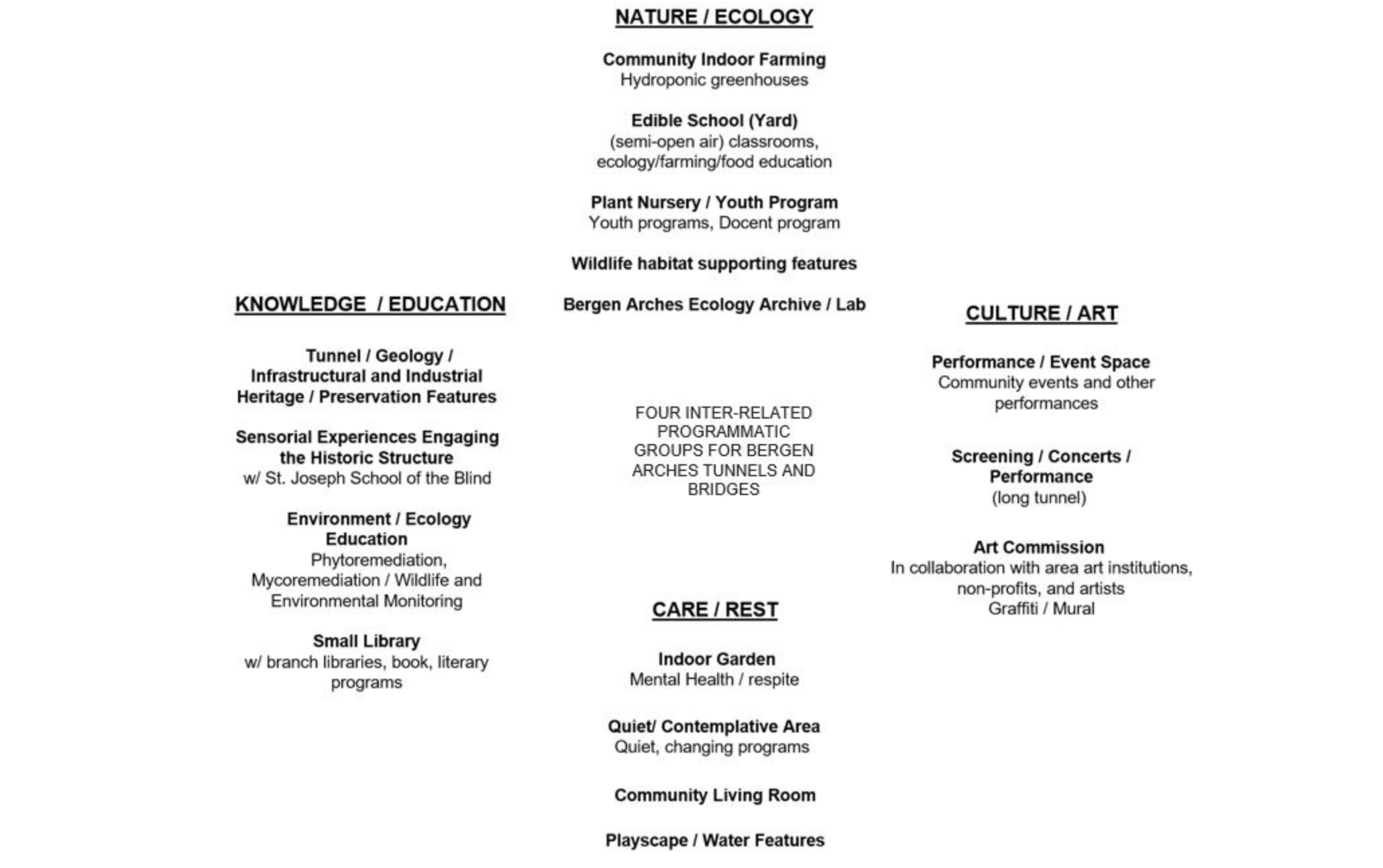
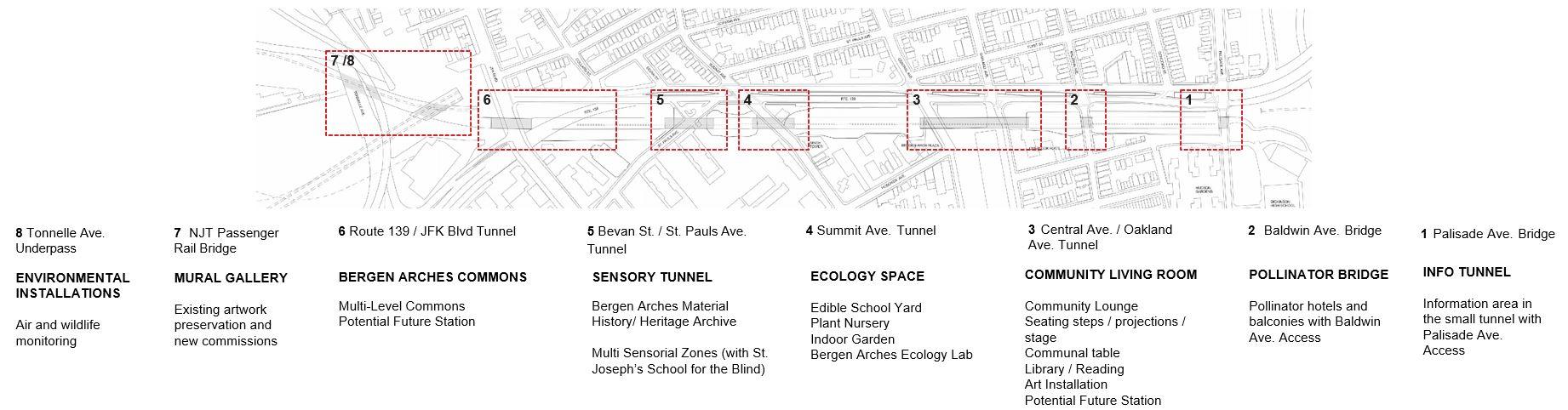
Architecture firm NHDM has published an extensive research and proposal to help bring BAPC’s vision to life.
There, they highlight four programs to achieve the Arches’ adaptive reuse:
- Nature/ecology
- Knowledge/education
- Culture/art
- Care/rest
You Can Help Make The Bergen Arches Accessible
But NJ Transit’s plan, BAPC’s vision and NHDM’s proposal are just a few pieces to the puzzle.
BAPC is encouraging residents to join them in learning about the history and future potential of the Bergen Arches; how it coincides with NJ Transit’s plan; and your own personal thoughts. You can submit your short response here. There is no deadline to submit your comments, but the sooner, the better.
Cornejo added that if any local advocacy groups—of any kind—would like to collaborate, you can reach out to BAPC at [email protected] or fill out the contact form at the bottom of their “Comment” page here.
BAPC will also be prioritizing educating the community on the Bergen Arches through events and building out a mini museum that lays out the history, conservation and more in an interactive and engaging way. Follow their Instagram to stay up to date.
“Thinking about just our organization and where we’re at now, we wouldn’t have gotten here I think without organizations like the Embankment and other park groups in Jersey City that are already fighting for green space [and] fighting for adaptive reuse,” Cornejo added.
“I do think that our organization [BAPC] could be a catalyst for more Greenway Networks to pop up… It’s not only happening in Jersey City, it’s happening regionally now. There’s greenways popping up through all [of] New Jersey. It’s all really kind of the same concept: adaptive reuse of properties that are near rails and turning them into something that could really benefit the community.”






One Response